Utrecht University
2023/2024
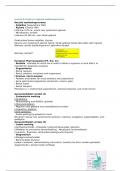
GE2V19007 Secret Intelligence: achterkant van Internationale
Betrekkingen
Verplichte literatuur samenvatting
- Nummers na zinnen refereren naar paginanummers
- Schuingedrukte zinnen zijn directe quotes uit de literatuur
John Hughes-Wilson, On Intelligence. The History of Espionage and the
Secret World, London: Constable 2016, 3-73
CHAPTER 1: A LITTLE HISTORY
Intelligence has mattered since the beginning of history (3)
Some examples of early military intelligence
- Moses’s spying expedition into Israel, and other Bible stories (4)
- Example of the ‘honey trap’ or ‘swallow’
- Greek and Egyptian examples (5)
- Sun Tzu, The Art of War great emphasis on intelligence (6)
Sun Tzu classifies five groups of agents
- Local inhabitants
- Government officials in the enemy camp who betray their
government in order to stay in their jobs
- Enemy spies who could be ‘turned’ and doubled to play back
disinformation
- Expendable agents who can be sacrificed
- Spies who can penetrate the enemy side, survive and report from
inside enemy camp
Great focus on the importance of intelligence in both peace and war time
More examples
- India, Rome (7)
- Network of Julius Caesar and Romans, first national intelligence
system (8)
- Roman spy structure transferred to Byzantian Empire after fall of
Roman Empire (10)
Connection intelligence and security (11)
More examples
- Assassins in the Middle East (12)
- Mongol spy networks
- Intelligence service of the Catholic Church (14), the Inquisition,
which was especially successful in Spain (15)
, - Venetian intelligence network, mostly connected to trade (16)
- Sir Francis Walsingham and British intelligence networks, in service
of the Crown (18)
- Cardinal Richelieu of France (20)
- In the US, intelligence service by George Washington, use of
disinformation (22)
- Napoleon also used intelligence, use of local agents (24)
- Duke of Wellington formed the Corps of Guides, an intelligence unit
in 1809 (26)
- After 1815, intelligence was used to report on brewing revolutions
(27)
- 1861, eruption of the Civil War and importance of intelligence (28)
- Spy networks in Prussia for Bismarck by Stieber (32)
- Britain intelligence against growing Irish dissent (34)
- ‘The Great Game’, name given to undercover war between Russia
and UK in Pakistan. Refers to the thrill of spying, the game (35)
- The Dreyfus Affair (1894) was the start of European spy-mania (36)
- New technology played a big role in intelligence during WWI (37)
- 1920s saw the importance of codes (39)
- Intelligence during WWII, UK had 9 intelligence agencies (40)
- Development of atomic bomb was also no secret due to espionage
- Cold War encouraged technical intelligence gathering
- End of CW saw change in priorities (41)
While technology has changed intelligence gathering a great deal, but
human intelligence is still relevant (42)
CHAPTER 2: ON INTELLIGENCE
Importance of intelligence for war, however it is not always mentioned.
Why is this? (46)
- Secrecy
- Intelligence is seen as a poor relation in the armory of national
security measures
- Missing dimension of diplomatic history (47)
Reliance on intelligence is more important than is said
Intelligence or a lack of it can have great consequences (48)
However, only intelligence cannot make decisions, that it up to leaders
themselves
Loss can often be traced back to a lack of intelligence (49)
Relationship between providers and recipients of intelligence is important
CHAPTER 3: THE INTELLIGENCE CYCLE
,Intelligence might best be described as information that has been
systematically and professionally processed and analyzed (55).
Intelligence is a cycle
Important to distinguish intentions and capabilities (56)
CHAPTER 4: ON DIRECTION: ‘WHAT EXACTLY IS YOUR INTELLIGENCE
REQUIREMENT, MINISTER?’
Important to understand what leaders want to know (58)
- Having a clear mission of what to do, what information to collect
CHAPTER 5: ON COLLECTION
The collection plan
When you have a clear intelligence question, a collection plan must be
formalized (60)
- Different intelligence is needed to acquire different types of
information
Impact of open-source analysis and social media
Collation – putting it all together
Once information has been obtained, it needs to be collated (62)
Phenomenon of having too much information/data to collate, this is
becoming increasingly more a problem
Interpretation – what does it all mean?
Information needs to be processed or interpreted, turning it into
intelligence (63)
, Dissemination – telling the boss
Relaying the intelligence that is gathered to higherups can have an impact
on how the message is delivered as well interpretations can be twisted
Facts should be distinguished from interpretive comments (64)
Indicators and warning
Pinnacle of intelligence process is often an indicators and warnings display
(65)
- Keep track of an enemy’s capabilities and intentions
ON HUMINT AND SPIES
Human intelligence (humint) has been a part of intelligence from the start,
includes spying (71)
What the spy can do, above all, is to identify intentions in a way that mere
technical or mechanical methods of intelligence frequently cannot (71).
Human intelligence is very broad
Spies are often not ‘good’ people, ethical questions (72)
Key question when recruiting is whether a human source has access to the
information that is needed
Even with technological advances, the need for humint still remains (73)
Philip Davies, ‘Ideas of Intelligence. Divergent National Concepts
and Institutions’, Harvard International Review 24, 3 (2002), pp. 62-66
Interest in intelligence has formed intelligence studies, traced to Sherman
Kent (62)
Narrow (British) and broad (American) approaches to intelligence
different states define intelligence differently
A study in contrast
Especially when comparing British and American conceptualizations
US intelligence definition
- Intelligence that is finished, that has already been processed
- Overall, a broader notion of intelligence
- Intelligence production means analytical production
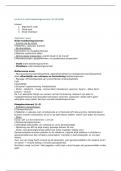
2023/2024
GE2V19007 Secret Intelligence: achterkant van Internationale
Betrekkingen
Verplichte literatuur samenvatting
- Nummers na zinnen refereren naar paginanummers
- Schuingedrukte zinnen zijn directe quotes uit de literatuur
John Hughes-Wilson, On Intelligence. The History of Espionage and the
Secret World, London: Constable 2016, 3-73
CHAPTER 1: A LITTLE HISTORY
Intelligence has mattered since the beginning of history (3)
Some examples of early military intelligence
- Moses’s spying expedition into Israel, and other Bible stories (4)
- Example of the ‘honey trap’ or ‘swallow’
- Greek and Egyptian examples (5)
- Sun Tzu, The Art of War great emphasis on intelligence (6)
Sun Tzu classifies five groups of agents
- Local inhabitants
- Government officials in the enemy camp who betray their
government in order to stay in their jobs
- Enemy spies who could be ‘turned’ and doubled to play back
disinformation
- Expendable agents who can be sacrificed
- Spies who can penetrate the enemy side, survive and report from
inside enemy camp
Great focus on the importance of intelligence in both peace and war time
More examples
- India, Rome (7)
- Network of Julius Caesar and Romans, first national intelligence
system (8)
- Roman spy structure transferred to Byzantian Empire after fall of
Roman Empire (10)
Connection intelligence and security (11)
More examples
- Assassins in the Middle East (12)
- Mongol spy networks
- Intelligence service of the Catholic Church (14), the Inquisition,
which was especially successful in Spain (15)
, - Venetian intelligence network, mostly connected to trade (16)
- Sir Francis Walsingham and British intelligence networks, in service
of the Crown (18)
- Cardinal Richelieu of France (20)
- In the US, intelligence service by George Washington, use of
disinformation (22)
- Napoleon also used intelligence, use of local agents (24)
- Duke of Wellington formed the Corps of Guides, an intelligence unit
in 1809 (26)
- After 1815, intelligence was used to report on brewing revolutions
(27)
- 1861, eruption of the Civil War and importance of intelligence (28)
- Spy networks in Prussia for Bismarck by Stieber (32)
- Britain intelligence against growing Irish dissent (34)
- ‘The Great Game’, name given to undercover war between Russia
and UK in Pakistan. Refers to the thrill of spying, the game (35)
- The Dreyfus Affair (1894) was the start of European spy-mania (36)
- New technology played a big role in intelligence during WWI (37)
- 1920s saw the importance of codes (39)
- Intelligence during WWII, UK had 9 intelligence agencies (40)
- Development of atomic bomb was also no secret due to espionage
- Cold War encouraged technical intelligence gathering
- End of CW saw change in priorities (41)
While technology has changed intelligence gathering a great deal, but
human intelligence is still relevant (42)
CHAPTER 2: ON INTELLIGENCE
Importance of intelligence for war, however it is not always mentioned.
Why is this? (46)
- Secrecy
- Intelligence is seen as a poor relation in the armory of national
security measures
- Missing dimension of diplomatic history (47)
Reliance on intelligence is more important than is said
Intelligence or a lack of it can have great consequences (48)
However, only intelligence cannot make decisions, that it up to leaders
themselves
Loss can often be traced back to a lack of intelligence (49)
Relationship between providers and recipients of intelligence is important
CHAPTER 3: THE INTELLIGENCE CYCLE
,Intelligence might best be described as information that has been
systematically and professionally processed and analyzed (55).
Intelligence is a cycle
Important to distinguish intentions and capabilities (56)
CHAPTER 4: ON DIRECTION: ‘WHAT EXACTLY IS YOUR INTELLIGENCE
REQUIREMENT, MINISTER?’
Important to understand what leaders want to know (58)
- Having a clear mission of what to do, what information to collect
CHAPTER 5: ON COLLECTION
The collection plan
When you have a clear intelligence question, a collection plan must be
formalized (60)
- Different intelligence is needed to acquire different types of
information
Impact of open-source analysis and social media
Collation – putting it all together
Once information has been obtained, it needs to be collated (62)
Phenomenon of having too much information/data to collate, this is
becoming increasingly more a problem
Interpretation – what does it all mean?
Information needs to be processed or interpreted, turning it into
intelligence (63)
, Dissemination – telling the boss
Relaying the intelligence that is gathered to higherups can have an impact
on how the message is delivered as well interpretations can be twisted
Facts should be distinguished from interpretive comments (64)
Indicators and warning
Pinnacle of intelligence process is often an indicators and warnings display
(65)
- Keep track of an enemy’s capabilities and intentions
ON HUMINT AND SPIES
Human intelligence (humint) has been a part of intelligence from the start,
includes spying (71)
What the spy can do, above all, is to identify intentions in a way that mere
technical or mechanical methods of intelligence frequently cannot (71).
Human intelligence is very broad
Spies are often not ‘good’ people, ethical questions (72)
Key question when recruiting is whether a human source has access to the
information that is needed
Even with technological advances, the need for humint still remains (73)
Philip Davies, ‘Ideas of Intelligence. Divergent National Concepts
and Institutions’, Harvard International Review 24, 3 (2002), pp. 62-66
Interest in intelligence has formed intelligence studies, traced to Sherman
Kent (62)
Narrow (British) and broad (American) approaches to intelligence
different states define intelligence differently
A study in contrast
Especially when comparing British and American conceptualizations
US intelligence definition
- Intelligence that is finished, that has already been processed
- Overall, a broader notion of intelligence
- Intelligence production means analytical production