ETH305V-02-612078 Page 1 of 8 C. Thompson - 56068484
ETH305V
ASSIGNMENT 02
Unique Number:
612078
Due Date: 2015/03/25
First semester:
23 Mar 2015
Christopher Thompson
Student Number:
56068484
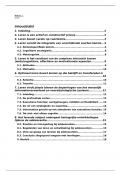
Table of contents
Page Title
1 Cover Page
2-3 Question 1
3-4 Question 2
4- 5 Question 3
6-7 Question 4
7-8 Question 5
8 References
, ETH305V-02-612078 Page 2 of 8 C. Thompson - 56068484
1. A. i) Multicultural education
Acknowledging the importance of a culturally diverse environment and successfully participating in such an
environment requires certain skills and attitudes that encourage mutual interaction and cultural preservation.
Linguistic, social and academic skills are introduced through multicultural education through a multidisciplinary
educational program which is easily applicable to the full spectrum of the curriculum.
A clear example of this would include a child gaining a better understanding of their own background as well
as that of other children’s backgrounds and cultures. Let us say, a Zulu child and an Afrikaans Child. They would
be more sensitive to the different customs and ways in which respect is shown. This knowledge would create
a mutual interaction and cooperation.
1.A.ii) Ethnocentrism
Allow me to continue with the previous example of a young Afrikaans boy and a Zulu boy. If the young Afrikaans
boy fails to appreciate and respect the cultural differences between his culture and that of the Zulu culture,
looking down on the Zulu culture, claiming to be more advanced or intellectual, the Afrikaans boy would be
guilty of ethnocentrism. However, this destructive force is common amongst groups rather than individuals.
When one (or multiple) ethnic group (s) cause another ethnic group to feel inferior or belittled, doing so openly
and publically in an exaggerated way, claiming to be better than the other – this is Ethnocentrism.
1.A. iii) Discrimination
Like ethnocentrism, discrimination highlights the differences in the way certain people, or groups of people,
are being treated. Often, the treatment that people receive because of cultural backgrounds or differences is
unfair and very demoralising.
An example of this would include the South African Apartheid, where the dominant cultural grossly
discriminated against the minority cultures, claiming certain groups are unable to achieve social development
without the governance of another. This discrimination shocked the world as blind beliefs in false cultural
supremacy damaged South Africa’s trade relationship the world.
1. A. iV) Culture
Culture is closely linked to traditional values standards that have formed over time. The activities of a specific
group of people could be summed up, illustrating certain behaviours that stimulate self-improvement,
consideration, creative mannerisms. Culture is the result of all these different activities being experienced with
a particular group.
For example, in one culture, making direct eye contact would be deemed disrespectful and in another, a
necessary part of greeting another individual. These differences are best illustrated by the Zulu culture and the
English Culture, where if eye contact is not made in the beginning of the conversation of greeting, issues of
trust or mistrust would quickly arise.
1. B.i) Xenophobia
In an attempt to reduce xenophobia in multicultural classroom, teachers should make every effort to express
or portray different individuals or ethnic groups accurately through carefully moderated literature. Ultimately,
through improved education and more access to the different groups of people, an effort to reduce
stereotyping is essential. By inviting certain role models from different ethnic groups would be a suitable
strategy in this case.
ETH305V
ASSIGNMENT 02
Unique Number:
612078
Due Date: 2015/03/25
First semester:
23 Mar 2015
Christopher Thompson
Student Number:
56068484
Table of contents
Page Title
1 Cover Page
2-3 Question 1
3-4 Question 2
4- 5 Question 3
6-7 Question 4
7-8 Question 5
8 References
, ETH305V-02-612078 Page 2 of 8 C. Thompson - 56068484
1. A. i) Multicultural education
Acknowledging the importance of a culturally diverse environment and successfully participating in such an
environment requires certain skills and attitudes that encourage mutual interaction and cultural preservation.
Linguistic, social and academic skills are introduced through multicultural education through a multidisciplinary
educational program which is easily applicable to the full spectrum of the curriculum.
A clear example of this would include a child gaining a better understanding of their own background as well
as that of other children’s backgrounds and cultures. Let us say, a Zulu child and an Afrikaans Child. They would
be more sensitive to the different customs and ways in which respect is shown. This knowledge would create
a mutual interaction and cooperation.
1.A.ii) Ethnocentrism
Allow me to continue with the previous example of a young Afrikaans boy and a Zulu boy. If the young Afrikaans
boy fails to appreciate and respect the cultural differences between his culture and that of the Zulu culture,
looking down on the Zulu culture, claiming to be more advanced or intellectual, the Afrikaans boy would be
guilty of ethnocentrism. However, this destructive force is common amongst groups rather than individuals.
When one (or multiple) ethnic group (s) cause another ethnic group to feel inferior or belittled, doing so openly
and publically in an exaggerated way, claiming to be better than the other – this is Ethnocentrism.
1.A. iii) Discrimination
Like ethnocentrism, discrimination highlights the differences in the way certain people, or groups of people,
are being treated. Often, the treatment that people receive because of cultural backgrounds or differences is
unfair and very demoralising.
An example of this would include the South African Apartheid, where the dominant cultural grossly
discriminated against the minority cultures, claiming certain groups are unable to achieve social development
without the governance of another. This discrimination shocked the world as blind beliefs in false cultural
supremacy damaged South Africa’s trade relationship the world.
1. A. iV) Culture
Culture is closely linked to traditional values standards that have formed over time. The activities of a specific
group of people could be summed up, illustrating certain behaviours that stimulate self-improvement,
consideration, creative mannerisms. Culture is the result of all these different activities being experienced with
a particular group.
For example, in one culture, making direct eye contact would be deemed disrespectful and in another, a
necessary part of greeting another individual. These differences are best illustrated by the Zulu culture and the
English Culture, where if eye contact is not made in the beginning of the conversation of greeting, issues of
trust or mistrust would quickly arise.
1. B.i) Xenophobia
In an attempt to reduce xenophobia in multicultural classroom, teachers should make every effort to express
or portray different individuals or ethnic groups accurately through carefully moderated literature. Ultimately,
through improved education and more access to the different groups of people, an effort to reduce
stereotyping is essential. By inviting certain role models from different ethnic groups would be a suitable
strategy in this case.