

As a volunteer, my role is to gather information about the causes and transmission of infectious
illnesses, as well as the methods used to counteract their spread. As a result, the assignment's goal is
to raise awareness on how illnesses spread and how to prevent them from spreading. I will also
assess the various ways and interventions used to prevent the transmission and spread of infectious
illnesses. I'll also look at how organisations might aid in the prevention of infectious illness
transmission.
How can diseases be transmitted?
Infectious illnesses can be caused by small organisms such as bacteria, fungus, and parasites. As a
result, these organisms can cause illnesses and spread infectious diseases from one person to
another. As a result of ingesting contaminated food or drinking polluted water, or being exposed to
small organisms in the environment, various illnesses may occur. There are many ways that the
disease can be spread directly and indirectly such as:
- Vector
- Contaminated food and water
- Air transmission
- Contaminated surface
- Direct physical contact
Vector
A vector transfers an infectious organism from an infected animal to a person or other animal.
Mosquitoes, ticks, fleas, and lice are examples of vectors that may spread infectious illnesses from
animals to individuals or between humans. Many of these vectors are bloodsucking insects that
spread disease-causing germs into new hosts by ingesting them during a blood meal from an affected
host.
Illnesses that are transmitted by insects are called vector-borne diseases. Many vector-borne
illnesses are zoonotic, which implies that they may spread from animals to people either directly or
indirectly. Several examples are leishmaniasis, crimean-congo hemorrhagic fever, west nile virus,
tick-borne encephalitis, and Lyme infections.
,Vector diseases include:
Malaria → Malaria is an infectious disease which is transmitted to individuals through bites of
infected mosquitoes. This can lead to severe symptoms and death which need to be treated
immediately. Symptoms of Malaria include: fever, headache, nausea and vomiting, rapid heart rate,
feeling of discomfort, fatigue and muscle or joint pain.
How can malaria spread diseases through the vector?
Through the bites of infected mosquitoes, which act as vectors, the parasites can be transmitted to
people. Mosquitoes can transmit these diseases to people because they carry the infection but are
immune to the diseases themselves. As a result, the mosquito may be able to infect and transfer
parasites to other people when it bites them. Additionally, if a parasite enters the human body, it can
reproduce inside red blood cells, which might result in serious symptoms.
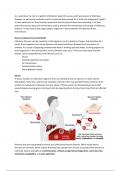
, Contaminated water and food
Foodborne and waterborne illnesses
can be caused by consuming
contaminated food and drinks.
Microbes and pathogens are present
in waterborne infections as well as
foodborne illnesses, often known as
food poisoning. As a result, the
majority of foodborne illnesses are
brought on by various bacteria,
viruses, and parasites, whereas food
poisoning, which is caused by
dangerous toxins or chemicals that
can contaminate food.
Symptoms of foodborne and waterborne diseases include:
- Diarrhoea
- Vomiting
- Fever
- Nausea
- Headache
- Stomach cramps
- Dizziness
Microorganisms and pathogens have the capacity to multiply and spread, which can result in
infections when they move from one surface to another. Typically, infectious diseases are carried on
by contaminated food and drink. Food that has been touched by an ill person can become
contaminated, and if it is not cooked correctly, it can spread diseases and infections to other people.
The foods that are most likely to be contaminated and to spread illnesses include raw meat, raw
eggs, unpasteurized milk, and raw shellfish. Undercooked meat or improperly handled meals are
likely to spread infections such as E. coli. The main causes of food poisoning include:
➔ Not cooking food properly
➔ Not defrosting food in right way
➔ Storing food incorrectly
➔ Contaminated food
➔ Infection diseases from people handling food
Additionally, poverty raises the risk of waterborne diseases affecting the population. For instance, a
community's capacity to have filtered water depends on its financial situation. Some South Africans
lack the financial stability to have access to treatment and drinking water. Families with lesser
earnings thus spend less on water supply, which might result in a lot of infections that cause various
illnesses. Moreover, the World Health Organization reports that water borne infections account for
an estimated 3.6% of the daily global disease burden and result in up to 1.5 million fatalities in
humans each year.
illnesses, as well as the methods used to counteract their spread. As a result, the assignment's goal is
to raise awareness on how illnesses spread and how to prevent them from spreading. I will also
assess the various ways and interventions used to prevent the transmission and spread of infectious
illnesses. I'll also look at how organisations might aid in the prevention of infectious illness
transmission.
How can diseases be transmitted?
Infectious illnesses can be caused by small organisms such as bacteria, fungus, and parasites. As a
result, these organisms can cause illnesses and spread infectious diseases from one person to
another. As a result of ingesting contaminated food or drinking polluted water, or being exposed to
small organisms in the environment, various illnesses may occur. There are many ways that the
disease can be spread directly and indirectly such as:
- Vector
- Contaminated food and water
- Air transmission
- Contaminated surface
- Direct physical contact
Vector
A vector transfers an infectious organism from an infected animal to a person or other animal.
Mosquitoes, ticks, fleas, and lice are examples of vectors that may spread infectious illnesses from
animals to individuals or between humans. Many of these vectors are bloodsucking insects that
spread disease-causing germs into new hosts by ingesting them during a blood meal from an affected
host.
Illnesses that are transmitted by insects are called vector-borne diseases. Many vector-borne
illnesses are zoonotic, which implies that they may spread from animals to people either directly or
indirectly. Several examples are leishmaniasis, crimean-congo hemorrhagic fever, west nile virus,
tick-borne encephalitis, and Lyme infections.
,Vector diseases include:
Malaria → Malaria is an infectious disease which is transmitted to individuals through bites of
infected mosquitoes. This can lead to severe symptoms and death which need to be treated
immediately. Symptoms of Malaria include: fever, headache, nausea and vomiting, rapid heart rate,
feeling of discomfort, fatigue and muscle or joint pain.
How can malaria spread diseases through the vector?
Through the bites of infected mosquitoes, which act as vectors, the parasites can be transmitted to
people. Mosquitoes can transmit these diseases to people because they carry the infection but are
immune to the diseases themselves. As a result, the mosquito may be able to infect and transfer
parasites to other people when it bites them. Additionally, if a parasite enters the human body, it can
reproduce inside red blood cells, which might result in serious symptoms.
, Contaminated water and food
Foodborne and waterborne illnesses
can be caused by consuming
contaminated food and drinks.
Microbes and pathogens are present
in waterborne infections as well as
foodborne illnesses, often known as
food poisoning. As a result, the
majority of foodborne illnesses are
brought on by various bacteria,
viruses, and parasites, whereas food
poisoning, which is caused by
dangerous toxins or chemicals that
can contaminate food.
Symptoms of foodborne and waterborne diseases include:
- Diarrhoea
- Vomiting
- Fever
- Nausea
- Headache
- Stomach cramps
- Dizziness
Microorganisms and pathogens have the capacity to multiply and spread, which can result in
infections when they move from one surface to another. Typically, infectious diseases are carried on
by contaminated food and drink. Food that has been touched by an ill person can become
contaminated, and if it is not cooked correctly, it can spread diseases and infections to other people.
The foods that are most likely to be contaminated and to spread illnesses include raw meat, raw
eggs, unpasteurized milk, and raw shellfish. Undercooked meat or improperly handled meals are
likely to spread infections such as E. coli. The main causes of food poisoning include:
➔ Not cooking food properly
➔ Not defrosting food in right way
➔ Storing food incorrectly
➔ Contaminated food
➔ Infection diseases from people handling food
Additionally, poverty raises the risk of waterborne diseases affecting the population. For instance, a
community's capacity to have filtered water depends on its financial situation. Some South Africans
lack the financial stability to have access to treatment and drinking water. Families with lesser
earnings thus spend less on water supply, which might result in a lot of infections that cause various
illnesses. Moreover, the World Health Organization reports that water borne infections account for
an estimated 3.6% of the daily global disease burden and result in up to 1.5 million fatalities in
humans each year.


