

→ P3 →
Introduction
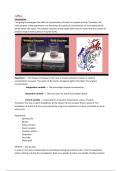
I am going to investigate the effect of concentration of starch on amylase activity. Therefore, the
main purpose of the experiment is to determine the optimum concentration of the amylase which
breaks down into starch. The amylase reaction, which breaks down starch, shows how the amount of
amylase impacts how quickly an enzyme works.
Hypothesis → The impact of amylase on the rate of enzyme activity increases as amylase
concentration increases. The colour of the starch will appear lighter the higher the amylase
concentration.
Independent variable → The percentage amylase concentration.
Dependent variable → The time taken for starch to be broken down.
Control variable → concentration of enzyme, temperature, colour of starch.
Therefore, The rate of starch breakdown will be slower the less amylase there is present. The
breakdown of starch will occur more quickly by using more amylase since there are double as many
active sites.
Equipments:
- Spotting tile
- Pipette
- Iodine solution
- Starch solution
- Amylase solution
- Stopwatch
- Test tube
- Water bath
Method→ step by step
In order to decrease contamination and avoid generating inaccurate results, rinse the equipment
before utilising it during the investigation. Next use a pipette to place one droplet of iodine solution
, into each well of the spotting tile. Afterwards, label the five test tubes and fill just four of them with
4mL of 1% starch. Then, added four mL of amylase solution to the fifth test tube. After filling each
test tube with solution, set the stopwatch for five minutes and placed every test tube in a 37 C water
bath. A separate dropper or pipette should be used for each mixture to avoid contamination of the
solution. Since there is no enzyme present in tube 1, it will act as the control variable. Next, remove
the tube from the water bath for a short while and use a pipette to add 3 drops of amylase solution
to tube 2, 6 drops of amylase solution to tube 3, and then 10 drops of amylase solution to tube 4.
Once amylase solution is added to each test tube, I'll ensure to carefully shake the tube to mix it,
then set it back into the water bath, where the temperature and pH should be kept constant,
Consequently, make sure to record when adding the amylase (enzyme). Then, keep the test tubes in
the water baths to maintain a consistent temperature by transferring four drops of each reaction
mixture from using only a sterile pipette for each separate well on the spotting tile. Observation
should be noted. For accurate results, conduct the experiment again.
Result of the experiment → The final outcome may be influenced by a number of factors, including
time, resources, purity, and stability. This is due to the possibility of experiment error; thus, it is
essential to clean the equipment before use, ensuring that it is safe for use, in order to assure that a
correct result is obtained. This is due to the fact that the measurement accuracy and concentration
error are closely associated. Time is one such uncontrollable aspect since it depends on the
reaction's unexpected response rate or how the reaction would take longer to complete. Although
this has no effect on the final outcome, it may make the graph less accurate and the time scale
longer. In order to lessen the consequences of these errors, it is crucial to repeat the experiment
repeatedly, increase the sample size, and estimate an average result.
Health and safety
Health and safety is defined as a law that is designed to keep people safe at the workplace and in
public settings from harm and danger. When doing the enzyme experiment, it is essential to avoid
inhaling aerosols, coming into contact with your skin or eyes, and other potential risks. For those
who are sensitive, inhaling enzymes may trigger an immunological reaction. Repeated exposure over
time might therefore lead to a respiratory allergy. Contact with the concentrated solution might
potentially cause skin and eye inflammation. In order to avoid any negative health consequences,
enzymes should be handled carefully. This may be done by following excellent work practices and
wearing the appropriate personal protection equipment. Personal Protection Equipment (PPE) is the
term for the equipment used in scientific research to prevent individuals from dangers or to ensure
their health and safety. These include a lab coat, face shields, safety goggles, helmets, and gloves.
Laminar flow cabinets and fume cupboards, which are designed to avoid contaminating sensitive
items like semiconductors and biological samples, are frequently encountered in laboratories.
Therefore, before carrying out the experiment it is important to consider the health and safety and
fully understand the potential hazards associated with the chemicals that you are about to use
(COSHH, Hazards from CLEAPSS, Topics in Safety by ASE). As part of the COSHH Regulations, 2002,
researchers are responsible for conducting research and publishing data that contain information
such as how much chemical should be used and how long it should be exposed to workers before
their health is damaged. Moreover, It is important that an individual should report all incidents, no
matter how minor, and to record these incidents in appropriate registers. In the event that an
incident requires investigation by the Health and Safety Executive (HSE), the register will be required.
Introduction
I am going to investigate the effect of concentration of starch on amylase activity. Therefore, the
main purpose of the experiment is to determine the optimum concentration of the amylase which
breaks down into starch. The amylase reaction, which breaks down starch, shows how the amount of
amylase impacts how quickly an enzyme works.
Hypothesis → The impact of amylase on the rate of enzyme activity increases as amylase
concentration increases. The colour of the starch will appear lighter the higher the amylase
concentration.
Independent variable → The percentage amylase concentration.
Dependent variable → The time taken for starch to be broken down.
Control variable → concentration of enzyme, temperature, colour of starch.
Therefore, The rate of starch breakdown will be slower the less amylase there is present. The
breakdown of starch will occur more quickly by using more amylase since there are double as many
active sites.
Equipments:
- Spotting tile
- Pipette
- Iodine solution
- Starch solution
- Amylase solution
- Stopwatch
- Test tube
- Water bath
Method→ step by step
In order to decrease contamination and avoid generating inaccurate results, rinse the equipment
before utilising it during the investigation. Next use a pipette to place one droplet of iodine solution
, into each well of the spotting tile. Afterwards, label the five test tubes and fill just four of them with
4mL of 1% starch. Then, added four mL of amylase solution to the fifth test tube. After filling each
test tube with solution, set the stopwatch for five minutes and placed every test tube in a 37 C water
bath. A separate dropper or pipette should be used for each mixture to avoid contamination of the
solution. Since there is no enzyme present in tube 1, it will act as the control variable. Next, remove
the tube from the water bath for a short while and use a pipette to add 3 drops of amylase solution
to tube 2, 6 drops of amylase solution to tube 3, and then 10 drops of amylase solution to tube 4.
Once amylase solution is added to each test tube, I'll ensure to carefully shake the tube to mix it,
then set it back into the water bath, where the temperature and pH should be kept constant,
Consequently, make sure to record when adding the amylase (enzyme). Then, keep the test tubes in
the water baths to maintain a consistent temperature by transferring four drops of each reaction
mixture from using only a sterile pipette for each separate well on the spotting tile. Observation
should be noted. For accurate results, conduct the experiment again.
Result of the experiment → The final outcome may be influenced by a number of factors, including
time, resources, purity, and stability. This is due to the possibility of experiment error; thus, it is
essential to clean the equipment before use, ensuring that it is safe for use, in order to assure that a
correct result is obtained. This is due to the fact that the measurement accuracy and concentration
error are closely associated. Time is one such uncontrollable aspect since it depends on the
reaction's unexpected response rate or how the reaction would take longer to complete. Although
this has no effect on the final outcome, it may make the graph less accurate and the time scale
longer. In order to lessen the consequences of these errors, it is crucial to repeat the experiment
repeatedly, increase the sample size, and estimate an average result.
Health and safety
Health and safety is defined as a law that is designed to keep people safe at the workplace and in
public settings from harm and danger. When doing the enzyme experiment, it is essential to avoid
inhaling aerosols, coming into contact with your skin or eyes, and other potential risks. For those
who are sensitive, inhaling enzymes may trigger an immunological reaction. Repeated exposure over
time might therefore lead to a respiratory allergy. Contact with the concentrated solution might
potentially cause skin and eye inflammation. In order to avoid any negative health consequences,
enzymes should be handled carefully. This may be done by following excellent work practices and
wearing the appropriate personal protection equipment. Personal Protection Equipment (PPE) is the
term for the equipment used in scientific research to prevent individuals from dangers or to ensure
their health and safety. These include a lab coat, face shields, safety goggles, helmets, and gloves.
Laminar flow cabinets and fume cupboards, which are designed to avoid contaminating sensitive
items like semiconductors and biological samples, are frequently encountered in laboratories.
Therefore, before carrying out the experiment it is important to consider the health and safety and
fully understand the potential hazards associated with the chemicals that you are about to use
(COSHH, Hazards from CLEAPSS, Topics in Safety by ASE). As part of the COSHH Regulations, 2002,
researchers are responsible for conducting research and publishing data that contain information
such as how much chemical should be used and how long it should be exposed to workers before
their health is damaged. Moreover, It is important that an individual should report all incidents, no
matter how minor, and to record these incidents in appropriate registers. In the event that an
incident requires investigation by the Health and Safety Executive (HSE), the register will be required.


