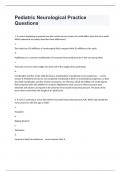
Pediatric Neurological Practice Questions fully solved graded A+
Pediatric Neurological Practice Questions1. A nurse is explaining to parents how the central nervous system of a child differs from that of an adult. Which statement accurately describes these differences? a. The infant has 150 milliliters of cerebrospinal fluid compared with 50 milliliters in the adult. b. Papilledema is a common manifestation of increased intracranial pressure in the very young child. c. The brain of a term infant weighs less than half of the weight of the adult brain. d. Coordination and fine motor skills develop as myelinization of peripheral nerves progresses. - correct answer D. Peripheral nerves are not completely myelinated at birth. As myelinization progresses, so does the childs coordination and fine muscle movements. An infant has about 50 milliliters of cerebrospinal fluid compared with 150 milliliters in an adult. Papilledema rarely occurs in infancy because open fontanels and sutures can expand in the presence of increased intracranial pressure. The brain of the term infant is two-thirds the weight of an adults brain. 2. A nurse is assessing a 1-year-old child for increased intracranial pressure (ICP). Which sign should the nurse assess for with this age of child? a. Headache b. Bulging fontanel c. Tachypnea d. Increase in head circumference - correct answer ANS: A
Written for
- Institution
- Pediatric Nursing
- Module
- Pediatric Nursing
Document information
- Uploaded on
- March 15, 2024
- Number of pages
- 14
- Written in
- 2023/2024
- Type
- Exam (elaborations)
- Contains
- Questions & answers
Subjects
-
pediatric neurological practice questions

Also available in package deal