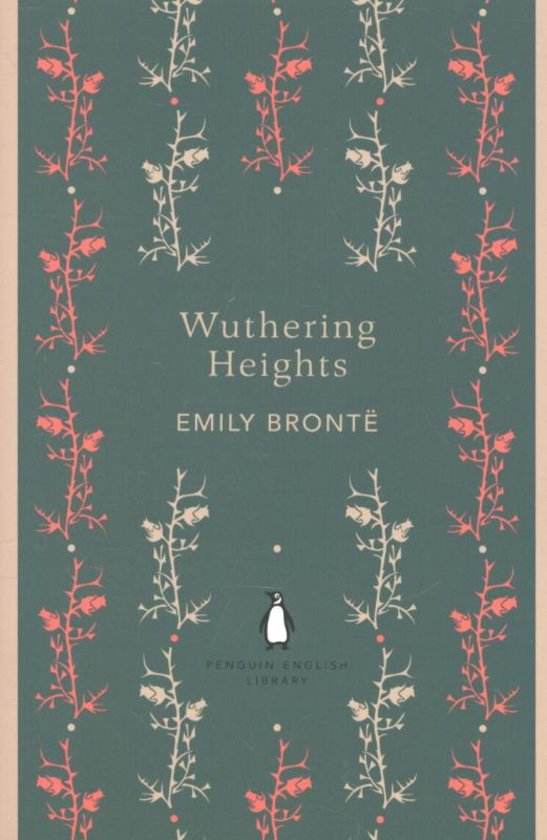
“Wuthering Heights’ continued popularity is a result of its portrayal of love and marriage”
Wuthering Heights is a novel written by Emily Bronte in 1847. Being written in Victorian
England, it features a number of thematic and literary tropes from that era. Love and
marriage are major themes within the plot of the novel, and are thoroughly explored by
Bronte throughout. Notable is that Bronte never married herself, and as such it could be
argued that her portrayal of marriage is inaccurate or exaggerated to account for her lack of
personal experience.
Relationships and love between men and women are central to the plot of Wuthering
Heights, with loves such as those between Catherine and Edgar, and Heathcliff and Isabella,
being the main source of conflict throughout the novel. The marriage between Catherine and
Edgar in particular is important, as it was arranged for a number of motives;primarily that of
genuine love, however Catherine herself describes this love as, “like the foliage: time will
change it…”, herself being aware that, while she is more passionately in love Heathcliff, due
to his social standing she herself says, “it would degrade me to marry Heathcliff now”,
showing that, while her marriage to Edgar is for love, it is a less passionate, solid, stable love
than that felt for Heathcliff. The institution of marriage in Victorian society often benefited the
male, not the female, and as such it was seen as a way of surviving; women were forced to
depend on a good marriage to carry them through later life and start a family. As such,
Catherine’s motives for marrying Edgar over Heathcliff are complicated, being both for love
and stability, which the erratic, passionate Heathcliff could not offer. These complicated
reasons for marriage and love make the characters feel very human, and are certainly a
reason for the novel’s continued popularity.
There was a system of social stratification in Victorian society which separated men and
women in everyday life, called the Doctrine of Separate Spheres. This was the belief that
men and women were made for different purposes, and were better suited for different tasks.
Despite this, the young Catherine and Heathcliff spend a great deal of time together,
eventually falling in love. This youthful love is unlikely and taboo, the upper-class Catherine
being traditionally unsuited to the “black haired… gypsy brat”, parentless (a gothic trope) boy
who would never have been allowed, in Victorian times, to marry the wealthy Catherine.
Their love in spite of this, being forbidden, is highly romantic and a vivid portrayal of
passionate love during the puritan and restricting age that it is set in. This presentation of
love despite the differences between the two immediately establishes a strong bond
between them, only strengthened by the forbidden nature of their love, the extent of which is
seen in Catherine’s proclamation, “I am Heathcliff!” This highly romantic ideal only
exemplifies the dramatic portrayal of love, which overcomes the gap between social class.
This portrayal of love between the two may represent a romantic ideal which has ensured
the continued popularity of the novel.
The portrayal of marriage in the novel may be interpreted as highly negative, however, often
causing great conflict throughout the story. Catherine and Edgar’s marriage is one of love.
Catherine states herself, “I’ve no more business marrying Edgar than I have to be in
heaven.”, comparing the prospect of their marriage to eternal life. While her love for Edgar
will change over time, their marriage is happy and stable, and for the most part very positive,
with Edgar attempting to resolve any conflicts in a calm, eloquent manner, “Will you give up
Heathcliff hereafter, or will you give up me?”. The very positive and relatively stable and
Wuthering Heights is a novel written by Emily Bronte in 1847. Being written in Victorian
England, it features a number of thematic and literary tropes from that era. Love and
marriage are major themes within the plot of the novel, and are thoroughly explored by
Bronte throughout. Notable is that Bronte never married herself, and as such it could be
argued that her portrayal of marriage is inaccurate or exaggerated to account for her lack of
personal experience.
Relationships and love between men and women are central to the plot of Wuthering
Heights, with loves such as those between Catherine and Edgar, and Heathcliff and Isabella,
being the main source of conflict throughout the novel. The marriage between Catherine and
Edgar in particular is important, as it was arranged for a number of motives;primarily that of
genuine love, however Catherine herself describes this love as, “like the foliage: time will
change it…”, herself being aware that, while she is more passionately in love Heathcliff, due
to his social standing she herself says, “it would degrade me to marry Heathcliff now”,
showing that, while her marriage to Edgar is for love, it is a less passionate, solid, stable love
than that felt for Heathcliff. The institution of marriage in Victorian society often benefited the
male, not the female, and as such it was seen as a way of surviving; women were forced to
depend on a good marriage to carry them through later life and start a family. As such,
Catherine’s motives for marrying Edgar over Heathcliff are complicated, being both for love
and stability, which the erratic, passionate Heathcliff could not offer. These complicated
reasons for marriage and love make the characters feel very human, and are certainly a
reason for the novel’s continued popularity.
There was a system of social stratification in Victorian society which separated men and
women in everyday life, called the Doctrine of Separate Spheres. This was the belief that
men and women were made for different purposes, and were better suited for different tasks.
Despite this, the young Catherine and Heathcliff spend a great deal of time together,
eventually falling in love. This youthful love is unlikely and taboo, the upper-class Catherine
being traditionally unsuited to the “black haired… gypsy brat”, parentless (a gothic trope) boy
who would never have been allowed, in Victorian times, to marry the wealthy Catherine.
Their love in spite of this, being forbidden, is highly romantic and a vivid portrayal of
passionate love during the puritan and restricting age that it is set in. This presentation of
love despite the differences between the two immediately establishes a strong bond
between them, only strengthened by the forbidden nature of their love, the extent of which is
seen in Catherine’s proclamation, “I am Heathcliff!” This highly romantic ideal only
exemplifies the dramatic portrayal of love, which overcomes the gap between social class.
This portrayal of love between the two may represent a romantic ideal which has ensured
the continued popularity of the novel.
The portrayal of marriage in the novel may be interpreted as highly negative, however, often
causing great conflict throughout the story. Catherine and Edgar’s marriage is one of love.
Catherine states herself, “I’ve no more business marrying Edgar than I have to be in
heaven.”, comparing the prospect of their marriage to eternal life. While her love for Edgar
will change over time, their marriage is happy and stable, and for the most part very positive,
with Edgar attempting to resolve any conflicts in a calm, eloquent manner, “Will you give up
Heathcliff hereafter, or will you give up me?”. The very positive and relatively stable and