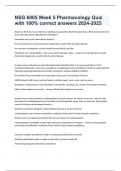
NSG 6005 Week 5 Pharmacology Quiz with 100% correct answers
David is a thirty-four-year-old who is starting on paroxetine (Paxil) for depression. What does David need to be educated about regarding his medication? Paroxetine may cause intermittent diarrhea. He may experience sexual dysfunction beginning a month after he starts therapy. He may have constipation, and he should increase fluids and fiber. Paroxetine has a long half-life, so he may occasionally skip a dose. He may experience sexual dysfunction beginning a month after he starts therapy. A sixty-six-year-old male was prescribed phenelzine (Nardil) while in an acute psychiatric unit for recalcitrant depression. The nurse practitioner managing his primary healthcare needs to understand the following regarding phenelzine and other monoamine oxidase inhibitors (MAOIs): He should not be prescribed any serotonergic drug such as sumatriptan (Imitrex). MAOIs interact with many common foods, including yogurt, sour cream, and soy sauce. Symptoms of hypertensive crisis (headache, tachycardia, sweating, etc.) require immediate treatment. All the above options are correct. All the above options are correct. Brainpower Read More Previous Play Next Rewind 10 seconds Move forward 10 seconds Unmute 0:00 / 0:00 Full screen Dwayne was recently started on carbamazepine to treat seizures. He comes to see you, and you note that while his carbamazepine levels had been in the therapeutic range, they are now low. The possible cause for the low carbamazepine levels is: Dwayne hasn't been taking his carbamazepine because it causes insomnia. Carbamazepine auto-induces metabolism, leading to lower levels in spite of good compliance. Dwayne was not originally prescribed the correct amount of carbamazepine. Carbamazepine is probably not the right antiseizure medication for Dwayne. Carbamazepine auto-induces metabolism, leading to lower levels in spite of good compliance. Common mistakes practitioners make in treating anxiety disorders include: Switching medications after an eight-week trial to a twelve-week trial Maximizing dosing of antianxiety medications Encouraging exercise and relaxation therapy before starting medication Thinking a partial response to medication is acceptable Thinking a partial response to medication is acceptable Six-year-old Lucy has recently been started on ethosuximide (Zarontin) for seizures. She should be monitored for: Increased seizure activity as this drug may auto-induce seizures Altered renal function, including renal failure Blood dyscrasias, which are uncommon but possible CNS excitement, leading to insomnia Blood dyscrasias, which are uncommon but possible An appropriate first-line drug for the treatment of depression with fatigue and low energy would be: Venlafaxine (Effexor) Escitalopram (Lexapro) Buspirone (Buspar) Amitriptyline (Elavil) Venlafaxine (Effexor) When prescribing Adderall (amphetamine and dextroamphetamine) to adults with ADHD, the nurse practitioner will need to monitor: The blood pressure Blood glucose levels Urine ketone levels Liver function The blood pressure Patients should be instructed regarding the rapid onset of zolpidem (Ambien) because: Zolpidem should be taken just before going to bed. Zolpidem may cause a dry mouth and constipation. Patients may need to double the dose for effectiveness. Patients should stop drinking alcohol at least thirty minutes before taking zolpidem. Zolpidem should be taken just before going to bed. Anticholinergic agents, such as benztropine (Cogentin), may be given with a phenothiazine to: Reduce the chance of tardive dyskinesia. Potentiate the effects of the drug. Reduce the tolerance that tends to occur. Increase CNS depression. Reduce the chance of tardive dyskinesia. Jack, eight years old, has attention deficit disorder (ADD) and is prescribed methylphenidate (Ritalin). He and his parents should be educated about the side effects of methylphenidate, which are: Slurred speech and insomnia Bradycardia and confusion Dizziness and orthostatic hypotension Insomnia and decreased appetite Insomnia and decreased appetite Patients who are prescribed olanzapine (Zyprexa) should be monitored for: Insomnia Weight gain Hypertension Galactorrhea Weight gain Levetiracetam has known drug interactions with: Oral contraceptives Carbamazepine Warfarin Few, if any, drugs Few, if any, drugs Cara is taking levetiracetam (Keppra) to treat seizures. Routine education for levetiracetam includes reminding her: To not abruptly discontinue levetiracetam due to the risk of withdrawal seizures To wear a sunscreen due to photosensitivity from levetiracetam To get an annual eye exam while on levetiracetam To report weight loss if it occurs To not abruptly discontinue levetiracetam due to the risk of withdrawal seizures
Written for
- Institution
- NSG 6005 Pharmacology
- Module
- NSG 6005 Pharmacology
Document information
- Uploaded on
- March 2, 2024
- Number of pages
- 5
- Written in
- 2023/2024
- Type
- Exam (elaborations)
- Contains
- Questions & answers
Subjects
-
nsg 6005 week 5 pharmacology quiz

Also available in package deal