Unit 4: Laboratory Techniques and their Applica9on.
Learning aim B: Explore the manufacturing techniques and tes9ng methods for an organic liquid.
Making Ethyl Ethanoate:
Aim:
The aim of our prac9cal was to explore the manufacturing techniques and tes9ng methods in order
to make nail varnish remover (ethyl ethanoate). Ethyl ethanoate acts as an organic solvent which is
oFen used within nail varnish removers as a component. To achieve making an ester would require
carboxylic acid and alcohol to go through the process of esterifica9on, which was performed in the
laboratory.
Predic6on:
It would be possible to achieve a low to moderate percentage yield (around 15-57%) of the
produc9on of ethyl ethanoate, since the reac9on is reversible, it also takes a long 9me to reach
an equilibrium. Achieving a 100% percent yield would be difficult.
Variables and fair tes6ng:
To enable a fair test the process of esterifica9on which produces ethyl ethanoate, the prac9cal would
have to be completed with; 5cm3 of ethanoic acid, 6 drops of concentrated sulphuric acid and 5cm3
of ethanol. The prac9cal would have to be repeated several 9mes to ensure no anomalies or
mistakes are found in the final percentage yield (result).
The variable that could be changed would be the amount of concentrated sulphuric acid that is
added as a catalyst for the reac9on, adding more concentrated sulphuric acid could decrease the
percentage yield, or adding less concentrated sulphuric acid could poten9ally increase the
percentage yield. This would be known as the independent variable.
The variables that would prac9cally stay the same would be the amount of ethanoic acid (carboxylic
acid), ethane (alcohol) and concentrated sulphuric acid (catalyst). The temperature of the water bath
would also have to stay the same throughout the reflux process. The chemicals needed for the
reac9on would stay the same to enable a fair test. This would be known as the control variable.
Equipment and technique:
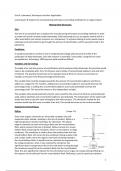
Reflux: [Image 1.0]
Since most organic chemicals are inherently unstable, they will
evaporate when heated, resul9ng in the loss of product. Reflux is a
high-temperature reac9on technique for chemicals. This allows
organic chemicals to react by forcing it back into the round boYom
flask, which prevents the loss of product. Reflux consists of a round
boYom flask containing the reactants, which is connected to a Liebig
condenser. The condenser is used to force the product back into the
round boYom flask, this occurs by the condenser having a water inlet
and a water outlet. Since the organic chemicals are being heated in
the round boYom flask, it would force the reactants to evaporate into
the Liebig condenser; when it has reached the condenser the
significant drop in temperature due to the cold water running through
the condenser would force the reactants back into the round boYom
flask, this also significantly reduces the loss of product since no gas can escape during refluxing. As
the vapours are forced back into the round boYom flask. Refluxing is used to speed up reac9ons
1
Learning aim B: Explore the manufacturing techniques and tes9ng methods for an organic liquid.
Making Ethyl Ethanoate:
Aim:
The aim of our prac9cal was to explore the manufacturing techniques and tes9ng methods in order
to make nail varnish remover (ethyl ethanoate). Ethyl ethanoate acts as an organic solvent which is
oFen used within nail varnish removers as a component. To achieve making an ester would require
carboxylic acid and alcohol to go through the process of esterifica9on, which was performed in the
laboratory.
Predic6on:
It would be possible to achieve a low to moderate percentage yield (around 15-57%) of the
produc9on of ethyl ethanoate, since the reac9on is reversible, it also takes a long 9me to reach
an equilibrium. Achieving a 100% percent yield would be difficult.
Variables and fair tes6ng:
To enable a fair test the process of esterifica9on which produces ethyl ethanoate, the prac9cal would
have to be completed with; 5cm3 of ethanoic acid, 6 drops of concentrated sulphuric acid and 5cm3
of ethanol. The prac9cal would have to be repeated several 9mes to ensure no anomalies or
mistakes are found in the final percentage yield (result).
The variable that could be changed would be the amount of concentrated sulphuric acid that is
added as a catalyst for the reac9on, adding more concentrated sulphuric acid could decrease the
percentage yield, or adding less concentrated sulphuric acid could poten9ally increase the
percentage yield. This would be known as the independent variable.
The variables that would prac9cally stay the same would be the amount of ethanoic acid (carboxylic
acid), ethane (alcohol) and concentrated sulphuric acid (catalyst). The temperature of the water bath
would also have to stay the same throughout the reflux process. The chemicals needed for the
reac9on would stay the same to enable a fair test. This would be known as the control variable.
Equipment and technique:
Reflux: [Image 1.0]
Since most organic chemicals are inherently unstable, they will
evaporate when heated, resul9ng in the loss of product. Reflux is a
high-temperature reac9on technique for chemicals. This allows
organic chemicals to react by forcing it back into the round boYom
flask, which prevents the loss of product. Reflux consists of a round
boYom flask containing the reactants, which is connected to a Liebig
condenser. The condenser is used to force the product back into the
round boYom flask, this occurs by the condenser having a water inlet
and a water outlet. Since the organic chemicals are being heated in
the round boYom flask, it would force the reactants to evaporate into
the Liebig condenser; when it has reached the condenser the
significant drop in temperature due to the cold water running through
the condenser would force the reactants back into the round boYom
flask, this also significantly reduces the loss of product since no gas can escape during refluxing. As
the vapours are forced back into the round boYom flask. Refluxing is used to speed up reac9ons
1