Key Skills 2
Week 3
Francesco Tamagini
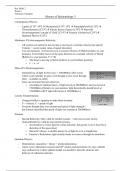
History of Epistemology 3
Contemporary Physics;
- Laplace [C18th /19th] Mechanisms [C18th /19th] Naturalphilosofie [C19th]
Thermodynamics [C19th] Kinetic theory of gases [C19th] Maxwells
electromagnetism/ concept of “field” [C19th] Einstein’s Relativity [C20th]
Quantum Physics [C20th]
Mechanics VS electromagnetic Relativity;
- All systems are inertial as not moving or moving at a constant velocity [not speed]
Velocity = vector [scalar value of speed/ direction]
- You are stationary. A horse moves at a constant velocity of 10km/h [relative to your
position]. Your brother moves in the same direction at a constant velocity of 5km/h
[Relative to your position. T=t’=0]
o The horse is moving at 5km/h [relative to your brothers position]
o x’ = x - vt
Maxwell’s Electromagnetism;
- Estimated ray of light for Em wave = 300,000km/s [Em waves
which occur naturally in space were thought to also occur through
ether – available on earth]
- Issue; not invariant between observers.
o According to Galilean theory, if light travels at 300,000km/s and you travel at
150,000km/s [Relative to your position, light theoretically should travel at
150,000km/s BUT light still travels at 300,000km/s.]
Lorentz Transformation;
- Changed Galileo’s equation to make them invariant
- V = velocity, C = speed of light
- Everyone thought time was constant and speed of light changed//
but Einstein identified that speed of light was constant at 300,000km/s.
Einstein;
- Special Relativity; Only valid for inertial systems = time moves more slowly.
- General Relativity; valid for non-inertial systems.
o Acceleration is a force [gravity comes into play, but gravity is not a force but a
distortion of the space-time]
o Maxwell’s theory; a satellite shoots ray of light to us in a straight line.
o Einstein’s Realization; light actually bends as it moves through the distortion
Quantum Physics;
- Deterministic conception = theory = predict phenomena
- Atoms were a theoretical concept until 20th century [advancements of x rays/ cathode
rays/ radioactivity] where updated model was needed to describe structure and
behavior of subatomic particles.
, Key Skills 2
Week 3
Francesco Tamagini
- Previous theory;
1. Plum pudding model; electrons are dispersed in a cloud of positive particles
2. Orbit-based [Rutherford’s] nucleus has protons and electrons orbiting.
3. Neil Bohn, 1913 [Current Theory];
o Atoms are not able to absorb energy except in discreet quantities [quantum
energy] which is used to take electrons from one energetic level to another
[electrons are in an excited state] portion of space [volume] where definite
probability of finding an electron]
o Portion of space where 99.9% probability of finding an electron = electron
shells orbiting the nucleus.
Heisenberg’s principle of uncertainty;
- Newtonian mechanics; known position and velocity [physical co-ordinates] can
predict the future positions.
- This doesn’t apply to subatomic particles
- Lack tools, so we can only determine position or velocity as we interact with system;
which increases the accuracy of the measure of velocity, but decreases the accuracy of
measure of the position [vice versa]
- Process of observation affects the phenomena.
- Universe is not deterministic; if none observed, would it act in a deterministic way? It
doesn’t matter as it doesn’t generate knowledge [challenges any experiments on a
subatomic level]
Wave body dualism;
- Pre 20th century; wave and mass were separate entities
- Electrons behave as waves and particles [dependent on instrument of method]
- Electrons acting as waves produce interference patterns, yet can also be particles.
- Cassini experiment; firing light particles [photons] towards the sun, change trajectory
due to the mass they have.
- Double slit experiment;
o 1801; light behaves as a wave
o 1965; Feynman; if places detector in front of slit; interference pattern
disappears. Fabric of universe behaves not independent to observers.
o 1961; Claus Johnson tries, electrons bump against each other generating
waves.
o 1974; Missiroli and Pozzi carry out experiment with single electrons =
interference patterns.
Crisis of Objectivity;
- Schrodinger’s cat; radioactive decay is stochastic [observation is needed to know if
decay has occurred] “superposition” – if not observes, the cat can be both dead or
alive [Copenhagen interpretation]
- Quantum physics shows 2 paradoxes = particles act as waves
- Subatomic particles don’t act in a deterministic way [Newtonian mechanics] Einstein
insisted on hidden variable which could explain the universe in deterministic way]
Week 3
Francesco Tamagini
History of Epistemology 3
Contemporary Physics;
- Laplace [C18th /19th] Mechanisms [C18th /19th] Naturalphilosofie [C19th]
Thermodynamics [C19th] Kinetic theory of gases [C19th] Maxwells
electromagnetism/ concept of “field” [C19th] Einstein’s Relativity [C20th]
Quantum Physics [C20th]
Mechanics VS electromagnetic Relativity;
- All systems are inertial as not moving or moving at a constant velocity [not speed]
Velocity = vector [scalar value of speed/ direction]
- You are stationary. A horse moves at a constant velocity of 10km/h [relative to your
position]. Your brother moves in the same direction at a constant velocity of 5km/h
[Relative to your position. T=t’=0]
o The horse is moving at 5km/h [relative to your brothers position]
o x’ = x - vt
Maxwell’s Electromagnetism;
- Estimated ray of light for Em wave = 300,000km/s [Em waves
which occur naturally in space were thought to also occur through
ether – available on earth]
- Issue; not invariant between observers.
o According to Galilean theory, if light travels at 300,000km/s and you travel at
150,000km/s [Relative to your position, light theoretically should travel at
150,000km/s BUT light still travels at 300,000km/s.]
Lorentz Transformation;
- Changed Galileo’s equation to make them invariant
- V = velocity, C = speed of light
- Everyone thought time was constant and speed of light changed//
but Einstein identified that speed of light was constant at 300,000km/s.
Einstein;
- Special Relativity; Only valid for inertial systems = time moves more slowly.
- General Relativity; valid for non-inertial systems.
o Acceleration is a force [gravity comes into play, but gravity is not a force but a
distortion of the space-time]
o Maxwell’s theory; a satellite shoots ray of light to us in a straight line.
o Einstein’s Realization; light actually bends as it moves through the distortion
Quantum Physics;
- Deterministic conception = theory = predict phenomena
- Atoms were a theoretical concept until 20th century [advancements of x rays/ cathode
rays/ radioactivity] where updated model was needed to describe structure and
behavior of subatomic particles.
, Key Skills 2
Week 3
Francesco Tamagini
- Previous theory;
1. Plum pudding model; electrons are dispersed in a cloud of positive particles
2. Orbit-based [Rutherford’s] nucleus has protons and electrons orbiting.
3. Neil Bohn, 1913 [Current Theory];
o Atoms are not able to absorb energy except in discreet quantities [quantum
energy] which is used to take electrons from one energetic level to another
[electrons are in an excited state] portion of space [volume] where definite
probability of finding an electron]
o Portion of space where 99.9% probability of finding an electron = electron
shells orbiting the nucleus.
Heisenberg’s principle of uncertainty;
- Newtonian mechanics; known position and velocity [physical co-ordinates] can
predict the future positions.
- This doesn’t apply to subatomic particles
- Lack tools, so we can only determine position or velocity as we interact with system;
which increases the accuracy of the measure of velocity, but decreases the accuracy of
measure of the position [vice versa]
- Process of observation affects the phenomena.
- Universe is not deterministic; if none observed, would it act in a deterministic way? It
doesn’t matter as it doesn’t generate knowledge [challenges any experiments on a
subatomic level]
Wave body dualism;
- Pre 20th century; wave and mass were separate entities
- Electrons behave as waves and particles [dependent on instrument of method]
- Electrons acting as waves produce interference patterns, yet can also be particles.
- Cassini experiment; firing light particles [photons] towards the sun, change trajectory
due to the mass they have.
- Double slit experiment;
o 1801; light behaves as a wave
o 1965; Feynman; if places detector in front of slit; interference pattern
disappears. Fabric of universe behaves not independent to observers.
o 1961; Claus Johnson tries, electrons bump against each other generating
waves.
o 1974; Missiroli and Pozzi carry out experiment with single electrons =
interference patterns.
Crisis of Objectivity;
- Schrodinger’s cat; radioactive decay is stochastic [observation is needed to know if
decay has occurred] “superposition” – if not observes, the cat can be both dead or
alive [Copenhagen interpretation]
- Quantum physics shows 2 paradoxes = particles act as waves
- Subatomic particles don’t act in a deterministic way [Newtonian mechanics] Einstein
insisted on hidden variable which could explain the universe in deterministic way]