Occupiers’ Liability
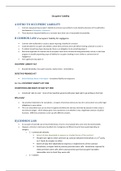
A INTRO TO OCCUPIERS’ LIABILITY
Common law governing occupier’s liability to entrance was settled in some detail by decisions of HL well before
the decision in Donoghue v Stevenson
Those decisions imposed liability on a narrower basis than one of reasonable foreseeability
B COMMON LAW of occupiers’ liability for negligence
Common law traditionally v cautious about imposing a liability for omission
Could be liable for occupier who failed to check their premises were safe before inviting someone to come in
If a defect should have been discovered, there is an obligation to do something about it
Restrictive approach of common law to occupiers came to be criticised as being excessively narrow, so has been
progress in steadily expanding scope of liability for occupiers (making it more similar to common law of
negligence)
First significant step taken in:
OCCUPIERS’ LIABILTIY ACT
Broadened liability of occupier towards a lawful visitor. Amended by:
DEFECTIVE PREMISES ACT
British Railways Board v Herrington – broadened liability to trespassers
But then OCCUPIERS’ LIABILITY ACT 1984
COUNTRYSIDE AND RIGHTS OF WAY ACT 2000
Introduced ‘right to roam’. Areas of land specified, general public given legal right to go walking on that land
Why study?
Has practical implications for everybody – occupiers of premises where you live, & to some extent are under legal
obligations to your visitors
This is an area where you can see that in England and Wales the law was reformed by statute (in other areas it
was done by judges – which always gives rise to questions as to whether it was a legitimate exercise of judicial
function). Different jurisdictions come up with different answers.
B)COMMON LAW
An occupier of land did owe at least limited duty of care to most people who came onto that land lawfully
However, entrants to land were classified into 4 categories, & different level of duty owed depending on
category
o 1 – contractual entrants
Extent of duty depended on express or implied terms of the contract
People have right to enter premises by contract between themselves or a 3rd party
on 1 hand, & occupier on other
Extent of duty here depended on express or implied terms of the contract
Sometimes, occupier held to promise premises were safe. Sometimes required to
check premises were safe, other cases promise just that occupier had taken
reasonable care to check they were safe
o 2 – invitees
A INTRO TO OCCUPIERS’ LIABILITY
Common law governing occupier’s liability to entrance was settled in some detail by decisions of HL well before
the decision in Donoghue v Stevenson
Those decisions imposed liability on a narrower basis than one of reasonable foreseeability
B COMMON LAW of occupiers’ liability for negligence
Common law traditionally v cautious about imposing a liability for omission
Could be liable for occupier who failed to check their premises were safe before inviting someone to come in
If a defect should have been discovered, there is an obligation to do something about it
Restrictive approach of common law to occupiers came to be criticised as being excessively narrow, so has been
progress in steadily expanding scope of liability for occupiers (making it more similar to common law of
negligence)
First significant step taken in:
OCCUPIERS’ LIABILTIY ACT
Broadened liability of occupier towards a lawful visitor. Amended by:
DEFECTIVE PREMISES ACT
British Railways Board v Herrington – broadened liability to trespassers
But then OCCUPIERS’ LIABILITY ACT 1984
COUNTRYSIDE AND RIGHTS OF WAY ACT 2000
Introduced ‘right to roam’. Areas of land specified, general public given legal right to go walking on that land
Why study?
Has practical implications for everybody – occupiers of premises where you live, & to some extent are under legal
obligations to your visitors
This is an area where you can see that in England and Wales the law was reformed by statute (in other areas it
was done by judges – which always gives rise to questions as to whether it was a legitimate exercise of judicial
function). Different jurisdictions come up with different answers.
B)COMMON LAW
An occupier of land did owe at least limited duty of care to most people who came onto that land lawfully
However, entrants to land were classified into 4 categories, & different level of duty owed depending on
category
o 1 – contractual entrants
Extent of duty depended on express or implied terms of the contract
People have right to enter premises by contract between themselves or a 3rd party
on 1 hand, & occupier on other
Extent of duty here depended on express or implied terms of the contract
Sometimes, occupier held to promise premises were safe. Sometimes required to
check premises were safe, other cases promise just that occupier had taken
reasonable care to check they were safe
o 2 – invitees