CAUSATION
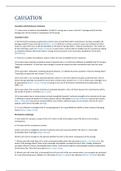
Causation and Remoteness: Summary
1. C must prove on balance of probabilities (1) that D’s wrong was a cause in fact of C’s damage and (2) that the
damage was not too remote a consequence of the wrong.
Causation in fact
2. Normal test for proving causation fact is but-for test: ie proof that had D’s act/omission not been wrongful, the
damage wouldn’t have occurred (McWilliams v Arrol). Where D’s wrong is a but-for cause, but combines w/ other
factors to cause the harm, D will be held liable on the basis of having made a “material contribution”; this need not
be the sole/major cause (Bonnington Castings). In some cases C may be able to establish but-for causation by relying
on statistical evidence that shows that D’s wrong more (in practice much more) than doubled the risk of harm
(Sienkiewicz).
3. There are a number of exceptions, where C does not have to establish but-for causation:
(1) In some cases involving cumulative causes of physical harm, it is said to be sufficient to establish that D’s wrong a
“material contribution” to that harm even though it cannot be shown that that contribution was a but-for cause
(John).
(2) In cases with 1 defendant, involving industrial diseases, C is allowed to prove causation-in-fact by showing that D
“materially increased the risk of harm” (McGhee).
(3) In cases with >1 D, involving industrial diseases, where it is not clear which D actually caused the harm, each D
whose wrong materially increased the risk of harm is held to have caused it (Fairchild). In these cases, damages must
be apportioned (Barker v Corus; Heneghan) except in the case of the disease mesothelioma (Compensation Act
2006, s.3).
(4) In cases where 2 Ds at same moment act carelessly towards C, only 1 of them injures C & C cannot prove which,
the burden of proof is reversed (Cook v Lewis).
(5) In cases where two or more persons act each wrongfully towards C and each wrongful act or omission on its own
is sufficient to cause the whole of D’s harm, both (or all) are held liable (Greenwich Millennium (concurrent causes)
Baker v Willoughby (successive causes)). (Where one of these sufficient causes in non-tortious, the but-for test is
applied, and D will not be liable (Jobling).
4. It is not sufficient to establish that D’s wrong deprived C of a quantifiable but 50/50 or lesser chance of avoiding
harm (Hotson; Gregg v Scott).
Remoteness of damage
5. Even where D’s wrong is a cause in fact of C’s harm, D will not be liable in law if the harm is too remote a
consequence.
6. The basic test for remoteness is either:
(a) (for such torts as negligence, breach of statutory duty and nuisance) whether the harm is a reasonably
foreseeable kind of damage (Wagon Mound)
(b) (for such torts as trespass to the person) whether the harm is the direct consequence of the wrong).
7. Where cases fall under 6(a), risk is to be construed broadly rather than narrowly (Hughes v Lord Advocate). The
extent of the damage doesn’t have to be reasonably foreseeable, provided the kind is (the “shabby millionaire”
principle). Where D causes a foreseeable kind of harm, D will remain liable for unforeseeable medical complications
of that harm (the “thin skull” principle) (Smith v Leech, Brain).
8. Where cases fall under 6(a), a foreseeable kind of harm will still be too remote where it can properly be attributed
to a new intervening cause, whether of a third party (Wright v Lodge) or the claimant (McKew v Holland). Normally
Causation and Remoteness: Summary
1. C must prove on balance of probabilities (1) that D’s wrong was a cause in fact of C’s damage and (2) that the
damage was not too remote a consequence of the wrong.
Causation in fact
2. Normal test for proving causation fact is but-for test: ie proof that had D’s act/omission not been wrongful, the
damage wouldn’t have occurred (McWilliams v Arrol). Where D’s wrong is a but-for cause, but combines w/ other
factors to cause the harm, D will be held liable on the basis of having made a “material contribution”; this need not
be the sole/major cause (Bonnington Castings). In some cases C may be able to establish but-for causation by relying
on statistical evidence that shows that D’s wrong more (in practice much more) than doubled the risk of harm
(Sienkiewicz).
3. There are a number of exceptions, where C does not have to establish but-for causation:
(1) In some cases involving cumulative causes of physical harm, it is said to be sufficient to establish that D’s wrong a
“material contribution” to that harm even though it cannot be shown that that contribution was a but-for cause
(John).
(2) In cases with 1 defendant, involving industrial diseases, C is allowed to prove causation-in-fact by showing that D
“materially increased the risk of harm” (McGhee).
(3) In cases with >1 D, involving industrial diseases, where it is not clear which D actually caused the harm, each D
whose wrong materially increased the risk of harm is held to have caused it (Fairchild). In these cases, damages must
be apportioned (Barker v Corus; Heneghan) except in the case of the disease mesothelioma (Compensation Act
2006, s.3).
(4) In cases where 2 Ds at same moment act carelessly towards C, only 1 of them injures C & C cannot prove which,
the burden of proof is reversed (Cook v Lewis).
(5) In cases where two or more persons act each wrongfully towards C and each wrongful act or omission on its own
is sufficient to cause the whole of D’s harm, both (or all) are held liable (Greenwich Millennium (concurrent causes)
Baker v Willoughby (successive causes)). (Where one of these sufficient causes in non-tortious, the but-for test is
applied, and D will not be liable (Jobling).
4. It is not sufficient to establish that D’s wrong deprived C of a quantifiable but 50/50 or lesser chance of avoiding
harm (Hotson; Gregg v Scott).
Remoteness of damage
5. Even where D’s wrong is a cause in fact of C’s harm, D will not be liable in law if the harm is too remote a
consequence.
6. The basic test for remoteness is either:
(a) (for such torts as negligence, breach of statutory duty and nuisance) whether the harm is a reasonably
foreseeable kind of damage (Wagon Mound)
(b) (for such torts as trespass to the person) whether the harm is the direct consequence of the wrong).
7. Where cases fall under 6(a), risk is to be construed broadly rather than narrowly (Hughes v Lord Advocate). The
extent of the damage doesn’t have to be reasonably foreseeable, provided the kind is (the “shabby millionaire”
principle). Where D causes a foreseeable kind of harm, D will remain liable for unforeseeable medical complications
of that harm (the “thin skull” principle) (Smith v Leech, Brain).
8. Where cases fall under 6(a), a foreseeable kind of harm will still be too remote where it can properly be attributed
to a new intervening cause, whether of a third party (Wright v Lodge) or the claimant (McKew v Holland). Normally