Unit 2 – Working in the Science Industry NOTES
BTEC Level 3 Applied Science - Unit 2 Working in the Science Industry
Specification:
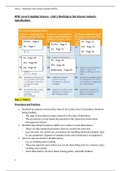
P1/M1 – Page 2 P3 – Page 13
P2/M2 – Page 9
D1 – Page 7 M3 – Page 15
D1 – Page 11
D3 – Page 16
P4 – Page 18
P5 – Page 23
M4 – Page 20
M5 – Page 26
D4 – Page 22
References – Page 29
Pass 1 / Merit 1
Procedures and Practices
Standard procedures and practces have to be in place due to hazardous chemicals
being handled.
- The type of procedures in place depend on the type of laboratory
- The procedures can be found documented in the Laboratory Informaton
Management System
Standard Operatng Procedures (SOPs) are in place in most laboratories.
- These are documented procedures that are carried out every day
- E.g. how tests are carried out, procedures for handling chemicals/samples, how
to use equipment, disposal of samples/waste and maintenance of equipment
General rules are found in all laboratories.
- E.g. no smoking and no eatng
- There are separate areas where you can do these thing such as a canteen and a
smoking area outside
- Some laboratories are strict about having guests, especially children
1
, Unit 2 – Working in the Science Industry NOTES
Handling of Materials
Hazardous substances and chemicals are ofen handled and examined all the tme in
the laboratory
- Some laboratories will require that the samples or chemicals are approved by a
scientic/biological commitee before the testng or examinatons begin.
- When the material or substances have been approved, the laboratory can have
speciic procedures or regulatons about how the technicians handle them.
- This can include speciic safety equipment or speciic transportaton procedures
when moving around the laboratory.
Store Management
All laboratories have a store for their chemicals and equipment.
- This must be under strict control, with a senior technician or laboratory
management being responsible for the store and managing the budget.
Orders may be placed automatcally or as and when required.
- The order may need to be authorised by the inance department who will
provide a code to be used when placing the order.
Stock rotaton is carried out by technicians to ensure that old stock is used up and
not lef to become dangerous.
- Stock must be stored correctly and safely, taking into account any special
requirements and some stock requires a license.
Storage - COSHH
Flammable materials in large quanttes must be stored in a special store.
- Built with brick, usually away from the main building with a roof that can detach
in case of an explosion so that walls are not blown out.
Flammable materials in smaller quanttes must be stored in a metal fammables
cabinet.
Drugs and poisons must be stored in a locked cupboard.
Dry chemicals must be stored in a cool, dry place.
Biological materials must be stored where they can be kept alive
- This could involve keeping it in a warm or cold environment, or in the light or
dark.
Radioactve materials must be stored in a metal cupboard away from fammable
materials.
Removal from the cupboard and details of use should be kept recorded in a log book.
2
BTEC Level 3 Applied Science - Unit 2 Working in the Science Industry
Specification:
P1/M1 – Page 2 P3 – Page 13
P2/M2 – Page 9
D1 – Page 7 M3 – Page 15
D1 – Page 11
D3 – Page 16
P4 – Page 18
P5 – Page 23
M4 – Page 20
M5 – Page 26
D4 – Page 22
References – Page 29
Pass 1 / Merit 1
Procedures and Practices
Standard procedures and practces have to be in place due to hazardous chemicals
being handled.
- The type of procedures in place depend on the type of laboratory
- The procedures can be found documented in the Laboratory Informaton
Management System
Standard Operatng Procedures (SOPs) are in place in most laboratories.
- These are documented procedures that are carried out every day
- E.g. how tests are carried out, procedures for handling chemicals/samples, how
to use equipment, disposal of samples/waste and maintenance of equipment
General rules are found in all laboratories.
- E.g. no smoking and no eatng
- There are separate areas where you can do these thing such as a canteen and a
smoking area outside
- Some laboratories are strict about having guests, especially children
1
, Unit 2 – Working in the Science Industry NOTES
Handling of Materials
Hazardous substances and chemicals are ofen handled and examined all the tme in
the laboratory
- Some laboratories will require that the samples or chemicals are approved by a
scientic/biological commitee before the testng or examinatons begin.
- When the material or substances have been approved, the laboratory can have
speciic procedures or regulatons about how the technicians handle them.
- This can include speciic safety equipment or speciic transportaton procedures
when moving around the laboratory.
Store Management
All laboratories have a store for their chemicals and equipment.
- This must be under strict control, with a senior technician or laboratory
management being responsible for the store and managing the budget.
Orders may be placed automatcally or as and when required.
- The order may need to be authorised by the inance department who will
provide a code to be used when placing the order.
Stock rotaton is carried out by technicians to ensure that old stock is used up and
not lef to become dangerous.
- Stock must be stored correctly and safely, taking into account any special
requirements and some stock requires a license.
Storage - COSHH
Flammable materials in large quanttes must be stored in a special store.
- Built with brick, usually away from the main building with a roof that can detach
in case of an explosion so that walls are not blown out.
Flammable materials in smaller quanttes must be stored in a metal fammables
cabinet.
Drugs and poisons must be stored in a locked cupboard.
Dry chemicals must be stored in a cool, dry place.
Biological materials must be stored where they can be kept alive
- This could involve keeping it in a warm or cold environment, or in the light or
dark.
Radioactve materials must be stored in a metal cupboard away from fammable
materials.
Removal from the cupboard and details of use should be kept recorded in a log book.
2