Exam 3 Med Surg Galen Questions and Answers with complete solution
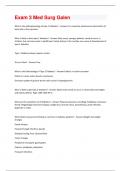
What is the pathophysiology of type 1 Diabetes? - Answer-It is caused by autoimmune destruction of beta cells in the pancreas. Who is likely to have type 1 diabetes? - Answer-Early onset, younger patients, tends to occur in children, but can have onset in adulthood. Family History is the number one cause of development of type 1 diabetes. Type 1 diabetes always requires insulin. True or False? - Answer-True What is the Pathosiology of Type 2 Diabetes? - Answer-Deficits in insulin secretion Deficit in insulin action (insulin resistance). Decrease uptake of glucose by the cells results in hyperglycemia. Who is likely to get Type 2 Diabetes? - Answer-Adult onset, tends to occur in chronically overweight and obese patients. Page 1286 Table 64-5. What are the symptoms of of Diabetes? - Answer-Polyuria (excessive urinating), Polydipsia ( excessive thirst), Polgyphagia (excessive hunger), weight loss, blurred vision, paresthesias, yeast infection, (balanitis in male) What History Assessment finding is common in diabetes patients? - Answer-Weight and weight changes Family History: Frequent fungal infections (yeast) Delayed healing: Poor LE blood flow Vision changes Peripheral neuropath, gastropathy Polyuria, polydipsia, polyphasic Frequent infectionsAge/Race: Type 2 higher prevalence among minorities >40 What Physical Assessment finding would you see in Diabetes patients? - Answer-Acanthosis Nigricans Yeast infections, pneumonia, ear infection, UTIs, dental infections Decreased sensation Type 1: may present with DKA Type 2: Obesity and hypertension, may present with HHS (rare) What are the signs and symptoms of Severe Hyperglycemia? - Answer-Elevated serum ketones (breaking down of fat) Hypovolemia (excessive urinating) Metabolic Acidosis Kussmaul Respiration (Deep rapid breathing) Fruity Breath (because of ketones) Electrolyte imbalance (they are at risk for hyponatermia and hyperkalemia) How is Diabetes Diagnosed? - Answer-Blood test: Fasting Plasma glucose >/= 126 Random Blood Glucose >200 Glycosylated Hemoglobin A1C >/= 6.5% (normal <6%) (5.8%-6.4% is prediabetic) 75 gram two hour glucose tolerance test with plasma glucose >200 (gestational diabetes) Results should be confirmed with repeat testing. Must be positive in at least 2 test. Glucometer Steps for BG monitoring - Answer-1. Assemble equipment: BG monitor, testing strips, lancet, gauze 2. Ensure that hands are clean before testing. Wash hands and make sure they are throughly dry. 3. Load NEW lancet 4. Prick finger at side 5. Squeeze finger 6. Touch tip against drop of blood 7. clean finger, remove test strip8. dispose of lancet in SHARPS
Written for
- Institution
- Med Surg Galen
- Module
- Med Surg Galen
Document information
- Uploaded on
- February 6, 2024
- Number of pages
- 27
- Written in
- 2023/2024
- Type
- Exam (elaborations)
- Contains
- Questions & answers
Subjects
-
med surg galen

Also available in package deal