

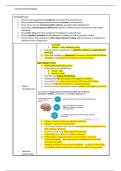
Cornell notes template
eff
Schizophrenia:
§ Describe and categorize the symptoms associated with schizophrenia
§ Discuss potential biological and environmental causes of schizophrenia
Introduction
§ Knowand about relevant neurotransmitter systems associated with schizophrenia
symptoms In individualsdifferences
§ Know about neuroanatomical with schizophrenia
between –individuals
abnormal with
cellular structures in
schizophrenia hippocampus
and healthy
individuals and prefrontal cortex can be observed.
§• Know
Historical
brain areas that show functional modulations in schizophrenia
background
§ Discuss Emil Kraepelin
cognitive symptoms (1898): - assumed
in schizophrenia, the the
including cause
roleofofschizophrenia is biological and
proactive control
genetic mechanisms.
§ Discuss factors that contribute to effort-based decision-making and how these are modulated in
§ Described symptoms of patients as ‘dementia praecox’:
individuals with schizophrenia
§ dementia = global disruption of perceptual and cognitive
r
processes
§ praecox = early adulthood onset
§ Main symptoms: impairments in attention, memory and goal-directed
behaviour
§ Described condition as progressive, no return to premorbid functioning
§ Disruption of perception and cognitive processes going on
Eugen Bleuler (1911):
§ Reformulated dementia praecox
§ Coined the term schizophrenia:
§ schizo = split
§ phrene = mind
§ Characterised fragmented thinking
§ Distinguished between positive and negative symptoms
§ He used the term split mind in the idea of fragmented thinking
§ Only in the cognitive symptoms of organized thinking
• What is § The first person to distinguish between positive and negative symptoms
schizophrenia?
§ Positive= symptoms that are added to behaviour
§ Negative = lack of certain behaviors
§ Can be some patients that can have strong positive symptoms but very
little negative symptoms
§ Or patients that have strong cognitive symptoms
§ Overactivity in the brain that leads to delusions
§ Hallucinations- false perceptions, can be auditory and visual
§ Disorderly thinking – disconnected and disorganized and possibly
incoherent thoughts
§ Negative symptoms cause emotion problems – lacking I certain things
e.g. lacking emotional expression and lack of experiencing pleasure
• Summary:
positive (type
, Cornell notes template
1) symptoms § Delusions: false belief despite evidence to contrary, distorting reality
(e.g. patient beliefs someone is plotting against them), but also:
§ Thought insertion
§ Thought withdrawal
§ Thought broadcasting
§ Not being in control of own actions
§ Hallucinations: perceptual experience seems real in the absence of
physical proof; most common: auditory, visual, olfactory (e.g. seeing a
person or an animal that is not real)
§ Disorganized behaviour (e.g. can affect speech, difficulties with routine
tasks, inappropriate emotions)
§ Delusions – the feeling of not being in control of your own actions, the
feeling of being controlled by someone or something else
§ Fletcher and Frith, 2009
• Summary:
negative (type
2) symtpoms Recent suggestion: 2 subdomains of negative symptoms (Lim et al.):
Diminished emotional expression
§ Affect: blunted affect, mood or emotional state, limited range of
emotions
§ Alogia: poverty of speech, lack of conversation
Avolition
§ Apathy (lack of motivation)
§ Social withdrawal
§ Anhedonia: inability to feel pleasure
• Summary
cognitive
deficits § Substantial impairment in overall cognitive performance (most
individuals)
§ Can be variable (either selective or general)
§ Most common deficits in:
§ Executive functions/cognitive control (incl. verbal fluency and
eff
Schizophrenia:
§ Describe and categorize the symptoms associated with schizophrenia
§ Discuss potential biological and environmental causes of schizophrenia
Introduction
§ Knowand about relevant neurotransmitter systems associated with schizophrenia
symptoms In individualsdifferences
§ Know about neuroanatomical with schizophrenia
between –individuals
abnormal with
cellular structures in
schizophrenia hippocampus
and healthy
individuals and prefrontal cortex can be observed.
§• Know
Historical
brain areas that show functional modulations in schizophrenia
background
§ Discuss Emil Kraepelin
cognitive symptoms (1898): - assumed
in schizophrenia, the the
including cause
roleofofschizophrenia is biological and
proactive control
genetic mechanisms.
§ Discuss factors that contribute to effort-based decision-making and how these are modulated in
§ Described symptoms of patients as ‘dementia praecox’:
individuals with schizophrenia
§ dementia = global disruption of perceptual and cognitive
r
processes
§ praecox = early adulthood onset
§ Main symptoms: impairments in attention, memory and goal-directed
behaviour
§ Described condition as progressive, no return to premorbid functioning
§ Disruption of perception and cognitive processes going on
Eugen Bleuler (1911):
§ Reformulated dementia praecox
§ Coined the term schizophrenia:
§ schizo = split
§ phrene = mind
§ Characterised fragmented thinking
§ Distinguished between positive and negative symptoms
§ He used the term split mind in the idea of fragmented thinking
§ Only in the cognitive symptoms of organized thinking
• What is § The first person to distinguish between positive and negative symptoms
schizophrenia?
§ Positive= symptoms that are added to behaviour
§ Negative = lack of certain behaviors
§ Can be some patients that can have strong positive symptoms but very
little negative symptoms
§ Or patients that have strong cognitive symptoms
§ Overactivity in the brain that leads to delusions
§ Hallucinations- false perceptions, can be auditory and visual
§ Disorderly thinking – disconnected and disorganized and possibly
incoherent thoughts
§ Negative symptoms cause emotion problems – lacking I certain things
e.g. lacking emotional expression and lack of experiencing pleasure
• Summary:
positive (type
, Cornell notes template
1) symptoms § Delusions: false belief despite evidence to contrary, distorting reality
(e.g. patient beliefs someone is plotting against them), but also:
§ Thought insertion
§ Thought withdrawal
§ Thought broadcasting
§ Not being in control of own actions
§ Hallucinations: perceptual experience seems real in the absence of
physical proof; most common: auditory, visual, olfactory (e.g. seeing a
person or an animal that is not real)
§ Disorganized behaviour (e.g. can affect speech, difficulties with routine
tasks, inappropriate emotions)
§ Delusions – the feeling of not being in control of your own actions, the
feeling of being controlled by someone or something else
§ Fletcher and Frith, 2009
• Summary:
negative (type
2) symtpoms Recent suggestion: 2 subdomains of negative symptoms (Lim et al.):
Diminished emotional expression
§ Affect: blunted affect, mood or emotional state, limited range of
emotions
§ Alogia: poverty of speech, lack of conversation
Avolition
§ Apathy (lack of motivation)
§ Social withdrawal
§ Anhedonia: inability to feel pleasure
• Summary
cognitive
deficits § Substantial impairment in overall cognitive performance (most
individuals)
§ Can be variable (either selective or general)
§ Most common deficits in:
§ Executive functions/cognitive control (incl. verbal fluency and


