Membranes and membrane transport
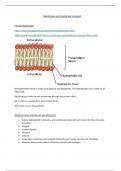
Phospholipid bilayer
https://www.biologyforlife.com/membranesandtransport.html
https://quizlet.com/852395733/b21-membranes-and-membrane-transport-flash-cards/
Hydrophophillic head is made up of glycerol and phosphate. The hydrophobic tail is made up of
fatty acids.
Big things go inside the cell membrane through the protein shell.
B2.1.1-B2.1.4 ( except B2.1.3) on PowerPoints.
B2.1.9-B2.1.13 on PowerPoints
What can move into the cell and what can’t
• Gases, hydrophobic molecules, and small polar molecules can move into the cell easily.
Examples:
• Oxygen
• Carbon dioxide
• Benzene
• Ethanol
• Large polar molecules and charged molecules can’t move into the cell. Examples:
• Glucose, amino acids Sodium, chlorine, calcium and hydrogen.
, • Why can hydrophobic molevueles move through but not hydrophilic: Molecules that are
hydrophobic can easily pass through the cell membrane, if they are small enough, because
they are water-hating like the interior of the membrane. Small lipids and steroids are
hydrophobic and can readily cross the membrane. They won’t dissolve in the membrane.
What the membrane is made of: Cholesterol
• It’s inside the membrane and only animal cells can have cholesterol.
• It’s a type of steroid (lipid).
• Higher temps- stiffens membrane.
• Lower temps- prevents membrane from freezing.
• Cholesterol is also a key determinant of membrane fluidity: at high temperatures,
cholesterol acts to stabilize the cell membrane and increase its melting point; while at low
temperatures, it inserts into phospholipids and prevents them from interfering with each
other.
What the membrane is made of: Recognition Proteins
• These proteins have carbohydrate chains attached.
• Carbohydrate chains aid in cell identification. Examples are red blood cells and white blood
cells which identify viruses as foreign.
What the membrane is made of: Receptor Proteins
• These proteins receive chemical signals from other cells such as nervous system cells.
• Exam question: They can show us a pic of either a recognition or receptor protein and ask us
the function.
Phospholipid bilayer
https://www.biologyforlife.com/membranesandtransport.html
https://quizlet.com/852395733/b21-membranes-and-membrane-transport-flash-cards/
Hydrophophillic head is made up of glycerol and phosphate. The hydrophobic tail is made up of
fatty acids.
Big things go inside the cell membrane through the protein shell.
B2.1.1-B2.1.4 ( except B2.1.3) on PowerPoints.
B2.1.9-B2.1.13 on PowerPoints
What can move into the cell and what can’t
• Gases, hydrophobic molecules, and small polar molecules can move into the cell easily.
Examples:
• Oxygen
• Carbon dioxide
• Benzene
• Ethanol
• Large polar molecules and charged molecules can’t move into the cell. Examples:
• Glucose, amino acids Sodium, chlorine, calcium and hydrogen.
, • Why can hydrophobic molevueles move through but not hydrophilic: Molecules that are
hydrophobic can easily pass through the cell membrane, if they are small enough, because
they are water-hating like the interior of the membrane. Small lipids and steroids are
hydrophobic and can readily cross the membrane. They won’t dissolve in the membrane.
What the membrane is made of: Cholesterol
• It’s inside the membrane and only animal cells can have cholesterol.
• It’s a type of steroid (lipid).
• Higher temps- stiffens membrane.
• Lower temps- prevents membrane from freezing.
• Cholesterol is also a key determinant of membrane fluidity: at high temperatures,
cholesterol acts to stabilize the cell membrane and increase its melting point; while at low
temperatures, it inserts into phospholipids and prevents them from interfering with each
other.
What the membrane is made of: Recognition Proteins
• These proteins have carbohydrate chains attached.
• Carbohydrate chains aid in cell identification. Examples are red blood cells and white blood
cells which identify viruses as foreign.
What the membrane is made of: Receptor Proteins
• These proteins receive chemical signals from other cells such as nervous system cells.
• Exam question: They can show us a pic of either a recognition or receptor protein and ask us
the function.