Proteins ib biology introduction
Amino acids
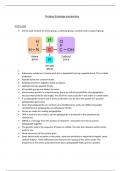
• Amino acids contain an amino group, a carboxyl group, a carbon and a unique R group.
•
• Ribosomes condenses 2 amino acids into a dipeptide forming a peptide bond. This is called
anabolism.
• Peptide bonds are covalent bonds.
• Building monomers together builds a polymer.
• Hydrolysis breaks peptide bonds.
• All variable groups are always the same.
• Almost every protein is unique because there are infinite possibilities of polypeptides,
because they could be any length, the 20 amino acids could be in any order or combination.
• If a polypeptide contains just 7 amino acids there can be 20 to the power of 7 possible
polypeptides generated.
• Given that polypeptides can contain up to 30,000 amino acids, the different possible
combinations of polypeptides are effectively infinite.
• Genes are codes for making polypeptides.
• DNA is stored in the nucleus, yet the polypeptide is produced in the cytoplasm (by
ribosomes).
• MRNA is a message from the nucleus to ribosome- instruction for how to put the
polypeptide together.
• The genetic code is the sequence of bases on mRNA- this tells the ribosome which amino
acids to use.
• Mrna moves out of the nuclear pore.
• Some amino acids are polar or non polar, some are positively or negatively charged, some
contain Sulphur. These differences are found in the r group of the amino acids. The
properties of the amino acids determine how a polypeptide folds up into a protein.
, •
Polypeptide primary structure
https://ib.bioninja.com.au/higher-level/topic-7-nucleic-acids/73-translation/protein-structure.html
• The order/sequence of the amino acids of which the protein is composed.
• Formed by covalent peptide bonds between adjacent amino acids.
• Controls all subsequent levels of structure.
• It looks like beads on a string.
•
Polypeptide secondary structure
• The chains of amino acids fold or turn upon themselves.
• Difference between secondary and primary structure: Held together by hydrogen bonds
between anime and carboxylic groups. Hydrogen bonds themselves are weak but when
there are many together it can be strong.
Amino acids
• Amino acids contain an amino group, a carboxyl group, a carbon and a unique R group.
•
• Ribosomes condenses 2 amino acids into a dipeptide forming a peptide bond. This is called
anabolism.
• Peptide bonds are covalent bonds.
• Building monomers together builds a polymer.
• Hydrolysis breaks peptide bonds.
• All variable groups are always the same.
• Almost every protein is unique because there are infinite possibilities of polypeptides,
because they could be any length, the 20 amino acids could be in any order or combination.
• If a polypeptide contains just 7 amino acids there can be 20 to the power of 7 possible
polypeptides generated.
• Given that polypeptides can contain up to 30,000 amino acids, the different possible
combinations of polypeptides are effectively infinite.
• Genes are codes for making polypeptides.
• DNA is stored in the nucleus, yet the polypeptide is produced in the cytoplasm (by
ribosomes).
• MRNA is a message from the nucleus to ribosome- instruction for how to put the
polypeptide together.
• The genetic code is the sequence of bases on mRNA- this tells the ribosome which amino
acids to use.
• Mrna moves out of the nuclear pore.
• Some amino acids are polar or non polar, some are positively or negatively charged, some
contain Sulphur. These differences are found in the r group of the amino acids. The
properties of the amino acids determine how a polypeptide folds up into a protein.
, •
Polypeptide primary structure
https://ib.bioninja.com.au/higher-level/topic-7-nucleic-acids/73-translation/protein-structure.html
• The order/sequence of the amino acids of which the protein is composed.
• Formed by covalent peptide bonds between adjacent amino acids.
• Controls all subsequent levels of structure.
• It looks like beads on a string.
•
Polypeptide secondary structure
• The chains of amino acids fold or turn upon themselves.
• Difference between secondary and primary structure: Held together by hydrogen bonds
between anime and carboxylic groups. Hydrogen bonds themselves are weak but when
there are many together it can be strong.