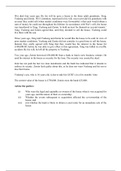
Wei died four years ago. By his will he gave a house to his three adult grandsons, Xing,
Yusheng and Zemin. Wei’s intention, expressed in his will, was to provide his grandsons with
an asset they could sell (when market conditions were favourable) o that each would obtain a
sum of money he could use throughout his lifetime. In accordance with Wei’s will, the house
was transferred to Xing, Yusheng and Zemin ‘to hold on trust for themselves as joint tenants.’
Xing, Yusheng and Zemin agreed that, until they decided to sell the house, Yusheng could
live there with his son.
Three years ago, Xing told Yusheng and Zemin he would like the house to be sold. In view of
poor market conditions, Yusheng and Zemin did not consider it a good time to sell the house.
Instead, they orally agreed with Xing that they would buy his interest in the house for
£100,000.00. before he was able to give effect to this agreement, Xing was killed in a traffic
accident. By his will, he left all his property to Yusheng.
Two year ago, Zemin borrowed £50,000.00 from a bank to fund a new business venture. He
used his interest in the house as security for the loan. The security was created by deed.
Zein has not paid the last two loan instalments and the bank has indicated that it intends to
enforce its secutiy. Zemin feels guilty about this, as he does not want Yusheng and his son to
lose their home.
Yusheng’s son, who is 16 years old, is due to take his GCSE’s in a few months’ time.
The current value of the house is £750,000. Zemin owes the bank £25,000.
Advise the parties:
(i) Who were the legal and equitable co-owners of the house when it was acquired for
years ago, and the nature of their co-ownership;
(ii) Whether the events subsequent to acquisition affected the co-ownership of the
house; and
(iii) (iii) whether the bank is likely to obtain a court order for an immediate sale of the
house.
Yusheng and Zemin. Wei’s intention, expressed in his will, was to provide his grandsons with
an asset they could sell (when market conditions were favourable) o that each would obtain a
sum of money he could use throughout his lifetime. In accordance with Wei’s will, the house
was transferred to Xing, Yusheng and Zemin ‘to hold on trust for themselves as joint tenants.’
Xing, Yusheng and Zemin agreed that, until they decided to sell the house, Yusheng could
live there with his son.
Three years ago, Xing told Yusheng and Zemin he would like the house to be sold. In view of
poor market conditions, Yusheng and Zemin did not consider it a good time to sell the house.
Instead, they orally agreed with Xing that they would buy his interest in the house for
£100,000.00. before he was able to give effect to this agreement, Xing was killed in a traffic
accident. By his will, he left all his property to Yusheng.
Two year ago, Zemin borrowed £50,000.00 from a bank to fund a new business venture. He
used his interest in the house as security for the loan. The security was created by deed.
Zein has not paid the last two loan instalments and the bank has indicated that it intends to
enforce its secutiy. Zemin feels guilty about this, as he does not want Yusheng and his son to
lose their home.
Yusheng’s son, who is 16 years old, is due to take his GCSE’s in a few months’ time.
The current value of the house is £750,000. Zemin owes the bank £25,000.
Advise the parties:
(i) Who were the legal and equitable co-owners of the house when it was acquired for
years ago, and the nature of their co-ownership;
(ii) Whether the events subsequent to acquisition affected the co-ownership of the
house; and
(iii) (iii) whether the bank is likely to obtain a court order for an immediate sale of the
house.