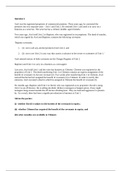
Question 4
Axel was the registered proprietor of commercial premises. Three years ago, he converted the
premises into two separate units – Unit 1 and Unit 2. He retained Unit 1 and used it to carry on a
business as a wine bar. The wine bar has a refined, middle- aged clientele.
Two years ago, Axel sold Unit 2 to Baptiste, who was registered as its proprietor. The deed of transfer,
which was signed by Axel and Baptiste, contains the following covenants:
‘Baptiste covenants:
1. (1) not to sell any alcohol products from Unit 2; and
2. (2) not to use Unit 2 in any way that causes a nuisance to the owner or customers of Unit 1.’
Axel entered notices of both covenants on the Charges Register of Unit 2.
Baptiste used Unit 2 to carry on a business as a newsagent.
Last year, Axel sold Unit 1 and the wine bar business to Clement. Clement was registered as the
proprietor of Unit 1. The deed transferring Unit 1 to Clement contains an express assignment of the
benefit of covenant (1), but not covenant (2). Two weeks after transferring Unit 1 to Clement, Axel
noticed that he had not assigned the benefit of covenant (2) to Clement. In order to rectify this
omission, Axel executed a deed in which he assigned to Clement the benefit of covenant (2).
Six months ago, Baptiste sold Unit 2 to David, who was registered as its proprietor. David is using
Unit 2 as an off-licence. He is selling alcoholic drinks to teenagers at bargain prices. Every night
teenagers hang around outside the off-licence drinking beer. They are loud and aggressive to passers-
by. As a result, there has been a significant reduction in business at Unit 1.
Advise the parties:
(i) whether David is subject to the burden of the covenants in equity;
(ii) whether Clément has acquired the benefit of the covenants in equity; and
(iii) what remedies are available to Clément.
Axel was the registered proprietor of commercial premises. Three years ago, he converted the
premises into two separate units – Unit 1 and Unit 2. He retained Unit 1 and used it to carry on a
business as a wine bar. The wine bar has a refined, middle- aged clientele.
Two years ago, Axel sold Unit 2 to Baptiste, who was registered as its proprietor. The deed of transfer,
which was signed by Axel and Baptiste, contains the following covenants:
‘Baptiste covenants:
1. (1) not to sell any alcohol products from Unit 2; and
2. (2) not to use Unit 2 in any way that causes a nuisance to the owner or customers of Unit 1.’
Axel entered notices of both covenants on the Charges Register of Unit 2.
Baptiste used Unit 2 to carry on a business as a newsagent.
Last year, Axel sold Unit 1 and the wine bar business to Clement. Clement was registered as the
proprietor of Unit 1. The deed transferring Unit 1 to Clement contains an express assignment of the
benefit of covenant (1), but not covenant (2). Two weeks after transferring Unit 1 to Clement, Axel
noticed that he had not assigned the benefit of covenant (2) to Clement. In order to rectify this
omission, Axel executed a deed in which he assigned to Clement the benefit of covenant (2).
Six months ago, Baptiste sold Unit 2 to David, who was registered as its proprietor. David is using
Unit 2 as an off-licence. He is selling alcoholic drinks to teenagers at bargain prices. Every night
teenagers hang around outside the off-licence drinking beer. They are loud and aggressive to passers-
by. As a result, there has been a significant reduction in business at Unit 1.
Advise the parties:
(i) whether David is subject to the burden of the covenants in equity;
(ii) whether Clément has acquired the benefit of the covenants in equity; and
(iii) what remedies are available to Clément.