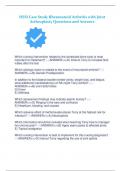
OB: Labor and Birth Complications NCLEX question n answers graded A+
OB: Labor and Birth Complications NCLEX In planning for home care of a woman with preterm labor, which concern must the nurse address? a. Nursing assessments will be different from those done in the hospital setting. b. Restricted activity and medications will be necessary to prevent recurrence of preterm labor. c. Prolonged bed rest may cause negative physiologic effects. d. Home health care providers will be necessary. - correct answer C Prolonged bed rest may cause adverse effects such as weight loss, loss of appetite, muscle wasting, weakness, bone demineralization, decreased cardiac output, risk for thrombophlebitis, alteration in bowel functions, sleep disturbance, and prolonged postpartum recovery. Nursing assessments will differ somewhat from those performed in the acute care setting, but this is not the concern that needs to be addressed. Restricted activity and medication may prevent preterm labor, but not in all women. In addition, the plan of care is individualized to meet the needs of each woman. Many women will receive home health nurse visits, but care is individualized for each woman. In evaluating the effectiveness of magnesium sulfate for the treatment of preterm labor, what finding would alert the nurse to possible side effects? a. Urine output of 160 mL in 4 hours b. Deep tendon reflexes 2+ and no clonus c. Respiratory rate of 16 breaths/min d. Serum magnesium level of 10 mg/dL - correct answer D The therapeutic range for magnesium sulfate management is 5 to 8 mg/dL. A serum magnesium level of 10 mg/dL could lead to signs and symptoms of magnesium toxicity, including oliguria and respiratory distress. Urine output of 160 mL in 4 hours, deep tendon reflexes 2+ with no clonus, and respiratory rate of 16 breaths/min are normal findings. A woman in preterm labor at 30 weeks of gestation receives two 12-mg doses of betamethasone intramuscularly. The purpose of this pharmacologic treatment is to: a. Stimulate fetal surfactant production. b. Reduce maternal and fetal tachycardia associated with ritodrine administration. c. Suppress uterine contractions. d. Maintain adequate maternal respiratory effort and ventilation during magnesium sulfate therapy. - correct answer A Antenatal glucocorticoids given as intramuscular injections to the mother accelerate fetal lung maturity. Inderal would be given to reduce the effects of ritodrine administration. Betamethasone has no effect on uterine contractions. Calcium gluconate would be given to reverse the respiratory depressive effects of magnesium sulfate therapy. A woman at 26 weeks of gestation is being assessed to determine whether she is experiencing preterm labor. What finding indicates that preterm labor is occurring? a. Estriol is not found in maternal saliva. b. Irregular, mild uterine contractions are occurring every 12 to 15 minutes. c. Fetal fibronectin is present in vaginal secretions. d. The cervix is effacing and dilated to 2 cm. - correct answer D Cervical changes such as shortened endocervical length, effacement, and dilation are predictors of imminent preterm labor. Changes in the cervix accompanied by regular contractions indicate labor at any gestation. Estriol is a form of estrogen produced by the fetus that is present in plasma at 9 weeks of gestation. Levels of salivary estriol have been shown to increase before preterm birth. Irregular, mild contractions that do not cause cervical change are not considered a threat. The presence of fetal fibronectin in vaginal secretions between 24 and 36 weeks of gestation could predict preterm labor, but it has only a 20% to 40% positive predictive value. Of more importance are other physiologic clues of preterm labor such as cervical changes. A primigravida at 40 weeks of gestation is having uterine contractions every 1.5 to 2 minutes and says that they are very painful. Her cervix is dilated 2 cm and has not changed in 3 hours. The woman is crying and wants an epidural. What is the likely status of this woman's labor? a. She is exhibiting hypotonic uterine dysfunction. b. She is experiencing a normal latent stage. c. She is exhibiting hypertonic uterine dysfunction. d. She is experiencing pelvic dystocia. - correct answer C Women who experience hypertonic uterine dysfunction, or primary dysfunctional labor, often are anxious first-time mothers who are having painful and frequent contractions that are ineffective at causing cervical dilation or effacement to progress. With hypotonic uterine dysfunction, the woman initially makes normal progress into the active stage of labor; then the contractions become weak and inefficient or stop altogether. The contraction pattern seen in this woman signifies hypertonic uterine
Written for
- Institution
- Complications of Pregnancy
- Module
- Complications of Pregnancy
Document information
- Uploaded on
- January 8, 2024
- Number of pages
- 14
- Written in
- 2023/2024
- Type
- Exam (elaborations)
- Contains
- Questions & answers
Subjects
-
ob labor and birth complications nclex

Also available in package deal