Economics Notes Theme 4 Nikhil Patel
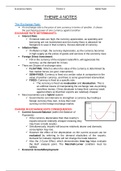
THEME 4 NOTES
The Exchange Rate:
An exchange rate is the price of one currency in terms of another. It shows
the purchasing power of one currency against another.
EXCHANGE RATE DETERMINANTS:
Interest Rate:
If interest rates are high, the currency appreciates, as spending and
borrowing are not incentivised and hot money flows is attractive for
foreigners to save in that currency. Excess demand of currency.
Inflation Rate:
If inflation is high, the currency depreciates, as the currency becomes
in high supply as the prices of goods and services in the economy rises
Foreign Direct Investment:
FDI in the currency of the recipient nation/firm, will appreciate the
currency, as the demand for it rises.
There are 3 types of exchange rates:
FLOATING: Which is when the value of the currency is determined by
free market forces (no govt. intervention)
SEMI-FIXED: Currency is fixed at a certain value in comparison to the
value of another currency, and there is some government intervention.
FIXED: Currency is fixed at a specific rate.
The currency is fixed via revaluation and devaluation. This is
an artificial means of manipulating the exchange rate via printing
more/less money. China devaluate to keep their currency weak
against others so that their exports are relatively cheaper.
Most economies use a hybrid system
Governments can intervene to strengthen a currency buy trading a
foreign currency they own, to buy their own
currency on the foreign exchange market.
CHANGE IN EXCHANGE RATE CONSEQUENCES:
Current Account Balance (within the Balance of
Payments):
If the currency depreciates then that country’s
exports become relatively cheaper meaning they
may have a trade surplus.
Simultaneously, imports will become relatively dearer and domestic
consumption may rise.
However the effect of the depreciation on the current account can be
evaluated by referring to the demand elasticities of the exports.
Demand for inelastic imports will not change the trade balance.
Also the J-Curve Effect, which demonstrates time lag helps evaluate
the BoP analysis point. The Marshall-Lerner condition must be
fulfilled.
Economic Growth/Employment:
THEME 4 NOTES
The Exchange Rate:
An exchange rate is the price of one currency in terms of another. It shows
the purchasing power of one currency against another.
EXCHANGE RATE DETERMINANTS:
Interest Rate:
If interest rates are high, the currency appreciates, as spending and
borrowing are not incentivised and hot money flows is attractive for
foreigners to save in that currency. Excess demand of currency.
Inflation Rate:
If inflation is high, the currency depreciates, as the currency becomes
in high supply as the prices of goods and services in the economy rises
Foreign Direct Investment:
FDI in the currency of the recipient nation/firm, will appreciate the
currency, as the demand for it rises.
There are 3 types of exchange rates:
FLOATING: Which is when the value of the currency is determined by
free market forces (no govt. intervention)
SEMI-FIXED: Currency is fixed at a certain value in comparison to the
value of another currency, and there is some government intervention.
FIXED: Currency is fixed at a specific rate.
The currency is fixed via revaluation and devaluation. This is
an artificial means of manipulating the exchange rate via printing
more/less money. China devaluate to keep their currency weak
against others so that their exports are relatively cheaper.
Most economies use a hybrid system
Governments can intervene to strengthen a currency buy trading a
foreign currency they own, to buy their own
currency on the foreign exchange market.
CHANGE IN EXCHANGE RATE CONSEQUENCES:
Current Account Balance (within the Balance of
Payments):
If the currency depreciates then that country’s
exports become relatively cheaper meaning they
may have a trade surplus.
Simultaneously, imports will become relatively dearer and domestic
consumption may rise.
However the effect of the depreciation on the current account can be
evaluated by referring to the demand elasticities of the exports.
Demand for inelastic imports will not change the trade balance.
Also the J-Curve Effect, which demonstrates time lag helps evaluate
the BoP analysis point. The Marshall-Lerner condition must be
fulfilled.
Economic Growth/Employment: