

Unit 8: Lymphatic System
Aim: Impact of lymphatic disorder and associated
treatments.
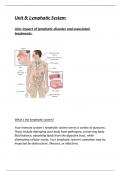
What’s the lymphatic system?
Your immune system's lymphatic system serves a variety of purposes.
These include defending your body from pathogens, preserving body
fluid balance, absorbing lipids from the digestive tract, while
eliminating cellular waste. Your lymphatic system's operation may be
impacted by obstructions, illnesses, or infections.
, A infrastructure of tissues, veins, including organs known as the
lymphatic system collaborates to transport lymph, a colourless,
watery fluid, back through the circulatory system (your bloodstream).
The body's artery, tiny arteriole blood vessels, plus capillaries each
day carry about 20 litres of blood. About 17 litres are then restored
to the circulation through veins after providing nourishment to the
body's cells and tissues but also collecting their waste products. The
remaining 3 litres permeate the body's tissues via capillaries. The
lymphatic system gathers this extra fluid, currently known as lymph,
through the body's tissues and transports it to various locations
before returning it to the circulation.
What are some of the functions of the lymphatic system?
Controls fluid quantities in the body: As was just mentioned, the
lymphatic system gathers any extra fluid one which drains from the
body's cells as well as tissues before returning it to the bloodstream,
which then circulates around the body.
Receives fats from its digestive tract: Lymph transfers fat- and
protein-containing fluids from the intestines into to the blood system.
The immune system includes the lymphatic system, which defends
your body from external pathogens. It creates but also produces an
immune response such as lymphocytes (white blood cells), which
track and eventually eliminate any external invaders including
bacteria, viruses, parasites, & fungus that may infiltrate your body.
carries and expels aberrant cells plus debris from the lymph.
What are the parts of the lymphatic system and their functions?
Lymph: Also known as lymphatic fluid, lymph is a mixture of excess
fluid which leaks mostly from cells and tissues and cannot be
absorbed back by capillaries. Proteins, minerals, lipids, nutrients,
harmed cells, cancer cells, as well as foreign invaders are among the
Aim: Impact of lymphatic disorder and associated
treatments.
What’s the lymphatic system?
Your immune system's lymphatic system serves a variety of purposes.
These include defending your body from pathogens, preserving body
fluid balance, absorbing lipids from the digestive tract, while
eliminating cellular waste. Your lymphatic system's operation may be
impacted by obstructions, illnesses, or infections.
, A infrastructure of tissues, veins, including organs known as the
lymphatic system collaborates to transport lymph, a colourless,
watery fluid, back through the circulatory system (your bloodstream).
The body's artery, tiny arteriole blood vessels, plus capillaries each
day carry about 20 litres of blood. About 17 litres are then restored
to the circulation through veins after providing nourishment to the
body's cells and tissues but also collecting their waste products. The
remaining 3 litres permeate the body's tissues via capillaries. The
lymphatic system gathers this extra fluid, currently known as lymph,
through the body's tissues and transports it to various locations
before returning it to the circulation.
What are some of the functions of the lymphatic system?
Controls fluid quantities in the body: As was just mentioned, the
lymphatic system gathers any extra fluid one which drains from the
body's cells as well as tissues before returning it to the bloodstream,
which then circulates around the body.
Receives fats from its digestive tract: Lymph transfers fat- and
protein-containing fluids from the intestines into to the blood system.
The immune system includes the lymphatic system, which defends
your body from external pathogens. It creates but also produces an
immune response such as lymphocytes (white blood cells), which
track and eventually eliminate any external invaders including
bacteria, viruses, parasites, & fungus that may infiltrate your body.
carries and expels aberrant cells plus debris from the lymph.
What are the parts of the lymphatic system and their functions?
Lymph: Also known as lymphatic fluid, lymph is a mixture of excess
fluid which leaks mostly from cells and tissues and cannot be
absorbed back by capillaries. Proteins, minerals, lipids, nutrients,
harmed cells, cancer cells, as well as foreign invaders are among the


