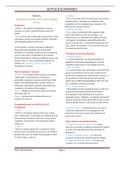
Act 4 Scene 1
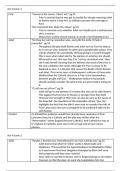
Friar “Uneven is the course. I like it not.” pg 52
- Friar is worried that he may get in trouble for already marrying Juliet
to Romeo which is why he’s so willing to prevent the marriage to
Paris
“Nor womanish fear abate thy valour” pg 54
- Friar is uncertain as to whether Juliet can handle such a task because
she’s a woman
- Shows how society viewed woman as weak in the Elizabethan era
Juliet “Do thou but call my resolution wise, and with this knife I’ll help it
presently!” pg 53
- Throughout the play both Romeo and Juliet turn to Friar for help as
he is seen as wise, however he often gives questionable advice. They
will do whatever he says blindly, without giving it a second thought.
This is seen when Juliet asks for his opinion on whether she should
kill herself or not. She says that if he “call my resolution wise” then
she’ll stab herself showing that she believes the word of the Friar is
the only validation she needs. Although the Friar is meant to be
depicted as wise, it is his plan that causes the death of both Romeo
and Juliet. This can be seen as Shakespeare’s criticism of those who
blindly follow the Catholic church as a Friar is the intermediary
between people and God. * Shakespeare believes that people
should carefully consider the advice they are given before acting on
it.
“O, tell me not of fear!” pg 54
- Juliet will go to any extreme if it means that she can be with Romeo.
This suggest that her love for Romeo is stronger than fear itself.
However, the strength of their love can also be seen as the cause of
the downfall. The repetition of the imperative phrase “give me”
highlights the fact that she didn’t even stop to consider the risks of
Friar’s plan since she was so prepared to do anything it takes to be
with Romeo
Context An Elizabethan audience would have already been suspicious of Friar
Lawrence since he is Catholic and the play was written after the
“Reformation” (when England became Catholic). Anti-Catholicism was at
it’s highest as Catholics were seen to be corrupt and to have excess
passion.
Act 4 Scene 2
Juliet “Pardon, I beseech you. Henceforward I am ever ruled by you” pg 55
- Juliet knows that what her father wants is total loyalty and
obedience. This would be the typical feeling of an Elizabethan father
as it was known that their daughters belonged to them and were
their property until they were married
- Since Juliet is married to Romeo, she no longer belongs to her father
however, so that the plan can work she manipulates him into
Friar “Uneven is the course. I like it not.” pg 52
- Friar is worried that he may get in trouble for already marrying Juliet
to Romeo which is why he’s so willing to prevent the marriage to
Paris
“Nor womanish fear abate thy valour” pg 54
- Friar is uncertain as to whether Juliet can handle such a task because
she’s a woman
- Shows how society viewed woman as weak in the Elizabethan era
Juliet “Do thou but call my resolution wise, and with this knife I’ll help it
presently!” pg 53
- Throughout the play both Romeo and Juliet turn to Friar for help as
he is seen as wise, however he often gives questionable advice. They
will do whatever he says blindly, without giving it a second thought.
This is seen when Juliet asks for his opinion on whether she should
kill herself or not. She says that if he “call my resolution wise” then
she’ll stab herself showing that she believes the word of the Friar is
the only validation she needs. Although the Friar is meant to be
depicted as wise, it is his plan that causes the death of both Romeo
and Juliet. This can be seen as Shakespeare’s criticism of those who
blindly follow the Catholic church as a Friar is the intermediary
between people and God. * Shakespeare believes that people
should carefully consider the advice they are given before acting on
it.
“O, tell me not of fear!” pg 54
- Juliet will go to any extreme if it means that she can be with Romeo.
This suggest that her love for Romeo is stronger than fear itself.
However, the strength of their love can also be seen as the cause of
the downfall. The repetition of the imperative phrase “give me”
highlights the fact that she didn’t even stop to consider the risks of
Friar’s plan since she was so prepared to do anything it takes to be
with Romeo
Context An Elizabethan audience would have already been suspicious of Friar
Lawrence since he is Catholic and the play was written after the
“Reformation” (when England became Catholic). Anti-Catholicism was at
it’s highest as Catholics were seen to be corrupt and to have excess
passion.
Act 4 Scene 2
Juliet “Pardon, I beseech you. Henceforward I am ever ruled by you” pg 55
- Juliet knows that what her father wants is total loyalty and
obedience. This would be the typical feeling of an Elizabethan father
as it was known that their daughters belonged to them and were
their property until they were married
- Since Juliet is married to Romeo, she no longer belongs to her father
however, so that the plan can work she manipulates him into