Act 2 Scene 1
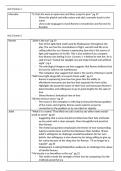
Mercutio “O, that she were an open-arse and thou a pop’rin pear” pg 19
- Shows his playful and witty nature and add a comedic touch to the
scene
- Uses crude language to mock Romeo’s romanticism and his love for
Rosaline
Act 2 Scene 2
Romeo “Juliet is the sun” pg 19
- Part of the light/dark motif used by Shakespeare throughout the
play. The sun has the connotations of light, warmth and life so by
calling Juliet the sun, Romeo is expressing how she is the source of
light and happiness in his life. This is also evident if you compare
how Romeo was feeling in Act 1 Scenes 1 -4 before he met her: he is
said to have “locked fair daylight out and make himself and artificial
night”. pg 4
- The astrological imagery use here suggests that Romeo believes that
his love for Juliet is not earthbound.
- This metaphor also suggest that Juliet is the centre of Romeo’s world
“With loves light wings did I o’er-perch these walls” pg 21
- Romeo is expressing how love has given him the ability to
effortlessly overcome any barriers that separate him from Juliet.
- Highlights the powerful nature of their love and showcases Romeo’s
determination and willingness to go to great lengths for the sake of
love
- Shows Romeo’s fantastical view of love
“Kill the envious moon” pg 19
- The moon in this metaphor is referring to Diana the Roman goddess
of the moon and virginity. Romeo wants Juliet to erase her
connection to the goddess so he can take her virginity
Juliet “What’s in a name? That which we call a rose by any other name would
smell as sweet” pg 20
- Suggesting that a name should not determine their fate and backs
up her point with a clear example. More thoughtful and practical
than Romeo
- The rhetorical question emphasizes the theme of love transcending
typical societal views and the feud between their families. Shows
Juliet’s willingness to challenge societal boundaries for her own
beliefs. Her willingness is also shown by her being willing to give up
her name because of her deep love for Romeo: “I’ll no longer be a
Capulet”. pg 20
- Shakespeare is asking Elizabethan audiences to challenges the values
of familial honour
“My bounty is as boundless as the sea” pg 22
- This simile reveals the strength of their love by comparing it to the
endlessly powerful sea
Mercutio “O, that she were an open-arse and thou a pop’rin pear” pg 19
- Shows his playful and witty nature and add a comedic touch to the
scene
- Uses crude language to mock Romeo’s romanticism and his love for
Rosaline
Act 2 Scene 2
Romeo “Juliet is the sun” pg 19
- Part of the light/dark motif used by Shakespeare throughout the
play. The sun has the connotations of light, warmth and life so by
calling Juliet the sun, Romeo is expressing how she is the source of
light and happiness in his life. This is also evident if you compare
how Romeo was feeling in Act 1 Scenes 1 -4 before he met her: he is
said to have “locked fair daylight out and make himself and artificial
night”. pg 4
- The astrological imagery use here suggests that Romeo believes that
his love for Juliet is not earthbound.
- This metaphor also suggest that Juliet is the centre of Romeo’s world
“With loves light wings did I o’er-perch these walls” pg 21
- Romeo is expressing how love has given him the ability to
effortlessly overcome any barriers that separate him from Juliet.
- Highlights the powerful nature of their love and showcases Romeo’s
determination and willingness to go to great lengths for the sake of
love
- Shows Romeo’s fantastical view of love
“Kill the envious moon” pg 19
- The moon in this metaphor is referring to Diana the Roman goddess
of the moon and virginity. Romeo wants Juliet to erase her
connection to the goddess so he can take her virginity
Juliet “What’s in a name? That which we call a rose by any other name would
smell as sweet” pg 20
- Suggesting that a name should not determine their fate and backs
up her point with a clear example. More thoughtful and practical
than Romeo
- The rhetorical question emphasizes the theme of love transcending
typical societal views and the feud between their families. Shows
Juliet’s willingness to challenge societal boundaries for her own
beliefs. Her willingness is also shown by her being willing to give up
her name because of her deep love for Romeo: “I’ll no longer be a
Capulet”. pg 20
- Shakespeare is asking Elizabethan audiences to challenges the values
of familial honour
“My bounty is as boundless as the sea” pg 22
- This simile reveals the strength of their love by comparing it to the
endlessly powerful sea