Weimar economic development and policies
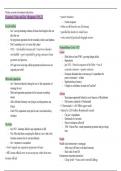
Economic Crises and Gov’t Response 1918-23 → passive resistance
- French response:
Social welfare → Ruhr cut off from the rest of Germany
- Gov’t set up retraining schemes for those that fought in the war → patrolled the border w/ armed forces
after the war
→ took control of postal and telegraph services
- Set up pension payments for the wounded, widows and orphans
- Nat’l committees est. to oversee the Lander
- 1920 - 1.5m disabled veterans and 1.9 survivors classed as
Hyperinflation Crisis 1923
Causes
not disabled → gov’t responded by giving a mixture of sum
- Debt leftover from WWI - growing budget deficit
payments and pensions - Reparations
- 10% pop were receiving welfare payments and more were on - Jan 1923 - French occupation of the Ruhr → loss of
regional poor relief economic resources → passive resistance
- Economy disrupted due to increase gov’t expenditure for
Debt and reparations passive resistance + welfare
- Rapid printing of money
- Gov’t borrowed heavily during the war w/ the expectation of
- Collapse in confidence in mark nat’l and int’l
winning the war
- Debt and reparations payments led to increase in printing Actions
money - Stresemann appointed Schacht as new financier of Reichsbank
- Allies felt that Germany was trying to avoid payments, esp - Old currency replaced w/ Rentenmark
France → 1 Rentenmark = 1,000 billion paper marks
- Until 1924, reparations were paid in coal, wood and railway → limited to 3,200 million Rentenmarks created
carriages - Cut gov’t expenditure
- Dismissed civil servants
- Passive resistance called off
The Ruhr
- 1924 - Dawes Plan - eased reparations payments and gave huge
- Jan 1923 - Germany failed to pay reparations in full loan
- The Allies had been occupying the Ruhr as it was vital to the
German economy for its coal and industry People
- Gov’t response to occupation: Middle class homeowner w mortgage:
→ Gov’t stopped any reparations payments to France - Able to pay off loans w devalued currency
→ All German officials were to not accept any orders from non- - Real value of rent fell
Entrepreneur exporting chemicals:
German officials - Cheap credit → loans used to extend holdings
, Weimar economic development and policies
- Falling exchange rate - export products at a lower price - Wages 1928 = 1913 lvl
Middle class pensioner living off investments
- War bonds lost all value Setting up the welfare state
- Savings value no longer mattered - Public works schemes - new airports, exhibition centres,
Industrial worker housing estates, swimming pools
- Real income declined - July 1927 - ‘Act on Labour Exchanges and Unemployment
- Unskilled workers couldn’t barter when marks weren’t used Insurance’ - extended unemployment insurance to 17.25 mil
Farmer employees
- Didn’t have any savings → no fall in income
- Food always in demand - work not affected Good industrial relations
- 1923 - ‘binding arbitration’ - settled industrial disputes, even if
Policies for recovery 1924-8 workers and employers disagreed
- Number of disputes decreased
Genuine recovery
Feel-good factor
Economic growth - Many Germans believed they were living through a period of
- Nat’l income was 12% higher than in 1913 economic prosperity
- 1928 production = 1913 production
- Economy grew rapidly in 1924,25,27 Illusory recovery
- Low inflation
World trade
New production and management techniques - Share of world trade was down
- Up-to-date - 1929 world trade lvl < 1914 world trade lvl - Germany had not
- More efficient technology, esp in iron,coal, steel, chemical recovered its pre-war position
- Exports increased by 40% 1925-29 - Share of world exports: 1913 = 13.2%, 1929 = 9.1%
Cartelisation Variable economic growth
- 90% coal and steel industry cartelised - US economic growth = 70%, German economic growth = 4%
- Companies co-op rather than compete through fixed prices - 1926 - production declined
- Less businesses collapse - Balance of trade consistently in the red
- Unemployment never fell below 1.3 mil
Foreign investment - 1929 unemployment = 1.9 mil before financial crisis
- Many foreign investors attracted to economy - potential for
economic growth Over-reliance on foreign loans
- Not enough capital to invest in new equipment
Rising wages - Couldn’t pay reparations
- Wages rose in real terms - Relied on foreign loans to provide investment
Economic Crises and Gov’t Response 1918-23 → passive resistance
- French response:
Social welfare → Ruhr cut off from the rest of Germany
- Gov’t set up retraining schemes for those that fought in the war → patrolled the border w/ armed forces
after the war
→ took control of postal and telegraph services
- Set up pension payments for the wounded, widows and orphans
- Nat’l committees est. to oversee the Lander
- 1920 - 1.5m disabled veterans and 1.9 survivors classed as
Hyperinflation Crisis 1923
Causes
not disabled → gov’t responded by giving a mixture of sum
- Debt leftover from WWI - growing budget deficit
payments and pensions - Reparations
- 10% pop were receiving welfare payments and more were on - Jan 1923 - French occupation of the Ruhr → loss of
regional poor relief economic resources → passive resistance
- Economy disrupted due to increase gov’t expenditure for
Debt and reparations passive resistance + welfare
- Rapid printing of money
- Gov’t borrowed heavily during the war w/ the expectation of
- Collapse in confidence in mark nat’l and int’l
winning the war
- Debt and reparations payments led to increase in printing Actions
money - Stresemann appointed Schacht as new financier of Reichsbank
- Allies felt that Germany was trying to avoid payments, esp - Old currency replaced w/ Rentenmark
France → 1 Rentenmark = 1,000 billion paper marks
- Until 1924, reparations were paid in coal, wood and railway → limited to 3,200 million Rentenmarks created
carriages - Cut gov’t expenditure
- Dismissed civil servants
- Passive resistance called off
The Ruhr
- 1924 - Dawes Plan - eased reparations payments and gave huge
- Jan 1923 - Germany failed to pay reparations in full loan
- The Allies had been occupying the Ruhr as it was vital to the
German economy for its coal and industry People
- Gov’t response to occupation: Middle class homeowner w mortgage:
→ Gov’t stopped any reparations payments to France - Able to pay off loans w devalued currency
→ All German officials were to not accept any orders from non- - Real value of rent fell
Entrepreneur exporting chemicals:
German officials - Cheap credit → loans used to extend holdings
, Weimar economic development and policies
- Falling exchange rate - export products at a lower price - Wages 1928 = 1913 lvl
Middle class pensioner living off investments
- War bonds lost all value Setting up the welfare state
- Savings value no longer mattered - Public works schemes - new airports, exhibition centres,
Industrial worker housing estates, swimming pools
- Real income declined - July 1927 - ‘Act on Labour Exchanges and Unemployment
- Unskilled workers couldn’t barter when marks weren’t used Insurance’ - extended unemployment insurance to 17.25 mil
Farmer employees
- Didn’t have any savings → no fall in income
- Food always in demand - work not affected Good industrial relations
- 1923 - ‘binding arbitration’ - settled industrial disputes, even if
Policies for recovery 1924-8 workers and employers disagreed
- Number of disputes decreased
Genuine recovery
Feel-good factor
Economic growth - Many Germans believed they were living through a period of
- Nat’l income was 12% higher than in 1913 economic prosperity
- 1928 production = 1913 production
- Economy grew rapidly in 1924,25,27 Illusory recovery
- Low inflation
World trade
New production and management techniques - Share of world trade was down
- Up-to-date - 1929 world trade lvl < 1914 world trade lvl - Germany had not
- More efficient technology, esp in iron,coal, steel, chemical recovered its pre-war position
- Exports increased by 40% 1925-29 - Share of world exports: 1913 = 13.2%, 1929 = 9.1%
Cartelisation Variable economic growth
- 90% coal and steel industry cartelised - US economic growth = 70%, German economic growth = 4%
- Companies co-op rather than compete through fixed prices - 1926 - production declined
- Less businesses collapse - Balance of trade consistently in the red
- Unemployment never fell below 1.3 mil
Foreign investment - 1929 unemployment = 1.9 mil before financial crisis
- Many foreign investors attracted to economy - potential for
economic growth Over-reliance on foreign loans
- Not enough capital to invest in new equipment
Rising wages - Couldn’t pay reparations
- Wages rose in real terms - Relied on foreign loans to provide investment