
Therapeutic Pharmacology
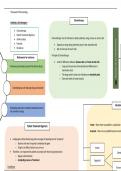
Chemotherapy
Antibiotics & Antifungals+
• Chemotherapy
• Patient Treatment Regimens
• Antimicrobials Chemotherapy: Use of chemicals to destroy bacteria, fungi, viruses or cancer cells
Plasmids can be transferred by:
• Plasmids • Depends on drugs being selectively toxic to the unwanted cells
• Resistance • But not too toxic to host’s cells
Principle of Chemotherapy
Mechanisms for resistance
• Look for differences between disease state and hosts normal cells
Producing inactivating enzymes that destroy drugs o Fungi and viruses have many biochemical differences to
mammalian cells
o The drugs used to treat such infections are selectively toxic
o Show low levels of human toxicity
Developing ways of reducing drug accumulation
Resistan
Developing alternative metabolic pathways that are
not sensitive to drugs
Patient Treatment Regimens Innate – Never been susceptible to a particular d
Acquired – Was once susceptible becomes resist
• Inadequate antimicrobial dosing will encourage the development of ‘resistance’
o Bacteria cells won’t respond to antibacterial agent
o Drug has no effect; bacteria can carry on
• Therefore, it is important for patients to comply with their dosing instructions
o Regular administration
o Completing courses of treatment
Compliance
, Viruses
Therapeutic Pharmacology
• Too small to be seen through Light Microscope
Antivirals & Vaccines
• Can infect mammalian cells, plant cells and microorganisms
• Rely on Host for replication
• Viruses • Consists of a core of genetic material
• Stages of Viral Infection o Maybe either single or double stranded DNA or RNA
• RNA Virus Replication • Core is surrounded by Protein coat
• RNA Retrovirus o Capsid/Capsule
replication o Capsid surrounded by a lipoprotein enzyme
• DNA Virus Replication o Derived from host’s plasma membrane
o Which also contains viral glycoproteins
• Outside of the host virus particle = Virion
o Some produce enzymes that will facilitate replication when inside host cells
• Viruses attach themselves to host cells
Recognition sites are normal cell constituents such as surface o Using binding sites in capsid or envelope proteins
molecules like receptors o To bind to recognition sites
o neurotransmitter or hormonal receptors
• Once attached, endocytosis may bring the virus-receptor complex into the cell
o ion channels
o where it is uncoated
o cluster of differentiation molecules (e.g., CD4)
o often by host lysosomal enzymes
o so, enabling viral genes to use the host's cellular machinery to produce copies
of itself.
Lysis
RNA Virus Replication
DNA Virus
Replication
RNA Virus • Viral RNA can act directly as mRNA
• Virion enzymes can synthesize mRNA using the original virus Once inside a host's cell, viral DNA is transcribed into
Attachment RNA as the template. mRNA using the host's RNA polymerase, to produce
• The mRNA produced will then be translated into peptides by virus specific proteins.
the host cell.
Penetration Once copies of viral DNA and protein coats have been
• These peptides can then be used to produce enzymes.
assembled together;
• Enzymes such as RNA polymerase will produce copies of the
Reverse viral RNA • Virions will be released by either budding or
Transcriptase • whilst other enzymes synthesize viral structural proteins lysis of the host cell.
• Copies of the original virus are created.
, Lining of Host Defences T
Therapeutic Pharmacology
mouth,
nose • Some
• Intact skin is an effective barrier against most viruses; however, wounds and
Antivirals & Vaccines lymph
mucous membranes are susceptible to viral entry.
o
• Once inside the body, the host can deploy both
• Host Defences o Innate inflammatory responses Body does
• The Immune system o releasing histamine, prostaglandin etc. something
• The humoral Immune Response o Adaptive immune responses to adapt to
• The Cellular Immune Response o pathogen-specific responses involving lymphocytes situation • On ini
to pro
The Immune System • Infecte
Involved in surfac
Circulating • Leucocytes are involved in protecting the body against 'non-self' substances.
producing o
blood cells Antibodies
• Granulocytes (neutrophils, eosinophils and basophils)
granulocytes • Lymphocytes can be primed either in the thymus (T lymphocytes) or bone marrow (B lymphocytes).
lymphocytes • Monocytes (closely related to macrophages) ingest particles.
o
monocytes • Leucocytes circulate around the body in order to react against antigens Memory
Cells
• The body has two specific immunological responses:
Antigen Cla
• Humoral immune response (antibody mediated immunity),
• Cellular immune response (cell-mediated immunity). On Diffe
Endogeno
Humoral Immune response Effector Cells T Lymphocytes
Both presented to Im
• B lymphocytes in response to antigens are
Memory Cells converted to plasma cells, which produce
• A virus may be able to evade detection by T-lym
Antigen specific immunoglobulin antibodies.
o inhibiting the presentation of MHC-pep
• Antibodies then bind to antigens
• However natural killer (NK) cells may still atta
o which can result in coating a
MHC expression.
microorganism
o so, enhancing its destruction by • But some viruses may also be able to evade NK
Antibodies B Lymphocytes
phagocytosis. o by inducing the expression of an MHC c
similar to the host's MHC.
• Memory cells are also produced, which are
able to recognize the same antigen on
subsequent exposures, which results in a more
Plasma Cells
rapid response, as plasma cells (and hence
, Hormone Target Effects
Therapeutic Pharmacology
Anti-Diuretic V2 (Gs) receptors in the distal Reabsorption of H2O
Hormone (ADH) kidney tubule
Endocrine Pharmacology Vasoconstriction increases BP • The post
(vasopressin)
V1a (Gq) receptors (vascular which or
• Anatomy of Endocrine System smooth muscle) hypothal
• The Hypothalamus & Pituitary Gland
• Anterior Pituitary Oxytocin OT (Gq) receptors in the Labour contractions Hypotha
• Posterior Pituitary Myometrium
• The axon
terminat
• Peptides
Anatomy of Endocrine System
into the p
• The endocrine system is a messenger system in an organism comprising
feedback loops of hormones that are released by internal glands directly
Peptides (A
into the circulatory system and that target and regulate distant organs. synt
in hypoth
Hormones Neurotransmitters
Oestrogen, Testosterone Noradrenaline
Glucocorticoids Acetylcholine
Thyroxine
Insulin
• Everything beside the pancreas is controlled by hypothalamus and
pituitary
• In humans, the major endocrine glands are the thyroid, parathyroid,
pituitary, pineal, and adrenal glands, and the (male) testicles and
Hypothalamic
(female) ovaries. The hypothalamus, pancreas, and thymus also function
releasing factor
as endocrine glands, among other functions. Other organs, such as the
kidneys, also have roles within the endocrine system by secreting certain
Corticotrophin rel
hormones. factor (CRF)
Hypothalamic Releasing Factors A
• TRH
• CRF
• GnRH
• Prolactin releasing factor
Chemotherapy
Antibiotics & Antifungals+
• Chemotherapy
• Patient Treatment Regimens
• Antimicrobials Chemotherapy: Use of chemicals to destroy bacteria, fungi, viruses or cancer cells
Plasmids can be transferred by:
• Plasmids • Depends on drugs being selectively toxic to the unwanted cells
• Resistance • But not too toxic to host’s cells
Principle of Chemotherapy
Mechanisms for resistance
• Look for differences between disease state and hosts normal cells
Producing inactivating enzymes that destroy drugs o Fungi and viruses have many biochemical differences to
mammalian cells
o The drugs used to treat such infections are selectively toxic
o Show low levels of human toxicity
Developing ways of reducing drug accumulation
Resistan
Developing alternative metabolic pathways that are
not sensitive to drugs
Patient Treatment Regimens Innate – Never been susceptible to a particular d
Acquired – Was once susceptible becomes resist
• Inadequate antimicrobial dosing will encourage the development of ‘resistance’
o Bacteria cells won’t respond to antibacterial agent
o Drug has no effect; bacteria can carry on
• Therefore, it is important for patients to comply with their dosing instructions
o Regular administration
o Completing courses of treatment
Compliance
, Viruses
Therapeutic Pharmacology
• Too small to be seen through Light Microscope
Antivirals & Vaccines
• Can infect mammalian cells, plant cells and microorganisms
• Rely on Host for replication
• Viruses • Consists of a core of genetic material
• Stages of Viral Infection o Maybe either single or double stranded DNA or RNA
• RNA Virus Replication • Core is surrounded by Protein coat
• RNA Retrovirus o Capsid/Capsule
replication o Capsid surrounded by a lipoprotein enzyme
• DNA Virus Replication o Derived from host’s plasma membrane
o Which also contains viral glycoproteins
• Outside of the host virus particle = Virion
o Some produce enzymes that will facilitate replication when inside host cells
• Viruses attach themselves to host cells
Recognition sites are normal cell constituents such as surface o Using binding sites in capsid or envelope proteins
molecules like receptors o To bind to recognition sites
o neurotransmitter or hormonal receptors
• Once attached, endocytosis may bring the virus-receptor complex into the cell
o ion channels
o where it is uncoated
o cluster of differentiation molecules (e.g., CD4)
o often by host lysosomal enzymes
o so, enabling viral genes to use the host's cellular machinery to produce copies
of itself.
Lysis
RNA Virus Replication
DNA Virus
Replication
RNA Virus • Viral RNA can act directly as mRNA
• Virion enzymes can synthesize mRNA using the original virus Once inside a host's cell, viral DNA is transcribed into
Attachment RNA as the template. mRNA using the host's RNA polymerase, to produce
• The mRNA produced will then be translated into peptides by virus specific proteins.
the host cell.
Penetration Once copies of viral DNA and protein coats have been
• These peptides can then be used to produce enzymes.
assembled together;
• Enzymes such as RNA polymerase will produce copies of the
Reverse viral RNA • Virions will be released by either budding or
Transcriptase • whilst other enzymes synthesize viral structural proteins lysis of the host cell.
• Copies of the original virus are created.
, Lining of Host Defences T
Therapeutic Pharmacology
mouth,
nose • Some
• Intact skin is an effective barrier against most viruses; however, wounds and
Antivirals & Vaccines lymph
mucous membranes are susceptible to viral entry.
o
• Once inside the body, the host can deploy both
• Host Defences o Innate inflammatory responses Body does
• The Immune system o releasing histamine, prostaglandin etc. something
• The humoral Immune Response o Adaptive immune responses to adapt to
• The Cellular Immune Response o pathogen-specific responses involving lymphocytes situation • On ini
to pro
The Immune System • Infecte
Involved in surfac
Circulating • Leucocytes are involved in protecting the body against 'non-self' substances.
producing o
blood cells Antibodies
• Granulocytes (neutrophils, eosinophils and basophils)
granulocytes • Lymphocytes can be primed either in the thymus (T lymphocytes) or bone marrow (B lymphocytes).
lymphocytes • Monocytes (closely related to macrophages) ingest particles.
o
monocytes • Leucocytes circulate around the body in order to react against antigens Memory
Cells
• The body has two specific immunological responses:
Antigen Cla
• Humoral immune response (antibody mediated immunity),
• Cellular immune response (cell-mediated immunity). On Diffe
Endogeno
Humoral Immune response Effector Cells T Lymphocytes
Both presented to Im
• B lymphocytes in response to antigens are
Memory Cells converted to plasma cells, which produce
• A virus may be able to evade detection by T-lym
Antigen specific immunoglobulin antibodies.
o inhibiting the presentation of MHC-pep
• Antibodies then bind to antigens
• However natural killer (NK) cells may still atta
o which can result in coating a
MHC expression.
microorganism
o so, enhancing its destruction by • But some viruses may also be able to evade NK
Antibodies B Lymphocytes
phagocytosis. o by inducing the expression of an MHC c
similar to the host's MHC.
• Memory cells are also produced, which are
able to recognize the same antigen on
subsequent exposures, which results in a more
Plasma Cells
rapid response, as plasma cells (and hence
, Hormone Target Effects
Therapeutic Pharmacology
Anti-Diuretic V2 (Gs) receptors in the distal Reabsorption of H2O
Hormone (ADH) kidney tubule
Endocrine Pharmacology Vasoconstriction increases BP • The post
(vasopressin)
V1a (Gq) receptors (vascular which or
• Anatomy of Endocrine System smooth muscle) hypothal
• The Hypothalamus & Pituitary Gland
• Anterior Pituitary Oxytocin OT (Gq) receptors in the Labour contractions Hypotha
• Posterior Pituitary Myometrium
• The axon
terminat
• Peptides
Anatomy of Endocrine System
into the p
• The endocrine system is a messenger system in an organism comprising
feedback loops of hormones that are released by internal glands directly
Peptides (A
into the circulatory system and that target and regulate distant organs. synt
in hypoth
Hormones Neurotransmitters
Oestrogen, Testosterone Noradrenaline
Glucocorticoids Acetylcholine
Thyroxine
Insulin
• Everything beside the pancreas is controlled by hypothalamus and
pituitary
• In humans, the major endocrine glands are the thyroid, parathyroid,
pituitary, pineal, and adrenal glands, and the (male) testicles and
Hypothalamic
(female) ovaries. The hypothalamus, pancreas, and thymus also function
releasing factor
as endocrine glands, among other functions. Other organs, such as the
kidneys, also have roles within the endocrine system by secreting certain
Corticotrophin rel
hormones. factor (CRF)
Hypothalamic Releasing Factors A
• TRH
• CRF
• GnRH
• Prolactin releasing factor


