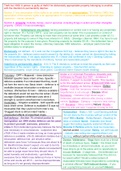
‘Among The Rocks’ by Robert Browning sings the praises of Mother
Earth. The speaker introduces this ode to the Earth with the
affectionate verse - “Oh, good gigantic smile o’ the brown old Earth”.
The speaker describes the earth as a gigantic person, setting his
bones and basking in the sun on a pleasant autumn morning, as the
stream ripples over its feet. This introduces a sense of serenity in the
poem. As he lies on the heap of stones, among the rocks, he listens to
the sweet twittering of the sea-larks; blissfully encased in the epitome
of relaxation. The poet has used imagery here which engages the
senses and allows the reader to truly immerse themselves in the
scenery.
Now, from the beauty of the morning, the speaker moves on to more
profound and deeper reflections. He speaks of a doctrine or a belief-
calling it ‘simple, ancient and true’ and it being something the earth
already knows of. This doctrine is simply that humans must endure
life’s trials and ordeals to gain peace; just as the earth went through
distress and calamity to gain the tranquility spoken of in the first few
verses.
He then speaks of love - if we love only what we deem worthy of love,
then love would be something which benefits us. But if we love despite
it being something which pains us, our fallible human nature is
blessed by such pain and suffering.
The speaker concludes the poem with the line ‘Give earth yourself, go
up for gain above’ - here, he tries to convey to the reader that at the
end, after one has gone through trials and tribulations, they should
give themselves back to the earth as their spirit makes its way up to
heaven to be reunited with the creator and gain peace.
Earth. The speaker introduces this ode to the Earth with the
affectionate verse - “Oh, good gigantic smile o’ the brown old Earth”.
The speaker describes the earth as a gigantic person, setting his
bones and basking in the sun on a pleasant autumn morning, as the
stream ripples over its feet. This introduces a sense of serenity in the
poem. As he lies on the heap of stones, among the rocks, he listens to
the sweet twittering of the sea-larks; blissfully encased in the epitome
of relaxation. The poet has used imagery here which engages the
senses and allows the reader to truly immerse themselves in the
scenery.
Now, from the beauty of the morning, the speaker moves on to more
profound and deeper reflections. He speaks of a doctrine or a belief-
calling it ‘simple, ancient and true’ and it being something the earth
already knows of. This doctrine is simply that humans must endure
life’s trials and ordeals to gain peace; just as the earth went through
distress and calamity to gain the tranquility spoken of in the first few
verses.
He then speaks of love - if we love only what we deem worthy of love,
then love would be something which benefits us. But if we love despite
it being something which pains us, our fallible human nature is
blessed by such pain and suffering.
The speaker concludes the poem with the line ‘Give earth yourself, go
up for gain above’ - here, he tries to convey to the reader that at the
end, after one has gone through trials and tribulations, they should
give themselves back to the earth as their spirit makes its way up to
heaven to be reunited with the creator and gain peace.