Introduction to Plastids
PLASTIDS
Plastids- membrane-bound organelles found in cells of plants, algae and some eukaryotes
There are many plastids types of which most well-known is
CHLOROPLASTS
CHLOROPLASTS
Predominant plastid type in leavers and other aerial types
Chloroplast has its own genome and genetic system, stroma also contains special set of ribosomes, RNAs
and chloroplast DNA
Primary role is PHOTOSYNTHESIS
Chloroplast are larger than mitochondria
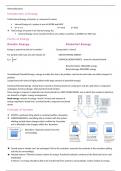
Chloroplasts structure
Highly permeable outer membrane and much less permeable inner membrane- in which transport
membranes are embedded
o Narrow intermembrane space in between them
o Together- these two membranes form chloroplast envelope
o Chloroplast membranes contain chlorophyll and its associated proteins and are sites of
photosynthesis
Inner chloroplast membrane surrounds large space- STROMA- contains many metabolic enzymes- where
ATP is made by head of ATP synthase
o Adjacent grana are connected by unstacked membranes- Stroma lamellae
Thylakoids are unique feature of chloroplasts- contain ETC, Photosynthetic light capturing systems and ATP
synthase
Separate, distinct membrane- forms set of flattened, disc-like sacs- thylakoids
Thylakoid membrane Is highly folded into numerous local stacks of flattened vesicles- grana-
interconnected by non-stacked thylakoids
o Stacked membranes are grana lamellae
Lumen of each thylakoid is connected with lumen of other thylakoids- thylakoid space – represents separate
compartment in each chloroplast that isn’t connected to either intermembrane space or stroma
Structure of Photosynthetic membranes
Thylakoid membrane derives from inner membrane during plastid
development and is pinched off to become discontinuous with it
Thylakoids from Greek- ‘sac-like’
Interconnected and closed continuum
Different parts have specialised functions in
photosynthesis
Chloroplast thylakoid membrane- site of solar energy conversion in plants and algae
Biogenesis and structure of photosynthetic membranes
, Chloroplast function
Chloroplasts are important in synthesising many different products for rest of cell including:
Purines and Pyrimidines
Fatty acids and Lipids
Amino Acids- Thr, Lys, Ile
Isoprenoids- plant hormones (gibberellic acid (GA), abscisic acid (ABA), strigolactones)
Heme
Critical for reduction of nitrate and sulphate- important process on global scale
OTHER TYPES OF PLASTID
Proplastid
Precursor of all other plastids
Present in young meristematic regions- where they divide to keep pace with cell
division- ENSURE CONTINUITY
I.E. all cells have a plastid
Only little larger than mitochondria
Chromoplast
Non-photosynthetic chromoplasts provide- colour to fruits, flowers and roots
(carrots)
Contain high concentrations CAROTENOIDS pigments rather than
chlrorophyll- such as Carotenes and Xanthophylls- often with crystalline
appearance
o Causes yellow, orange or red colours of fruits and flowers as well
as autumn leaves
Needle shaped chromoplasts- up to 20μm in length- in
bird of paradise feather
Chromoplasts in Chinese lantern (Physalis algehenki)
Young (L) and older (R) with spiked like stormules
Amyloplast
Starch- storing plastids in non-green tissues- such as storage organs (e.g. Potato
Tubers)
Abundant in storage tissues of shoot and root and in seeds
Specialised amyloplasts in root cap- serve as gravity sensors that direct root growth downward into soil
Leucoplast
Colourless plastids involved in oil and lipid synthesis (plastoglobuli)- Non pigmentated
Quite varied in appearance
Often surrounded by ER Membranes
Elaioplast- type of leucoplast
Quite rare, contain rounded and angular lipid bodies storing mostly sterol esters
Found in cells surrounding anther cavity (tapetum)- where pollen develops
PLASTIDS
Plastids- membrane-bound organelles found in cells of plants, algae and some eukaryotes
There are many plastids types of which most well-known is
CHLOROPLASTS
CHLOROPLASTS
Predominant plastid type in leavers and other aerial types
Chloroplast has its own genome and genetic system, stroma also contains special set of ribosomes, RNAs
and chloroplast DNA
Primary role is PHOTOSYNTHESIS
Chloroplast are larger than mitochondria
Chloroplasts structure
Highly permeable outer membrane and much less permeable inner membrane- in which transport
membranes are embedded
o Narrow intermembrane space in between them
o Together- these two membranes form chloroplast envelope
o Chloroplast membranes contain chlorophyll and its associated proteins and are sites of
photosynthesis
Inner chloroplast membrane surrounds large space- STROMA- contains many metabolic enzymes- where
ATP is made by head of ATP synthase
o Adjacent grana are connected by unstacked membranes- Stroma lamellae
Thylakoids are unique feature of chloroplasts- contain ETC, Photosynthetic light capturing systems and ATP
synthase
Separate, distinct membrane- forms set of flattened, disc-like sacs- thylakoids
Thylakoid membrane Is highly folded into numerous local stacks of flattened vesicles- grana-
interconnected by non-stacked thylakoids
o Stacked membranes are grana lamellae
Lumen of each thylakoid is connected with lumen of other thylakoids- thylakoid space – represents separate
compartment in each chloroplast that isn’t connected to either intermembrane space or stroma
Structure of Photosynthetic membranes
Thylakoid membrane derives from inner membrane during plastid
development and is pinched off to become discontinuous with it
Thylakoids from Greek- ‘sac-like’
Interconnected and closed continuum
Different parts have specialised functions in
photosynthesis
Chloroplast thylakoid membrane- site of solar energy conversion in plants and algae
Biogenesis and structure of photosynthetic membranes
, Chloroplast function
Chloroplasts are important in synthesising many different products for rest of cell including:
Purines and Pyrimidines
Fatty acids and Lipids
Amino Acids- Thr, Lys, Ile
Isoprenoids- plant hormones (gibberellic acid (GA), abscisic acid (ABA), strigolactones)
Heme
Critical for reduction of nitrate and sulphate- important process on global scale
OTHER TYPES OF PLASTID
Proplastid
Precursor of all other plastids
Present in young meristematic regions- where they divide to keep pace with cell
division- ENSURE CONTINUITY
I.E. all cells have a plastid
Only little larger than mitochondria
Chromoplast
Non-photosynthetic chromoplasts provide- colour to fruits, flowers and roots
(carrots)
Contain high concentrations CAROTENOIDS pigments rather than
chlrorophyll- such as Carotenes and Xanthophylls- often with crystalline
appearance
o Causes yellow, orange or red colours of fruits and flowers as well
as autumn leaves
Needle shaped chromoplasts- up to 20μm in length- in
bird of paradise feather
Chromoplasts in Chinese lantern (Physalis algehenki)
Young (L) and older (R) with spiked like stormules
Amyloplast
Starch- storing plastids in non-green tissues- such as storage organs (e.g. Potato
Tubers)
Abundant in storage tissues of shoot and root and in seeds
Specialised amyloplasts in root cap- serve as gravity sensors that direct root growth downward into soil
Leucoplast
Colourless plastids involved in oil and lipid synthesis (plastoglobuli)- Non pigmentated
Quite varied in appearance
Often surrounded by ER Membranes
Elaioplast- type of leucoplast
Quite rare, contain rounded and angular lipid bodies storing mostly sterol esters
Found in cells surrounding anther cavity (tapetum)- where pollen develops