409 - Respiratory and Cardiovascular questions with correct answers
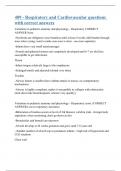
Variations in pediatric anatomy and physiology - Respiratory CORRECT ANSWER Nose -Newborns are obligatory nose breathers until at least 4 weeks old (breathe through nose when cyring; want to make sure nose is clear - use nose aspirator) -Infants have very small nasal passages -Frontal and sphenoid sinuses not completely developed until 6-7 yrs old (less susceptible to get infections) Throat -Infant tongue relatively large to the oropharynx -Enlarged tonsils and adenoids (shrink over time) Trachea -Airway lumen is smaller (have asthma attack or mucus, no compensatory mechanism) -Airway is highly compliant, makes it susceptible to collapse with obstruction (lock down like bronchospasm; wheeze very quickly) Variations in pediatric anatomy and physiology - Respiratory (cont.) CORRECT ANSWER Lower respiratory structures -Bifurcation of trachea occurs at level of 3rd thoracic vertebra (risk - foreign body aspiration; when suctioning, don't go down as far) -Bronchioles and bronchi are narrower -Alveoli develop at 24 weeks gestation and grow until 7-8 years old --Smaller number of alveoli esp in premature infants = high risk of hypoxemia and CO2 retention Chest wall -Infant chest wall is highly compliant (pliable)
Written for
- Institution
- 409 - Respiratory and Cardiovascular
- Module
- 409 - Respiratory and Cardiovascular
Document information
- Uploaded on
- November 27, 2023
- Number of pages
- 27
- Written in
- 2023/2024
- Type
- Exam (elaborations)
- Contains
- Questions & answers
Subjects
-
409 respiratory and cardiovascular questions wit

Also available in package deal