2.1
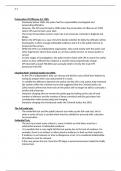
Prosecution Of Offences Act 1985:
- Previously before 1986, the police had the responsibility investigated and
prosecuting offenders.
- However, the CPS was formed in 1986 under the prosecution of offences act 1985
where CPS was formed a year later.
- The Crown Prosecution services main role is to prosecute criminals in England and
Wales.
- Before the CPS take on a case, they first decide whether its likely the offender will be
found guilty, is there enough admissible evidence and is it in the public interest to
prosecute this person.
- While the CPS is an independent organisation, they work closely with the police and
other legal teams where they stand as a 24 hour advise service, to ensure justice is
served.
- In early stages of investigations, the police tend to liaise with CPS in search for useful
advice on how sufficient the evidence is and the most proportionate charge.
- CPS deal with around 700,000 cases annually which is led by the main CPS
prosecutor Max Hill.
Charging Role- Criminal Justice Act 2003:
- As the CPS is independent, they can choose and decline cases which then follows by
having to prepare their case and present it in court.
- To solidify the difference between the police and the CPS, Lord Justice Auld reviewed
the system within the criminal courts and suggested that the Criminal justice act
2003 would confirm that from now on the police will no longer be able to conclude a
verdict and prosecute.
- Statutory charging aims to narrow the justice gap by looking at the rate of total
number of offences and the number of those convicted and this gets taken into
consideration when prosecuting and charging.
- Statutory charging was introduced under the Criminal Justice Act 2003.
The Full code test:
- The evidential test and the public interest test make up the full code test, this is
when a series of tests is carried which must be satisfied to proceed with a decision
for prosecution.
Evidential Test:
- The test must meet many criteria’s, some of which are that there must be a
substantial amount of admissible evidence.
- It is possible that a case might fail this test purely due to the lack of evidence, for
example, there is no witness or other physical evidence to back up their suspicion.
- If evidence is not relevant or tries to disapprove a fact, it is considered inadmissible.
- All evidence must be relevant.
- If the case passes the test, then the CPS begin a second assessment called the Public
Interest test.
Prosecution Of Offences Act 1985:
- Previously before 1986, the police had the responsibility investigated and
prosecuting offenders.
- However, the CPS was formed in 1986 under the prosecution of offences act 1985
where CPS was formed a year later.
- The Crown Prosecution services main role is to prosecute criminals in England and
Wales.
- Before the CPS take on a case, they first decide whether its likely the offender will be
found guilty, is there enough admissible evidence and is it in the public interest to
prosecute this person.
- While the CPS is an independent organisation, they work closely with the police and
other legal teams where they stand as a 24 hour advise service, to ensure justice is
served.
- In early stages of investigations, the police tend to liaise with CPS in search for useful
advice on how sufficient the evidence is and the most proportionate charge.
- CPS deal with around 700,000 cases annually which is led by the main CPS
prosecutor Max Hill.
Charging Role- Criminal Justice Act 2003:
- As the CPS is independent, they can choose and decline cases which then follows by
having to prepare their case and present it in court.
- To solidify the difference between the police and the CPS, Lord Justice Auld reviewed
the system within the criminal courts and suggested that the Criminal justice act
2003 would confirm that from now on the police will no longer be able to conclude a
verdict and prosecute.
- Statutory charging aims to narrow the justice gap by looking at the rate of total
number of offences and the number of those convicted and this gets taken into
consideration when prosecuting and charging.
- Statutory charging was introduced under the Criminal Justice Act 2003.
The Full code test:
- The evidential test and the public interest test make up the full code test, this is
when a series of tests is carried which must be satisfied to proceed with a decision
for prosecution.
Evidential Test:
- The test must meet many criteria’s, some of which are that there must be a
substantial amount of admissible evidence.
- It is possible that a case might fail this test purely due to the lack of evidence, for
example, there is no witness or other physical evidence to back up their suspicion.
- If evidence is not relevant or tries to disapprove a fact, it is considered inadmissible.
- All evidence must be relevant.
- If the case passes the test, then the CPS begin a second assessment called the Public
Interest test.