Respiratory Conditions
Common Presentation
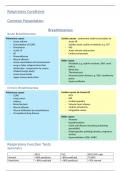
Breathlessness
Acute Breathlessness
Pulmonary causes Cardiac causes – pulmonary oedema secondary to
- Acute asthma - Acute HF
- Exacerbation of COPD - Sudden onset cardiac arrhythmia e.g. SVT
- Pneumonia - IHD
- Covid-19 - Acute valvular dysfunction
- PE - Cardiac tamponade
- Pneumothorax
- Pleural effusion Other causes
- Acute exacerbation of bronchiectasis - Metabolic e.g. aspirin overdose, DKA, renal
- Lung or lobar collapse (bronchial failure
obstruction, compression by cancer, - Blood loss
inhaled foreign body) - Thyrotoxicosis
- Acute pneumonitis - Neuromuscular disease e.g. GBS, myasthenia
- Upper airway obstruction gravis
- Hyperventilation
-
Chronic Breathlessness
Pulmonary causes Cardiac causes chronic HF
- COPD - HTN
- Lung cancer - IHD
- Asthma - Cardiomyopathy
- Bronchiectasis - Valvular heart disease
- Pleural effusion - Cardiac arrhythmia
- Pleural infiltration by mesothelioma - Congenital causes
- Occupational lung disease
Other causes
- Anaemia
- Hypothyroidism
- Chest wall disease (including ankylosing
spondylitis)
- Diaphragmatic splinting (obesity, pregnancy,
ascites)
- Hypoventilation (GBS, MND)
Respiratory Function Tests
Spirometry
FEV1 FVC FEV1/FVC ratio
Normal >80% predicted >80% predicted 75-80%
Restrictive < 80% predicted < 80% predicted >70% normal
, Obstructive < 80% predicted Normal or low < 70% predicted
Obstructive vs Restrictive
Obstructive: asthma, COPD, bronchiectasis, CF
Restrictive: fibrosis, sarcoidosis, pneumoconiosis, interstitial pneumonias, connective tissue diseases,
pleural effusion, obesity, kyphoscoliosis, neuromuscular problems
Cough
Acute cough, < 3/52
- URTI [pharyngitis, common cold]
o Cough +/- sputum lasting 7-10 days followed by dry irritant cough, worse with exercise and
falling asleep
- LRTI
- Acute exacerbation of COPD/asthma/bronchiectasis
- Inhalation of FB
o Sudden onset, dry cough. May be associated with stridor, reduced chest sounds on affected
side and decreased breath sounds
- Whooping cough
Chronic cough, > 3/52
- Exposure to cigarette smoke
- Post-infective cough – dry intermittent cough post-URTI/bronchitis
- Post-nasal drip – persistent cough and throat clearing. May be associated with chronic sinusitis or
allergic rhinitis
o If coexisting sinusitis/rhinitis can trial intranasal corticosteroid or antihistamine
- Asthma
- GORD
- ACEi
- Lung cancer
- Bronchiectasis
- TB
- Whooping cough
Red flags: weight loss, cough persisting > 3/52, haemoptysis, finger clubbing, night sweats
Pneumonia
Acute LRTI associated with fever, symptoms + signs in chest + CXR abnormalities
Classification
- CAP
o Strep pneumoniae
o H. influenzae
o M. catarrhalis
o Atypicals: mycoplasma, S aureus, Legionella, Chlamydia
o Viral in 15%
- HAP - > 48 hours after hospital admission
o Mostly gram – enterobacteria or S aureus
- Aspiration
, - Immunocompromised: same organisms + pneumocystis jiroveci
Clinical presentation
Symptoms
- Fever, rigors
- Malaise, anorexia
- SOB, cough, purulent sputum, haemoptysis
- Pleuritic pain
Signs
- Pyrexia, cyanosis, confusion
- Tachypnoea, tachycardia, hypotension
- Signs of consolidation: dullness to percussion, reduced expansion, bronchial breathing, pleural rub
Investigations
- Obs: sats, RR, HR, BP
- ABG if Sats < 92%
- FBC, U+E, LFT, CRP
- CXR
o Lobar or multilobar infiltrates, cavitation or pleural effusion
- Sputum culture
CURB-65
0-1 = low severity, 2 = moderate, 3-5 = high severity
Confusion (MST 8 or less)
Urea > 7
RR > 30
SBP < 90, DBP < 60
Age > 65
Management
CAP
CURB = 0
Oral amoxicillin 500mg TDS
Penicillin allergy = oral doxycycline 200mg on 1st day followed by 100mg OD for 4/7; or oral clarithromycin
500mg BD for 5/7, or oral erythromycin 500mg QDS for 5/7 in pregnancy
CURB = 1-2
Oral amoxicillin 500mg TDS for 5/7 (and oral clarithromycin 500mg BD 5/7 if suspecting atypicals)
CURB = 3-5
Co-amoxiclav 1.2g TDS IV + IV clarithromycin 500mg BD oral (if route available)
HAP
Low severity
Doxycycline 200mg (D1) then 100mg OD for 4/7
Common Presentation
Breathlessness
Acute Breathlessness
Pulmonary causes Cardiac causes – pulmonary oedema secondary to
- Acute asthma - Acute HF
- Exacerbation of COPD - Sudden onset cardiac arrhythmia e.g. SVT
- Pneumonia - IHD
- Covid-19 - Acute valvular dysfunction
- PE - Cardiac tamponade
- Pneumothorax
- Pleural effusion Other causes
- Acute exacerbation of bronchiectasis - Metabolic e.g. aspirin overdose, DKA, renal
- Lung or lobar collapse (bronchial failure
obstruction, compression by cancer, - Blood loss
inhaled foreign body) - Thyrotoxicosis
- Acute pneumonitis - Neuromuscular disease e.g. GBS, myasthenia
- Upper airway obstruction gravis
- Hyperventilation
-
Chronic Breathlessness
Pulmonary causes Cardiac causes chronic HF
- COPD - HTN
- Lung cancer - IHD
- Asthma - Cardiomyopathy
- Bronchiectasis - Valvular heart disease
- Pleural effusion - Cardiac arrhythmia
- Pleural infiltration by mesothelioma - Congenital causes
- Occupational lung disease
Other causes
- Anaemia
- Hypothyroidism
- Chest wall disease (including ankylosing
spondylitis)
- Diaphragmatic splinting (obesity, pregnancy,
ascites)
- Hypoventilation (GBS, MND)
Respiratory Function Tests
Spirometry
FEV1 FVC FEV1/FVC ratio
Normal >80% predicted >80% predicted 75-80%
Restrictive < 80% predicted < 80% predicted >70% normal
, Obstructive < 80% predicted Normal or low < 70% predicted
Obstructive vs Restrictive
Obstructive: asthma, COPD, bronchiectasis, CF
Restrictive: fibrosis, sarcoidosis, pneumoconiosis, interstitial pneumonias, connective tissue diseases,
pleural effusion, obesity, kyphoscoliosis, neuromuscular problems
Cough
Acute cough, < 3/52
- URTI [pharyngitis, common cold]
o Cough +/- sputum lasting 7-10 days followed by dry irritant cough, worse with exercise and
falling asleep
- LRTI
- Acute exacerbation of COPD/asthma/bronchiectasis
- Inhalation of FB
o Sudden onset, dry cough. May be associated with stridor, reduced chest sounds on affected
side and decreased breath sounds
- Whooping cough
Chronic cough, > 3/52
- Exposure to cigarette smoke
- Post-infective cough – dry intermittent cough post-URTI/bronchitis
- Post-nasal drip – persistent cough and throat clearing. May be associated with chronic sinusitis or
allergic rhinitis
o If coexisting sinusitis/rhinitis can trial intranasal corticosteroid or antihistamine
- Asthma
- GORD
- ACEi
- Lung cancer
- Bronchiectasis
- TB
- Whooping cough
Red flags: weight loss, cough persisting > 3/52, haemoptysis, finger clubbing, night sweats
Pneumonia
Acute LRTI associated with fever, symptoms + signs in chest + CXR abnormalities
Classification
- CAP
o Strep pneumoniae
o H. influenzae
o M. catarrhalis
o Atypicals: mycoplasma, S aureus, Legionella, Chlamydia
o Viral in 15%
- HAP - > 48 hours after hospital admission
o Mostly gram – enterobacteria or S aureus
- Aspiration
, - Immunocompromised: same organisms + pneumocystis jiroveci
Clinical presentation
Symptoms
- Fever, rigors
- Malaise, anorexia
- SOB, cough, purulent sputum, haemoptysis
- Pleuritic pain
Signs
- Pyrexia, cyanosis, confusion
- Tachypnoea, tachycardia, hypotension
- Signs of consolidation: dullness to percussion, reduced expansion, bronchial breathing, pleural rub
Investigations
- Obs: sats, RR, HR, BP
- ABG if Sats < 92%
- FBC, U+E, LFT, CRP
- CXR
o Lobar or multilobar infiltrates, cavitation or pleural effusion
- Sputum culture
CURB-65
0-1 = low severity, 2 = moderate, 3-5 = high severity
Confusion (MST 8 or less)
Urea > 7
RR > 30
SBP < 90, DBP < 60
Age > 65
Management
CAP
CURB = 0
Oral amoxicillin 500mg TDS
Penicillin allergy = oral doxycycline 200mg on 1st day followed by 100mg OD for 4/7; or oral clarithromycin
500mg BD for 5/7, or oral erythromycin 500mg QDS for 5/7 in pregnancy
CURB = 1-2
Oral amoxicillin 500mg TDS for 5/7 (and oral clarithromycin 500mg BD 5/7 if suspecting atypicals)
CURB = 3-5
Co-amoxiclav 1.2g TDS IV + IV clarithromycin 500mg BD oral (if route available)
HAP
Low severity
Doxycycline 200mg (D1) then 100mg OD for 4/7