Week 1 Affective appeals
Wednesday readings:
Witte, K., & Allen, M. (2000). A meta-analysis of fear appeals: Implications for effective public health
campaigns. Health Education & Behavior, 27(5), 591-615 [ONLY READ PAGES 591-595]
Tannenbaum, M. B., Hepler, J., Zimmerman, R., Saul, L., Jacobs, S., Wilson, K., & Albarracin, D. (2015).
Appealing to fear: a meta-analysis of fear appeal effectiveness and theories. Psychological Bulletin,
141, 1178-1204.
Kok, G. J. (2016). Social psychology applied: Politics, theories, and the future. Valedictorian lecture,
Maastricht: Maastricht University. See
https://cris.maastrichtuniversity.nl/ws/portal-files/portal/5719713/Oratie_Kok_Gerjo.pdf [ONLY
READ PAGES 6-12]
Brown, S. L., & West, C. (2014). Sequencing the threat and recommendation components of
persuasive messages differentially improves the effectiveness of high-and low-distressing imagery in
an anti-alcohol message in students. British Journal of Health Psychology, 20(2),
324-340.
Week 2 Reflective decision making and health behaviour change
Monday readings:
Ajzen, I. (n.d.). Constructing a theory of planned behavior questionnaire. Retrieved
from:http://people.umass.edu/aizen/tpb.html
Ajzen, I. (n.d.). Sample TPB questionnaire. Retrieved from: http://peo-
ple.umass.edu/aizen/tpb.html
Ajzen, I. (n.d.). Designing a TPB intervention. Retrieved from: http://peo-
ple.umass.edu/aizen/tpb.html
Fishbein, M., & Cappella, J. N. (2006). The role of theory in developing effective health
communications. Journal of Communication, 56, S1-S17.
Jordan, A., Piotrowski, J. T., Bleakly, A., & Mallya, G. (2012). Developing media interventions to reduce
sugar sweetened beverage consumption. The Annals of the American Academy, 640, 118-135.
Wednesday reading:
De Bruijn, G.-J., Nguyen, M. H., Rhodes, R. E., & van Osch, L. (2017). Effects of preparatory and action
planning instructions on situation-specific and general fruit and snack intake. Appetite, 108, 161-170.
Week 3 Reflective versus impulsive processes and health behaviour change
Monday readings:
Rothman, A. J., Sheeran, P., & Wood, W. (2009). Reflective and automatic processes in the initiation
and maintenance of dietary change. Annals of Behavioral Medicine, 38(1), 4-17.
Papies, E. K., & Hamstra, P. (2010). Goal priming and eating behavior: Enhancing self-regulation by
environmental cues. Health Psychology, 29(4), 384-388.
McGowan, L., Cooke, L. J., Gardner, B., Beeken, R. J., Croker, H., & Wardle, J. (2013). Healthy feeding
habits: Efficacy results from a cluster-randomized, controlled exploratory trial of a novel, habit-based
intervention with parents. American Journal of Clinical Nutrition, 98(3), 769-777.
Week 4 Social Influence
Monday readings:
Prentice, D. (2008). Mobilizing and weakening peer influence as mechanisms for changing behavior.
Implications for alcohol intervention programs. In M. J. Prinstein & K. A. Dodge [Eds.], Understanding
peer influence in children and adolescents (pp. 161–180). New York, NY: Guildford Press. [access via
Canvas, see Module Week 4]
1
, Mollen, S., Rimal, R. N., Ruiter, R. A., & Kok, G. (2013). Healthy and unhealthy social norms and food
selection. Findings from a field-experiment. Appetite, 65, 83-89.
Wednesday reading:
Stok, F. M., de Ridder, D. T. D., de Vet, E., & de Wit, J. B. F. (2012). Minority talks: The influence of
descriptive social norms on fruit intake. Psychology & Health, 27(8), 956–70.
Week 5 Storytelling
Monday readings:
Moyer-Gusé, E. (2008). Toward a theory of entertainment persuasion: Explaining the persuasive
effects of entertainment-education messages. Communication Theory, 18(3), 407-425.
Murphy, S. T., Frank, L. B., Chatterjee, J. S., & Baezconde-Garbanati, L. (2013). Narrative versus non-
narrative: The role of identification, transportation, and emotion in reducing health disparities.
Journal of Communication, 63(1), 116-137.
Wednesday reading:
Graaf, A. D., Sanders, J., & Hoeken, H. (2016). Characteristics of narrative interventions and health
effects: a review of the content, form, and context of narratives in health-related narrative persuasion
research. Review of Communication Research, 4, 88-131
Week 6 Mode strategies
Monday readings:
Mayer, R. E., & Moreno, R. (2003). Nine ways to reduce cognitive load in multimedia learning.
Educational Psychologist, 38(1), 43-52.
Meppelink, C. S., Van Weert, J. C. M., Haven, C., & Smit, E. G. (2015). The effectiveness of health
animations in audiences with different health literacy levels: An experimental study. Journal of
Medical Internet Research, 17(1), e11.
Bol, N., Van Weert, J. C. M., De Haes, J. C. J. M., Loos, E. F., & Smets, E. M. A. (2015). The effect of
modality and narration style on recall of online health information: Results from an online
experiment. Journal of Medical Internet Research, 17(4), e104.
Week 7 Target group: targeting and tailoring
Monday readings:
Hawkins, R. P., Kreuter, M., Resnicow, K., Fishbein, M., & Dijkstra, A. (2008). Understanding tailoring
in communicating about health. Health Education Research, 23, 454-466.
Kreuter, M. W., & McClure, S. M. (2004). The role of culture in health communication. Annual Review
of Public Health, 25, 439-455.
Wednesday reading:
van Stralen, M. M., de Vries, H., Mudde, A. N., Bolman, C., & Lechner, L. (2009). The working
mechanisms of an environmentally tailored physical activity intervention for older adults: a
randomized controlled trial. International Journal of Behavioral Nutrition and Physical Activity 6(1), 1-
12.
2
,Week 1
A Meta-Analysis of Fear Appeals: Implications for Effective Public Health Campaigns (Witte & Allen, 2000)
Across the nearly 50 years of research on fear appeals, three key independent variables have been identified:
fear, perceived threat, and perceived efficacy.
- Fear is defined as a negatively valenced emotion, accompanied by a high level of arousal.
- Perceived threat
o Perceived susceptibility to the threat (i.e., the degree to which one feels at risk for
experiencing the threat)
o Perceived severity of the threat (i.e., the magnitude of harm expected from the threat)
- Perceived response efficacy
o Perceived self-efficacy (i.e., one’s beliefs about his or her ability to perform the
recommended response)
o Perceived response efficacy (i.e., one’s beliefs about whether the recommended response
works in averting the threat).
While fear (emotion) and threat (cognition) are conceptually distinct, they are intricately and reciprocally
related, such that the higher the perceived threat, the greater the fear experienced.
The outcomes studied in fear appeals appear to fall into two general classes:
1. Outcomes related to acceptance of the message’s recommendations
a. (i.e., attitudes, intentions, behaviors inline with the recommendations)
2. Outcomes related to rejection of the message
a. (i.e.,defensive avoidance, reactance, denial)
Emotions in persuasive messages
Differences between moods and emotions
- Mood: less intense, long lasting, positive or negative
- Emotions: short-lived and immediate
o Have adaptive functions
o Arise in response to an event that is personally relevant
o Motivates us to take action
What can emotions influence persuasion?
- Within the receiver, prior to the message
- Through prior contextual information
- Through the message itself
The effect of fear appeals
Affective appeals use functional approach using emotion and persuasion. Fear appeal is a message that has
the goal to arouse fear in order to motivate attitude and behavior change
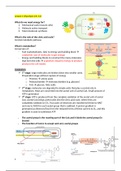
General fear appeal process
Message (fear appeal)
Perceived susceptibility / severity (cognition) fear emotion
Behavior change (conation)
Overall, fear appeal theories can be classified into three major groups, according to Dillard: drive theories,
parallel response models, and subjective expected utility (SEU) models
3
, 1. Drive theories
The level of fear arousal produced by a fear appeal acts as a drive to motivate actions.
o Drive is seen as a motivator to change attitudes and behavior
o Fear will function as a motivator
- It was argued that fear could have both facilitating (e.g., motivate appropriate self-protective
responses) and interfering (e.g., avoidance) effects.
o Facilitating: fear negative conditioning motivation to change but too much fear can
lead to skewed effect
o Interfering: too much fear too negative condition avoidance effects
- Drive theories suggested an inverted U-shaped relationship between fear and attitude change in
which a moderate amount of fear arousal was thought to produce the most attitude change.
Rejected because: this class of theories was rejected during the early 1970s due to a lack of support for the
inverted U-shaped model, acceptance of the message occurs when fear is reduced, was not supported
- Attention then turned to explaining emotional vs cognitive responses to fear appeals
2. Parallel reponse models
The parallel process model suggests that fear appeals produce two separate and potentially interdependent
processes:
- Danger control: cognitive response
- How to avoid the threat?
- Efforts to control the threat/danger
- Fear control: affective response
- How to reduce feelings of fear?
- Efforts to control one’s fear about the threat/danger
Rejected because Leventhal failed to explicitly state when danger control and fear control processes would be
initiated and the model was subsequently criticized as lacking specificity and being untestable
the model did change current thinking about fear appeals and separated emotional from cognitive
processes
Difference PRM - EPPM:
- PRM has no role for efficacy yet (the extent to which people think they can accelerate the behavior)
yet
- PRM does not include a stepwise appraisal
4
Wednesday readings:
Witte, K., & Allen, M. (2000). A meta-analysis of fear appeals: Implications for effective public health
campaigns. Health Education & Behavior, 27(5), 591-615 [ONLY READ PAGES 591-595]
Tannenbaum, M. B., Hepler, J., Zimmerman, R., Saul, L., Jacobs, S., Wilson, K., & Albarracin, D. (2015).
Appealing to fear: a meta-analysis of fear appeal effectiveness and theories. Psychological Bulletin,
141, 1178-1204.
Kok, G. J. (2016). Social psychology applied: Politics, theories, and the future. Valedictorian lecture,
Maastricht: Maastricht University. See
https://cris.maastrichtuniversity.nl/ws/portal-files/portal/5719713/Oratie_Kok_Gerjo.pdf [ONLY
READ PAGES 6-12]
Brown, S. L., & West, C. (2014). Sequencing the threat and recommendation components of
persuasive messages differentially improves the effectiveness of high-and low-distressing imagery in
an anti-alcohol message in students. British Journal of Health Psychology, 20(2),
324-340.
Week 2 Reflective decision making and health behaviour change
Monday readings:
Ajzen, I. (n.d.). Constructing a theory of planned behavior questionnaire. Retrieved
from:http://people.umass.edu/aizen/tpb.html
Ajzen, I. (n.d.). Sample TPB questionnaire. Retrieved from: http://peo-
ple.umass.edu/aizen/tpb.html
Ajzen, I. (n.d.). Designing a TPB intervention. Retrieved from: http://peo-
ple.umass.edu/aizen/tpb.html
Fishbein, M., & Cappella, J. N. (2006). The role of theory in developing effective health
communications. Journal of Communication, 56, S1-S17.
Jordan, A., Piotrowski, J. T., Bleakly, A., & Mallya, G. (2012). Developing media interventions to reduce
sugar sweetened beverage consumption. The Annals of the American Academy, 640, 118-135.
Wednesday reading:
De Bruijn, G.-J., Nguyen, M. H., Rhodes, R. E., & van Osch, L. (2017). Effects of preparatory and action
planning instructions on situation-specific and general fruit and snack intake. Appetite, 108, 161-170.
Week 3 Reflective versus impulsive processes and health behaviour change
Monday readings:
Rothman, A. J., Sheeran, P., & Wood, W. (2009). Reflective and automatic processes in the initiation
and maintenance of dietary change. Annals of Behavioral Medicine, 38(1), 4-17.
Papies, E. K., & Hamstra, P. (2010). Goal priming and eating behavior: Enhancing self-regulation by
environmental cues. Health Psychology, 29(4), 384-388.
McGowan, L., Cooke, L. J., Gardner, B., Beeken, R. J., Croker, H., & Wardle, J. (2013). Healthy feeding
habits: Efficacy results from a cluster-randomized, controlled exploratory trial of a novel, habit-based
intervention with parents. American Journal of Clinical Nutrition, 98(3), 769-777.
Week 4 Social Influence
Monday readings:
Prentice, D. (2008). Mobilizing and weakening peer influence as mechanisms for changing behavior.
Implications for alcohol intervention programs. In M. J. Prinstein & K. A. Dodge [Eds.], Understanding
peer influence in children and adolescents (pp. 161–180). New York, NY: Guildford Press. [access via
Canvas, see Module Week 4]
1
, Mollen, S., Rimal, R. N., Ruiter, R. A., & Kok, G. (2013). Healthy and unhealthy social norms and food
selection. Findings from a field-experiment. Appetite, 65, 83-89.
Wednesday reading:
Stok, F. M., de Ridder, D. T. D., de Vet, E., & de Wit, J. B. F. (2012). Minority talks: The influence of
descriptive social norms on fruit intake. Psychology & Health, 27(8), 956–70.
Week 5 Storytelling
Monday readings:
Moyer-Gusé, E. (2008). Toward a theory of entertainment persuasion: Explaining the persuasive
effects of entertainment-education messages. Communication Theory, 18(3), 407-425.
Murphy, S. T., Frank, L. B., Chatterjee, J. S., & Baezconde-Garbanati, L. (2013). Narrative versus non-
narrative: The role of identification, transportation, and emotion in reducing health disparities.
Journal of Communication, 63(1), 116-137.
Wednesday reading:
Graaf, A. D., Sanders, J., & Hoeken, H. (2016). Characteristics of narrative interventions and health
effects: a review of the content, form, and context of narratives in health-related narrative persuasion
research. Review of Communication Research, 4, 88-131
Week 6 Mode strategies
Monday readings:
Mayer, R. E., & Moreno, R. (2003). Nine ways to reduce cognitive load in multimedia learning.
Educational Psychologist, 38(1), 43-52.
Meppelink, C. S., Van Weert, J. C. M., Haven, C., & Smit, E. G. (2015). The effectiveness of health
animations in audiences with different health literacy levels: An experimental study. Journal of
Medical Internet Research, 17(1), e11.
Bol, N., Van Weert, J. C. M., De Haes, J. C. J. M., Loos, E. F., & Smets, E. M. A. (2015). The effect of
modality and narration style on recall of online health information: Results from an online
experiment. Journal of Medical Internet Research, 17(4), e104.
Week 7 Target group: targeting and tailoring
Monday readings:
Hawkins, R. P., Kreuter, M., Resnicow, K., Fishbein, M., & Dijkstra, A. (2008). Understanding tailoring
in communicating about health. Health Education Research, 23, 454-466.
Kreuter, M. W., & McClure, S. M. (2004). The role of culture in health communication. Annual Review
of Public Health, 25, 439-455.
Wednesday reading:
van Stralen, M. M., de Vries, H., Mudde, A. N., Bolman, C., & Lechner, L. (2009). The working
mechanisms of an environmentally tailored physical activity intervention for older adults: a
randomized controlled trial. International Journal of Behavioral Nutrition and Physical Activity 6(1), 1-
12.
2
,Week 1
A Meta-Analysis of Fear Appeals: Implications for Effective Public Health Campaigns (Witte & Allen, 2000)
Across the nearly 50 years of research on fear appeals, three key independent variables have been identified:
fear, perceived threat, and perceived efficacy.
- Fear is defined as a negatively valenced emotion, accompanied by a high level of arousal.
- Perceived threat
o Perceived susceptibility to the threat (i.e., the degree to which one feels at risk for
experiencing the threat)
o Perceived severity of the threat (i.e., the magnitude of harm expected from the threat)
- Perceived response efficacy
o Perceived self-efficacy (i.e., one’s beliefs about his or her ability to perform the
recommended response)
o Perceived response efficacy (i.e., one’s beliefs about whether the recommended response
works in averting the threat).
While fear (emotion) and threat (cognition) are conceptually distinct, they are intricately and reciprocally
related, such that the higher the perceived threat, the greater the fear experienced.
The outcomes studied in fear appeals appear to fall into two general classes:
1. Outcomes related to acceptance of the message’s recommendations
a. (i.e., attitudes, intentions, behaviors inline with the recommendations)
2. Outcomes related to rejection of the message
a. (i.e.,defensive avoidance, reactance, denial)
Emotions in persuasive messages
Differences between moods and emotions
- Mood: less intense, long lasting, positive or negative
- Emotions: short-lived and immediate
o Have adaptive functions
o Arise in response to an event that is personally relevant
o Motivates us to take action
What can emotions influence persuasion?
- Within the receiver, prior to the message
- Through prior contextual information
- Through the message itself
The effect of fear appeals
Affective appeals use functional approach using emotion and persuasion. Fear appeal is a message that has
the goal to arouse fear in order to motivate attitude and behavior change
General fear appeal process
Message (fear appeal)
Perceived susceptibility / severity (cognition) fear emotion
Behavior change (conation)
Overall, fear appeal theories can be classified into three major groups, according to Dillard: drive theories,
parallel response models, and subjective expected utility (SEU) models
3
, 1. Drive theories
The level of fear arousal produced by a fear appeal acts as a drive to motivate actions.
o Drive is seen as a motivator to change attitudes and behavior
o Fear will function as a motivator
- It was argued that fear could have both facilitating (e.g., motivate appropriate self-protective
responses) and interfering (e.g., avoidance) effects.
o Facilitating: fear negative conditioning motivation to change but too much fear can
lead to skewed effect
o Interfering: too much fear too negative condition avoidance effects
- Drive theories suggested an inverted U-shaped relationship between fear and attitude change in
which a moderate amount of fear arousal was thought to produce the most attitude change.
Rejected because: this class of theories was rejected during the early 1970s due to a lack of support for the
inverted U-shaped model, acceptance of the message occurs when fear is reduced, was not supported
- Attention then turned to explaining emotional vs cognitive responses to fear appeals
2. Parallel reponse models
The parallel process model suggests that fear appeals produce two separate and potentially interdependent
processes:
- Danger control: cognitive response
- How to avoid the threat?
- Efforts to control the threat/danger
- Fear control: affective response
- How to reduce feelings of fear?
- Efforts to control one’s fear about the threat/danger
Rejected because Leventhal failed to explicitly state when danger control and fear control processes would be
initiated and the model was subsequently criticized as lacking specificity and being untestable
the model did change current thinking about fear appeals and separated emotional from cognitive
processes
Difference PRM - EPPM:
- PRM has no role for efficacy yet (the extent to which people think they can accelerate the behavior)
yet
- PRM does not include a stepwise appraisal
4