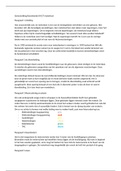
Hominid Studies
Evidence of primate ancestry
® Biogeographical evidence
® Most present-day primates = arboreal
® Adaptations to arboreal life
↳ clavicle = for stability = support weight
↳ long slender limbs = freely rotate = movement in trees
↳ mobile opposable thumbs = grasp/hold onto branches
® All primates:
↳ enlarged + complex brain
↳ flattened face + reduced snout = use vision more than smell
↳ forward facing eyes = stereoscopic vision
↳ flat nails
↳ molars + premolars = cusps that are low + rounded
↳ complex social behaviour = 1 offspring with extended care
The science of hominid studies depends on…
® Fossil remains
® Genetic evidence
® Archaeology
Anatomical similarities between apes and humans
® Opposable toes + thumbs = powerfully grip branches
® Fingers + toes with broad pads = grip
® Flat nails = protect pads
® Powerful hind limbs = standing
® Good vision
® Binocular vision = eyes face forward
® Eyes = cones = colour vision
® Large brain
® Upright posture
® ¹ external tails
® Molar + premolar teeth with rounded/low cusps
® Complex social behaviour = 1 offspring @ a time & extensive parental care
Human features not found in apes
® Humans = bipedal = all the time
® Large + highly developed
↳ make tools
↳ use + control fire
, ↳ use language + complex sentences = syntax
® Omnivorous = survive = variety of habitats
® Reduction = body hair
® First evolutionary adaptation = bipedalism
® Second evolutionary adaptation = toolmaking
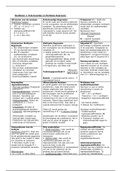
Differences between humans vs primates
Humans (Homo sapiens) African apes
Cranium/brain Large Small
Brow ridges Not well developed Well developed
Spine More curved = support Less curved
Pelvic girdle Short + wide Long + narrow
Canines Small Large
Palate shape Small + semi-circular Long + rectangular
Jaws Small + less prognathous Large + more
(protruding) prognathous
(protruding)
Cranial ridges None Across top of cranium
Foramen magnum Forward position = Backward position
bipedal locomotion
Fossil evidence
® Foramen magnum = further forward & central \ skull = balanced = vertical spine
® S-shaped spine = spring = enable upright posture
® Shorter + broader pelvis = efficient weight distribution in upright position
® Femur = angled inwards = weight distribution = easier as knees = under body
® Big toe = in line with other toes = thrust + balance = walking
® Foot arch = absorb shock while walking
Palaeontologists: study fossils to provide info on structure, movement, lifestyle &
environment
1. Bipedalism
2. Dentition + palate shape
3. Brain size
4. Prognathism
5. Cranial + brow ridges
Evidence of primate ancestry
® Biogeographical evidence
® Most present-day primates = arboreal
® Adaptations to arboreal life
↳ clavicle = for stability = support weight
↳ long slender limbs = freely rotate = movement in trees
↳ mobile opposable thumbs = grasp/hold onto branches
® All primates:
↳ enlarged + complex brain
↳ flattened face + reduced snout = use vision more than smell
↳ forward facing eyes = stereoscopic vision
↳ flat nails
↳ molars + premolars = cusps that are low + rounded
↳ complex social behaviour = 1 offspring with extended care
The science of hominid studies depends on…
® Fossil remains
® Genetic evidence
® Archaeology
Anatomical similarities between apes and humans
® Opposable toes + thumbs = powerfully grip branches
® Fingers + toes with broad pads = grip
® Flat nails = protect pads
® Powerful hind limbs = standing
® Good vision
® Binocular vision = eyes face forward
® Eyes = cones = colour vision
® Large brain
® Upright posture
® ¹ external tails
® Molar + premolar teeth with rounded/low cusps
® Complex social behaviour = 1 offspring @ a time & extensive parental care
Human features not found in apes
® Humans = bipedal = all the time
® Large + highly developed
↳ make tools
↳ use + control fire
, ↳ use language + complex sentences = syntax
® Omnivorous = survive = variety of habitats
® Reduction = body hair
® First evolutionary adaptation = bipedalism
® Second evolutionary adaptation = toolmaking
Differences between humans vs primates
Humans (Homo sapiens) African apes
Cranium/brain Large Small
Brow ridges Not well developed Well developed
Spine More curved = support Less curved
Pelvic girdle Short + wide Long + narrow
Canines Small Large
Palate shape Small + semi-circular Long + rectangular
Jaws Small + less prognathous Large + more
(protruding) prognathous
(protruding)
Cranial ridges None Across top of cranium
Foramen magnum Forward position = Backward position
bipedal locomotion
Fossil evidence
® Foramen magnum = further forward & central \ skull = balanced = vertical spine
® S-shaped spine = spring = enable upright posture
® Shorter + broader pelvis = efficient weight distribution in upright position
® Femur = angled inwards = weight distribution = easier as knees = under body
® Big toe = in line with other toes = thrust + balance = walking
® Foot arch = absorb shock while walking
Palaeontologists: study fossils to provide info on structure, movement, lifestyle &
environment
1. Bipedalism
2. Dentition + palate shape
3. Brain size
4. Prognathism
5. Cranial + brow ridges