

A35
CHAPTER 32 – POVERTY
Question Remarks
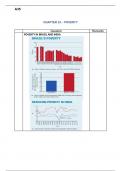
POVERTY IN BRAZIL AND INDIA
, A35
EXTRACT A: ABSOLUTE POVERTY IN INDIA
Between 2004 and 2011, poverty in India declined sharply from
38.9 per cent to 21 2 per cent at the international poverty line
($1.90 PPP/day). High economic growth, a rapid rise in rural
wages, and increased non-farm activity, especially in
construction, were some of the main drivers of poverty
reduction. However, despite the success, India still has a long
way to go. In 201 1, the latest year for which consumption
expenditure data is available, one in five Indians was poor - a
total of nearly 270 million people.
Between 2005 and 201 2, India achieved its fastest rate of
economic growth in history - averaging 8.5 per cent per year.
The annual consumption per capita growth of the bottom 40 per
cent of the population was 3.2 per cent per annum in the period
2004 to 2011, However, this growth was slower than the growth
in consumption for the entire population.
A report by the McKinsey Global Institute in 2014 says that
despite rapid GDP growth, the majority of India's labour force
remains engaged in low productivity activities. Many of the very
poor receive most of their income from agriculture. A faster shift
of labour from farm to non-farm jobs (matching China's pace)
could have lifted many millions more out of extreme poverty.
Increasing the number of jobs in manufacturing, construction
and labour intensive services, such as tourism and retail trade,
can help lower skilled workers move out of farm jobs into more
productive sectors.
With more intense competition, there is concern that the
government's redistribution policies will cause economic pain.
The plan to spend more on welfare, using revenues from tax
increases on large companies and high income earners, could
reduce incentives to invest. Increasing the minimum wage by 15
per cent a year to 10,000 Won by 2020, will be a further new
cost for South Korean firms.
In March 2018, the US was moving towards an arrangement with
South Korea to stop currency manipulation. The goal was to
prevent competitive devaluation. Although the US has not
formally called South Korea a currency manipulator, it wants to
CHAPTER 32 – POVERTY
Question Remarks
POVERTY IN BRAZIL AND INDIA
, A35
EXTRACT A: ABSOLUTE POVERTY IN INDIA
Between 2004 and 2011, poverty in India declined sharply from
38.9 per cent to 21 2 per cent at the international poverty line
($1.90 PPP/day). High economic growth, a rapid rise in rural
wages, and increased non-farm activity, especially in
construction, were some of the main drivers of poverty
reduction. However, despite the success, India still has a long
way to go. In 201 1, the latest year for which consumption
expenditure data is available, one in five Indians was poor - a
total of nearly 270 million people.
Between 2005 and 201 2, India achieved its fastest rate of
economic growth in history - averaging 8.5 per cent per year.
The annual consumption per capita growth of the bottom 40 per
cent of the population was 3.2 per cent per annum in the period
2004 to 2011, However, this growth was slower than the growth
in consumption for the entire population.
A report by the McKinsey Global Institute in 2014 says that
despite rapid GDP growth, the majority of India's labour force
remains engaged in low productivity activities. Many of the very
poor receive most of their income from agriculture. A faster shift
of labour from farm to non-farm jobs (matching China's pace)
could have lifted many millions more out of extreme poverty.
Increasing the number of jobs in manufacturing, construction
and labour intensive services, such as tourism and retail trade,
can help lower skilled workers move out of farm jobs into more
productive sectors.
With more intense competition, there is concern that the
government's redistribution policies will cause economic pain.
The plan to spend more on welfare, using revenues from tax
increases on large companies and high income earners, could
reduce incentives to invest. Increasing the minimum wage by 15
per cent a year to 10,000 Won by 2020, will be a further new
cost for South Korean firms.
In March 2018, the US was moving towards an arrangement with
South Korea to stop currency manipulation. The goal was to
prevent competitive devaluation. Although the US has not
formally called South Korea a currency manipulator, it wants to


