The layout for the course was
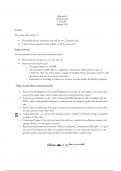
1. Exam format
o Question 1: Essay Question (50)
o Question 2
Part 1 – Essay question (15)
Part 2 – Short Question (5)
Part 3 – Essay Question (10)
Part 4 – four short questions (20)
N.B. There are no MCQ and the format has changed from the last years.
2. Lecturer gave a list of 9 questions which covers the entire theme of the exam paper. The page
numbers in the textbook was given in order to find the answers. In addition, she explained how
the question should be answered and what it must contain.
The 9 questions cover 90% of the exam paper. The other 10% is a question that will relate to
presumptions, which the lecturer did not want to discuss.
3. The most important thing for the exam is that 99 percent of the time, you have to use reference
to case law in answering the question. Even if there is no mention made of case law.
Further, if a case is discussed at length in the textbook, when you use it in the exam, you need to
state the facts, the findings and the judgment. For other cases that are just mentioned and very
little detail is given, you need only know the “little detail” and you don’t need to go and research
the case.
4. You can write up your questions and send it to the lecturer (I Moodley) and she said she will
respond with detailed feedback.
1. Exam format
o Question 1: Essay Question (50)
o Question 2
Part 1 – Essay question (15)
Part 2 – Short Question (5)
Part 3 – Essay Question (10)
Part 4 – four short questions (20)
N.B. There are no MCQ and the format has changed from the last years.
2. Lecturer gave a list of 9 questions which covers the entire theme of the exam paper. The page
numbers in the textbook was given in order to find the answers. In addition, she explained how
the question should be answered and what it must contain.
The 9 questions cover 90% of the exam paper. The other 10% is a question that will relate to
presumptions, which the lecturer did not want to discuss.
3. The most important thing for the exam is that 99 percent of the time, you have to use reference
to case law in answering the question. Even if there is no mention made of case law.
Further, if a case is discussed at length in the textbook, when you use it in the exam, you need to
state the facts, the findings and the judgment. For other cases that are just mentioned and very
little detail is given, you need only know the “little detail” and you don’t need to go and research
the case.
4. You can write up your questions and send it to the lecturer (I Moodley) and she said she will
respond with detailed feedback.