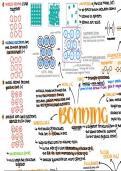
metal atoms close LIMITATIONS of Particle Model (HT)
1 SOLID
, Ou
together S
↳ no forces shown between atoms -
↳ atoms as
⑤ S A
spheres
.
⑤
a
↳ atoms are solid
5
I I
B
W N C C POLYME
.
8
I
③
④
varen-electren I
t x
+ I electrostatic forces
⑤
L
between positive metal icns monomer
2 valence electrons are t
+ I
Ame and delocalised electrons
↑
3)
↑
-
t t 1)
free to move around
1)
- ⑧
-
(delocatised)(-)
-
-
I t
polymerisa
outershell
t 1) t t
di makes metals good conductors
v
-
⑤
13
heat and electricity
-
!
I + I
monomer pol
&
88
S
->
ablet move freely
through the metal
delocalised electrons -
METAL ATOMS
④
·
↳ ↳> express their negative charge
(w/valence electrons shown)
transfer o
-> electrons
IONIC
metal atoms become lose e positiv
(metal+ non-metal)
:
3
METALLIC
↑
positive ions(t)
&
gain e negat
:
-) cons
metallic bonds are formed due ↑ form (t) cons forms
+
88
+
o + t
t
S
t
to the electrostatic
between positive
the sea
metal ions and
delocalised electrons
forces
W -> COVALENT Sh
④
single bon
·
⑲*)
t
MA double bo
4 positive ions and electrons I I Triple bon
attract each other
NANOSCIENCE
allotrope -> a different structural form of the
I
I Est At ↳ the study afstructures the same chemical element
1-100nm insize
.
⑤
5
that are
(in the same physical state)
·
t t t .
B
I
* ·
.
8
↑
L
I
④
↳
high surface area to volume ratic
t
↳ side of a cube decreases
as the by a factor of 10 ,
↳ electrostatic forces the S/A Vol ratio increases by a factor 10 SILICON
(SiO2)
:
.
.
DIOXIDE
↳ this keeps the structure
↳ smaller
quantities are more effective
together interestPatente
1 SOLID
, Ou
together S
↳ no forces shown between atoms -
↳ atoms as
⑤ S A
spheres
.
⑤
a
↳ atoms are solid
5
I I
B
W N C C POLYME
.
8
I
③
④
varen-electren I
t x
+ I electrostatic forces
⑤
L
between positive metal icns monomer
2 valence electrons are t
+ I
Ame and delocalised electrons
↑
3)
↑
-
t t 1)
free to move around
1)
- ⑧
-
(delocatised)(-)
-
-
I t
polymerisa
outershell
t 1) t t
di makes metals good conductors
v
-
⑤
13
heat and electricity
-
!
I + I
monomer pol
&
88
S
->
ablet move freely
through the metal
delocalised electrons -
METAL ATOMS
④
·
↳ ↳> express their negative charge
(w/valence electrons shown)
transfer o
-> electrons
IONIC
metal atoms become lose e positiv
(metal+ non-metal)
:
3
METALLIC
↑
positive ions(t)
&
gain e negat
:
-) cons
metallic bonds are formed due ↑ form (t) cons forms
+
88
+
o + t
t
S
t
to the electrostatic
between positive
the sea
metal ions and
delocalised electrons
forces
W -> COVALENT Sh
④
single bon
·
⑲*)
t
MA double bo
4 positive ions and electrons I I Triple bon
attract each other
NANOSCIENCE
allotrope -> a different structural form of the
I
I Est At ↳ the study afstructures the same chemical element
1-100nm insize
.
⑤
5
that are
(in the same physical state)
·
t t t .
B
I
* ·
.
8
↑
L
I
④
↳
high surface area to volume ratic
t
↳ side of a cube decreases
as the by a factor of 10 ,
↳ electrostatic forces the S/A Vol ratio increases by a factor 10 SILICON
(SiO2)
:
.
.
DIOXIDE
↳ this keeps the structure
↳ smaller
quantities are more effective
together interestPatente