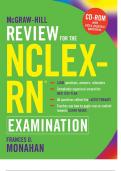
Saunders Comprehensive Review for the NCLEX-RN Examination 6Th Edition
A. Client Self-Determination Act 1. The Client Self-Determination Act is a law that indicates clients must be provided with information about their rights to identify written directions about the care that they wish to receive in the event that they become incapacitated and are unable to make health care decisions. 2. On admission to a health care facility, the client is asked about the existence of an advance directive, and if one exists, it must be documented and included as part of the medical record; if the client signs an advance directive at the time of admission, it must be documented in the client’s medical record. 3. The two basic types of advance directives include living wills and durable powers of attorney. a. Living will: Lists the medical treatment that a client chooses to omit or refuse if the client becomes unable to make decisions and is terminally ill. b. Durable powers of attorney: Appoints a person (health care proxy) chosen by the client to make health care decisions on the client’s behalf when the client can no longer make decisions. B. Do not resuscitate (DNR) orders 1. The DNR is an order written by a HCP when a client has indicated a desire to be allowed to die if the client suffers cardiac or respiratory arrest. 2. The client or his or her legal representative must provide informed consent for the DNR status. 3. The DNR order must be defined clearly so that other treatment, not refused by the client, will be continued. 4. The DNR order must be reviewed regularly according to agency policy. 5. All health care personnel must know whether a client has a DNR order. 6. If a client does not have a DNR order, health care personnel need to make every effort to revive the client. 7. DNR protocols may vary from state to state, and it is important for the nurse to know his or her state’s protocols. C. The nurse’s role 1. Discussing advance directives with the client opens the communication channel to establish what is important to the client and what the client may view as promoting life versus prolonging dying. 2. The nurse needs to ensure that the client has been provided with information about the right to identify written directions about the care that the client wishes to receive. 3. On admission to a health care facility, the nurse determines whether an advance directive exists and ensures that it is part of the medical record. 4. The nurse ensures that the HCP is aware of the presence of an advance directive. 5. All health care workers need to follow the directions of an advance directive to be safe from liability. 6. Some agencies have specific policies that prohibit the nurse from signing as a witness to a legal document, such as a living will. 7. If allowed by the agency, when the nurse acts as a witness to a legal document, the nurse must document the event and the factual circumstances surrounding the signing in the medical record; documentation as a witness should include who was present, any significant comments by the client, and the nurse’s observations of the client’s conduct during this process. XII. Reporting Responsibilities A. Nurses are required to report certain communicable diseases or criminal activities such as child or elder abuse or domestic violence; dog bite or other animal bite, gunshot, or stab wounds, assaults, and homicides; and suicides to the appropriate authorities. B. Impaired nurse 1. If the nurse suspects that a co-worker is abusing chemicals and potentially jeopardizing a client’s safety, the nurse must report the individual to the nursing administration in a confidential manner. (Client safety is always the first priority.) 2. Nursing administration notifies the board of nursing regarding the nurse’s behavior. C. Occupational Safety and Health Act (OSHA) 1. OSHA requires that an employer provide a safe workplace for employees according to regulations. 2. Employees can confidentially report working conditions that violate regulations. 3. An employee who reports unsafe working conditions cannot be retaliated against by the employer. D. Sexual harassment 1. Sexual harassment is prohibited by state and federal laws. 2. Sexual harassment includes unwelcome conduct of a sexual nature. 3. Follow agency policies and procedures to handle reporting a concern or complaint. CRITICAL THINKING What Should You Do? Answer: If the client indicates that he or she does not want a prescribed therapy, treatment, or procedure such as surgery, then the nurse should further investigate the client’s request. If the client indicates that he or she has changed their mind about surgery, the nurse should assess the client and explore with the client his or her concerns about not wanting the surgery. The nurse would then withhold further surgical preparation and contact the surgeon to report the client’s request so that the surgeon can discuss the consequences of not having the surgery with the client. Under no circumstances would the nurse continue with surgical preparation if the client has indicated that he or she does not want the surgery. Further assessment and follow-up related to the client’s request need to be done. In addition, it is the client’s right to refuse treatment. References Ignatavicius, Workman (2013), p. 252; Potter et al (2013), pp. 299, 320-322. PRACTICE QUESTIONS 13. The nurse hears a client calling out for help, hurries down the hallway to the client’s room, and finds the client lying on the floor. The nurse performs an assessment, assists the client back to bed, notifies the health care provider of the incident, and completes an incident report. Which statement should the nurse document on the incident report? 1. The client fell out of bed. 2. The client climbed over the side rails. 3. The client was found lying on the floor. 4. The client became restless and tried to get out of bed. 14. A client is brought to the emergency department by emergency medical services (EMS) after being hit by a car. The name of the client is unknown, and the client has sustained a severe head injury and multiple fractures and is unconscious. An emergency craniotomy is required. Regarding informed consent for the surgical procedure, which is the best action? 1. Obtain a court order for the surgical procedure. 2. Ask the EMS team to sign the informed consent. 3. Transport the victim to the operating room for surgery. 4. Call the police to identify the client and locate the family. 15. The nurse has just assisted a client back to bed after a fall. The nurse and health care provider have assessed the client and have determined that the client is not injured. After completing the incident report, the nurse should implement which action next? 1. Reassess the client. 2. Conduct a staff meeting to describe the fall. 3. Document in the nurse’s notes that an incident report was completed. 4. Contact the nursing supervisor to update information regarding the fall. 16. The nurse arrives at work and is told to report (float) to the intensive care unit (ICU) for the day because the ICU is understaffed and needs additional nurses to care for the clients. The nurse has never worked in the ICU. The nurse should take which action first? 1. Call the hospital lawyer. 2. Refuse to float to the ICU. 3. Call the nursing supervisor. 4. Identify tasks that can be performed safely in the ICU. 17. The nurse who works on the night shift enters the medication room and finds a co-worker with a tourniquet wrapped around the upper arm. The co-worker is about to insert a needle, attached to a syringe containing a clear liquid, into the antecubital area. Which is the most appropriate action by the nurse? 1. Call security. 2. Call the police. 3. Call the nursing supervisor. 4. Lock the co-worker in the medication room until help is obtained. 18. A hospitalized client tells the nurse that a living will is being prepared and that the lawyer will be bringing the will to the hospital today for witness signatures. The client asks the nurse for assistance in obtaining a witness to the will. Which is the most appropriate response to the client? 1. “I will sign as a witness to your signature.” 2. “You will need to find a witness on your own.” 3. “Whoever is available at the time will sign as a witness for you.” 4. “I will call the nursing supervisor to seek assistance regarding your request.” 19. The nurse has made an error in a narrative documentation of an assessment finding on a client and obtains the client’s record to correct the error. The nurse should take which action to correct the error? 1. Documenting a late entry into the client’s record 2. Trying to erase the error for space to write in the correct data 3. Using whiteout to delete the error to write in the correct data 4. Drawing one line through the error, initialing and dating, and then documenting the correct information 20. Which identifies accurate nursing documentation notations? Select all that apply. 1. The client slept through the night. 2. Abdominal wound dressing is dry and intact without drainage. 3. The client seemed angry when awakened for vital sign measurement. 4. The client appears to become anxious when it is time for respiratory treatments. 5. The client’s left lower medial leg wound is 3 cm in length without redness, drainage, or edema. 21. A nursing instructor delivers a lecture to nursing students regarding the issue of client’s rights and asks a nursing student to identify a situation that represents an example of invasion of client privacy. Which situation, if identified by the student, indicates an understanding of a violation of this client right? 1. Performing a procedure without consent 2. Threatening to give a client a medication 3. Telling the client that he or she cannot leave the hospital 4. Observing care provided to the client without the client’s permission 22. Nursing staff members are sitting in the lounge taking their morning break. An unlicensed assistive personnel (UAP) tells the group that she thinks that the unit secretary has acquired immunodeficiency syndrome (AIDS) and proceeds to tell the nursing staff that the secretary probably contracted the disease from her husband, who is supposedly a drug addict. Which legal tort has the UAP violated? 1. Libel 2. Slander 3. Assault 4. Negligence 23. An 87-year-old woman is brought to the emergency department for treatment of a fractured arm. On physical assessment, the nurse notes old and new ecchymotic areas on the client’s chest and legs and asks the client how the bruises were sustained. The client, although reluctant, tells the nurse in confidence that her son frequently hits her if supper is not prepared on time when he arrives home from work. Which is the most appropriate nursing response? 1. “Oh, really. I will discuss this situation with your son.” 2. “Let’s talk about the ways you can manage your time to prevent this from happening.” 3. “Do you have any friends that can help you out until you resolve these important issues with your son?” 4. “As a nurse, I am legally bound to report abuse. I will stay with you while you give the report and help find a safe place for you to stay.” 24. The nurse calls the heath care provider (HCP) regarding a new medication prescription because the dosage prescribed is higher than the recommended dosage. The nurse is unable to locate the HCP, and the medication is due to be administered. Which action should the nurse take? 1. Contact the nursing supervisor. 2. Administer the dose prescribed. 3. Hold the medication until the HCP can be contacted. 4. Administer the recommended dose until the HCP can be located. 25. The nurse employed in a hospital is waiting to receive a report from the laboratory via the facsimile (fax) machine. The fax machine activates and the nurse expects the report, but instead receives a sexually oriented photograph. Which is the most appropriate nursing action? 1. Call the police. 2. Cut up the photograph and throw it away. 3. Call the nursing supervisor and report the incident. 4. Call the laboratory and ask for the individual’s name who sent the photograph. ANSWERS 13. 3 Rationale: The incident report should contain the client’s name, age, and diagnosis. The report should contain a factual description of the incident, any injuries experienced by those involved, and the outcome of the situation. The correct option is the only one that describes the facts as observed by the nurse. Options 1, 2, and 4 are interpretations of the situation and are not factual information as observed by the nurse. Test-Taking Strategy: Focus on the subject, documentation of events, and read the information in the question to select the correct option. Remember to focus on factual information when documenting, and avoid including interpretations. This will direct you to the correct option. Review: Documentation principles related to incident reports Level of Cognitive Ability: Applying Client Needs: Safe and Effective Care Environment Integrated Process: Communication and Documentation Content Area: Leadership/Management—Ethical/Legal Priority Concepts: Communication; Health Care Law Reference: Huber (2013), pp. 305-358. 14. 3 Rationale: In general, there are two situations in which informed consent of an adult client is not needed. One is when an emergency is present and delaying treatment for the purpose of obtaining informed consent would result in injury or death to the client. The second is when the client waives the right to give informed consent. Option 1 will delay emergency treatment, and option 2 is inappropriate. Although option 4 may be pursued, it is not the best action. Test-Taking Strategy: Note the strategic word best. Recalling that when an emergency is present and a delay in treatment for the purpose of obtaining informed consent could result in injury or death will direct you to the correct option. Review: The issues surrounding informed consent Level of Cognitive Ability: Applying Client Needs: Safe and Effective Care Environment Integrated Process: Nursing Process—Implementation Content Area: Leadership/Management—Ethical/Legal Priority Concepts: Ethics; Health Care Law References: Potter et al (2013), pp. 302-303; Yoder-Wise (2011), pp. 79-81. 15. 1 Rationale: After a client’s fall, the nurse must frequently reassess the client because potential complications do not always appear immediately after the fall. The client’s fall should be treated as private information and shared on a “need to know” basis. Communication regarding the event should involve only the individuals participating in the client’s care. An incident report is a problem-solving document; however, its completion is not documented in the nurse’s notes. If the nursing supervisor has been made aware of the incident, the supervisor will contact the nurse if status update is necessary. Test-Taking Strategy: Focus on the data in the question and the strategic word next. Using the steps of the nursing process will direct you to the correct option. Remember that assessment is the first step. Review: Guidelines related to incident reports and care to the client after sustaining a fall Level of Cognitive Ability: Applying Client Needs: Safe and Effective Care Environment Integrated Process: Nursing Process—Implementation Content Area: Fundamental Skills—Safety Priority Concepts: Communication; Safety Reference: Potter et al (2013), pp. 358-371. 16. 4 Rationale: Floating is an acceptable legal practice used by hospitals to solve understaffing problems. Legally, the nurse cannot refuse to float unless a union contract guarantees that nurses can work only in a specified area or the nurse can prove the lack of knowledge for the performance of assigned tasks. When encountering this situation, the nurse should set priorities and identify potential areas of harm to the client. The nursing supervisor is called if the nurse is expected to perform tasks that he or she cannot safely perform. Calling the hospital lawyer is a premature action. Test-Taking Strategy: Note the strategic word first. Eliminate option 2 first because of the word refuse. Next, eliminate options 1 and 3 because they are premature actions. Review: Nursing responsibilities related to floating Level of Cognitive Ability: Applying Client Needs: Safe and Effective Care Environment Integrated Process: Nursing Process—Implementation Content Area: Leadership/Management—Ethical/Legal Priority Concepts: Care Coordination; Professionalism References: Potter et al (2013), p. 304; Yoder-Wise (2011), pp. 77-78. 17. 3 Rationale: Nurse practice acts require reporting impaired nurses. The board of nursing has jurisdiction over the practice of nursing and may develop plans for treatment and supervision of the impaired nurse. This incident needs to be reported to the nursing supervisor, who will then report to the board of nursing and other authorities, such as the police, as required. The nurse may call security if a disturbance occurs, but no information in the question supports this need, and so this is not the appropriate action. Option 4 is an inappropriate and unsafe action. Test-Taking Strategy: Note the strategic words most appropriate. Eliminate option 4 first because this is an inappropriate and unsafe action. Recall the lines of organizational structure to assist in directing you to the correct option. Review: The nurse’s responsibilities when dealing with an impaired nurse Level of Cognitive Ability: Applying Client Needs: Safe and Effective Care Environment Integrated Process: Nursing Process—Implementation Content Area: Leadership/Management—Ethical/Legal Priority Concepts: Ethics; Professionalism Reference: Yoder-Wise (2011), pp. 489-490. 18. 4 Rationale: Living wills, also known as natural death acts in some states, are required to be in writing and signed by the client. The client’s signature must be witnessed by specified individuals or notarized. Laws and guidelines regarding living wills vary from state to state, and it is the responsibility of the nurse to know the laws. Many states prohibit any employee, including the nurse of a facility where the client is receiving care, from being a witness. Option 2 is nontherapeutic and not a helpful response. The nurse should seek the assistance of the nursing supervisor. Test-Taking Strategy: Note the strategic words most appropriate. Options 1 and 3 are comparable or alike and should be eliminated first. Option 2 is eliminated because it is a nontherapeutic response. Review: Legal implications associated with living wills Level of Cognitive Ability: Applying Client Needs: Safe and Effective Care Environment Integrated Process: Nursing Process—Implementation Content Area: Leadership/Management—Ethical/Legal Priority Concepts: Health Care Law; Professionalism References: Ignatavicius, Workman (2013), pp. 107-108; Lewis et al (2011), p. 159. 19. 4 Rationale: If the nurse makes an error in narrative documentation in the client’s record, the nurse should follow agency policies to correct the error. This includes drawing one line through the error, initialing and dating the line, and then documenting the correct information. A late entry is used to document additional information not remembered at the initial time of documentation. Erasing data from the client’s record and the use of whiteout are prohibited. Test-Taking Strategy: Focus on the subject, correcting a documentation error, and use principles related to documentation. Recalling that alterations to a client’s record are to be avoided will assist in eliminating options 2 and 3. From the remaining options, focusing on the subject of the question and using knowledge regarding the principles related to documentation will direct you to the correct option. Review: The principles and guidelines related to documentation Level of Cognitive Ability: Applying Client Needs: Safe and Effective Care Environment Integrated Process: Communication and Documentation Content Area: Leadership/Management—Ethical/Legal Priority Concepts: Communication; Professionalism References: Perry, Potter, Elkin (2012), pp. 30-33; Potter et al (2013), p. 351. 20. 1, 2, 5 Rationale: Factual documentation contains descriptive, objective information about what the nurse sees, hears, feels, or smells. The use of inferences without supporting factual data is not acceptable because it can be misunderstood. The use of vague terms, such as seemed or appears is not acceptable because these words suggest that the nurse is stating an opinion. Test-Taking Strategy: Focus on the subject, accurate documentation notations. Eliminate options 3 and 4 because they are comparable or alike and include vague terms (seemed, appears). Review: Documentation guidelines Level of Cognitive Ability: Understanding Client Needs: Safe and Effective Care Environment Integrated Process: Communication and Documentation Content Area: Leadership/Management—Ethical/Legal Priority Concepts: Communication; Professionalism Reference: Potter et al (2013), pp. 350-352. 21. 4 Rationale: Invasion of privacy occurs with unreasonable intrusion into an individual’s private affairs. Performing a procedure without consent is an example of battery. Threatening to give a client a medication constitutes assault. Telling the client that the client cannot leave the hospital constitutes false imprisonment. Test-Taking Strategy: Focus on the subject, invasion of privacy. Noting the words without the client’s permission in option 4 will direct you to this option. Review: Situations that include invasion of privacy Level of Cognitive Ability: Understanding Client Needs: Safe and Effective Care Environment Integrated Process: Teaching and Learning Content Area: Leadership/Management—Ethical/Legal Priority Concepts: Ethics; Professionalism References: Potter et al (2013), pp. 301-302; Yoder-Wise (2011), pp. 82-83. 22. 2 Rationale: Defamation is a false communication or a careless disregard for the truth that causes damage to someone’s reputation, either in writing (libel) or verbally (slander). An assault occurs when a person puts another person in fear of a harmful or an offensive contact. Negligence involves the actions of professionals that fall below the standard of care for a specific professional group. Test-Taking Strategy: Note the subject, the legal tort violated. Focus on the data in the question and eliminate options 1 and 4 first because their definitions are unrelated to the data. Recalling that slander constitutes verbal defamation will direct you to the correct option from the remaining options. Review: The definitions of libel, slander, assault, and negligence Level of Cognitive Ability: Understanding Client Needs: Safe and Effective Care Environment Integrated Process: Nursing Process—Implementation Content Area: Leadership/Management—Ethical/Legal Priority Concepts: Health Care Law; Professionalism Reference: Potter et al (2013), p. 302. 23. 4 Rationale: The nurse must report situations related to child or elder abuse, gunshot wounds and other criminal acts, and certain infectious diseases. Confidential issues are not to be discussed with nonmedical personnel or the client’s family or friends without the client’s permission. Clients should be assured that information is kept confidential, unless it places the nurse under a legal obligation. Options 1, 2, and 3 do not address the legal implications of the situation and do not ensure a safe environment for the client. Test-Taking Strategy: Note the strategic words most appropriate. Focus on the data in the question and note that an 87-year-old woman is receiving physical abuse by her son. Recall the nursing responsibilities related to client safety and reporting obligations. Options 1, 2, and 3 should be eliminated because they are comparable or alike in that they do not protect the client from injury. Review: The nursing responsibilities related to reporting responsibilities Level of Cognitive Ability: Applying Client Needs: Safe and Effective Care Environment Integrated Process: Nursing Process—Implementation Content Area: Leadership/Management—Ethical/Legal Priority Concepts: Health Care Law; Interpersonal violence References: Potter et al (2013), pp. 301-302; Yoder-Wise (2011), pp. 82-83. 24. 1 Rationale: If the HCP writes a prescription that requires clarification, the nurse’s responsibility is to contact the HCP. If there is no resolution regarding the prescription because the HCP cannot be located or because the prescription remains as it was written after talking with the HCP, the nurse should contact the nurse manager or nursing supervisor for further clarification as to what the next step should be. Under no circumstances should the nurse proceed to carry out the prescription until obtaining clarification. Test-Taking Strategy: Eliminate options 2 and 4 first because they are comparable or alike and are unsafe actions. Holding the medication can result in client injury. The nurse needs to take action. The correct option clearly identifies the required action in this situation. Review: Nursing responsibilities related to the HCP’s prescriptions Level of Cognitive Ability: Applying Client Needs: Safe and Effective Care Environment Integrated Process: Nursing Process—Implementation Content Area: Leadership/Management—Ethical/Legal Priority Concepts: Clinical Judgment; Safety Reference: Potter et al (2013), p. 590. 25. 3 Rationale: Ensuring a safe workplace is a responsibility of an employing institution. Sexual harassment in the workplace is prohibited by state and federal laws. Sexually suggestive jokes, touching, pressuring a co-worker for a date, and open displays of or transmitting sexually oriented photographs or posters are examples of conduct that could be considered sexual harassment by another worker. If the nurse believes that he or she is being subjected to unwelcome sexual conduct, these concerns should be reported to the nursing supervisor immediately. Option 1 is unnecessary at this time. Options 2 and 4 are inappropriate initial actions. Test-Taking Strategy: Note the strategic words most appropriate. Remember that using the organizational channels of communication is best. This will assist in directing you to the correct option. Review: Nursing responsibilities when sexual harassment occurs in the workplace Level of Cognitive Ability: Applying Client Needs: Safe and Effective Care Environment Integrated Process: Nursing Process—Implementation Content Area: Leadership/Management—Ethical/Legal Priority Concepts: Health Care Law; Professionalism Reference: Yoder-Wise (2011), pp. 500-501. CHAPTER 8 Prioritizing Client Care: Leadership, Delegation, and Disaster Planning CRITICAL THINKING What Should You Do? The nurse notes that there has been an increase in the number of intravenous (IV) site infections that developed in the clients being cared for on the nursing unit. How should the nurse proceed to implement a quality improvement program? Answer located on p. 76. I. Health Care Delivery Systems A. Managed care 1. Managed care is a broad term used to describe strategies used in the health care delivery system that reduce the costs of health care. 2. Client care is outcome driven and is managed by a case management process. 3. Managed care emphasizes the promotion of health, client education and responsible self-care, early identification of disease, and the use of health care resources. B. Case management 1. Case management is a health care delivery strategy that supports managed care; it uses an interprofessional health care delivery approach that provides comprehensive client care throughout the client’s illness, using available resources to promote high-quality and cost-effective care. 2. Case management includes assessment and development of a plan of care, coordination of all services, referral, and follow-up. 3. Critical pathways are used, and variation analysis is conducted. Case management involves consultation and collaboration with an interprofessional health care team. C. Case manager 1. A case manager is a professional nurse (often one with a master’s degree) who assumes responsibility for coordinating the client’s care at admission and after discharge. 2. The case manager establishes a plan of care with the client, coordinates any interprofessional consultations and referrals, and facilitates discharge. D. Critical pathway 1. A critical pathway is a clinical management care plan for providing client- centered care and for planning and monitoring the client’s progress within an established time frame; interprofessional collaboration and teamwork ensure shared decision making and quality client care. 2. Variation analysis is a continuous process that the case manager and other caregivers conduct by comparing the specific client outcomes with the expected outcomes described on the critical pathway. 3. The goal of a critical pathway is to anticipate and recognize negative variance (i.e., client problems) early so that appropriate action can be taken and positive client outcomes can result. E. Nursing care plan 1. A nursing care plan is a written guideline and communication tool that identifies the client’s pertinent assessment data, problems and nursing diagnoses, goals, interventions, and expected outcomes. 2. The plan enhances interprofessional continuity of care by identifying specific nursing actions necessary to achieve the goals of care. 3. The client and family are involved in developing the plan of care, and the plan identifies short-term and long-term goals. 4. Client problems, goals, interventions, and expected outcomes are documented in the care plan, which provides a framework for evaluation of the client’s response to nursing actions. II. Nursing Delivery Systems A. Functional nursing 1. Functional nursing involves a task approach to client care, with tasks being delegated by the charge nurse to individual members of the team. 2. This type of system is task-oriented, and the team member focuses on the delegated task rather than the total client; this results in fragmentation of care and lack of accountability by the team member. B. Team nursing 1. The team generally is led by a registered nurse (team leader) who is responsible for assessing, developing nursing diagnoses, planning, and evaluating each client’s plan of care. 2. The team leader determines the work assignment; each staff member works fully within the realm of his or her educational and clinical expertise and job description. 3. Each staff member is accountable for client care and outcomes of care delivered in accordance with the licensing and practice scope as determined by health care agency policy and state law. 4. Modular nursing is similar to team nursing, but takes into account the structure of the unit; the unit is divided into modules allowing nurses to care for a group of clients who are geographically close by. C. Relationship-based practice (primary nursing) 1. Relationship-based practice (primary nursing) is concerned with keeping the nurse at the bedside, actively involved in client care, while planning goal-directed, individualized care. 2. One (primary) nurse is responsible for managing and coordinating the client’s care while in the hospital and for discharge, and an associate nurse cares for the client when the primary nurse is off-duty. D. Client-focused care 1. This is also known as the total care or case method; the registered nurse assumes total responsibility for planning and delivering care to a client. 2. The client may have different nurses assigned during a 24-hour period; however, the nurse provides all necessary care needed for the assigned time period. III. Professional Responsibilities A. Accountability 1. The process in which individuals have an obligation (or duty) to act and are answerable for their actions 2. Involves assuming only the responsibilities that are within one’s scope of practice and not assuming responsibility for activities in which competence has not been achieved 3. Involves admitting mistakes rather than blaming others and evaluating the outcomes of one’s own actions 4. Includes a responsibility to the client to be competent, providing nursing care in accordance with standards of nursing practice and adhering to the professional ethics codes Accountability is the acceptance of responsibility for one’s actions. The nurse is always responsible for his or her actions when providing care to a client. B. Leadership and management 1. Leadership is the interpersonal process that involves influencing others (followers) to achieve goals. 2. Management is the accomplishment of tasks or goals by oneself or by directing others. C. Theories of leadership and management (Box 8-1) BOX 8-1 Theories of Leadership and Management Charismatic: Based on personal beliefs and characteristics Quantum: Based on the concepts of chaos theory; maintaining a balance between tension and order prevents an unstable environment and promotes creativity Relational: Based on collaboration and teamwork Servant: Based on a desire to serve others; the leader emerges when another’s needs assume priority Shared: Based on the belief that several individuals share the responsibility for achieving the health care agency’s goals Transactional: Based on the principles of social-exchange theory Transformational: Based on the individual’s commitment to the health care agency’s vision; focuses on promoting change D. Leader and manager approaches 1. Autocratic a. The leader or manager is focused and maintains strong control, makes decisions, and addresses all problems. b. The leader or manager dominates the group and commands rather than seeks suggestions or input. 2. Democratic a. This is also called participative. b. It is based on the belief that every group member should have input into the development of goals and problem solving. c. A democratic leader or manager acts primarily as a facilitator and resource person and is concerned for each member of the group. d. The democratic style is a more “talk with the members” style and much less authoritarian than the autocratic style. 3. Laissez-faire a. A laissez-faire leader or manager assumes a passive, nondirective, and inactive approach and relinquishes part or all of the responsibilities to the members of the group. b. Decision making is left to the group, with the laissez-faire leader or manager providing little, if any, guidance, support, or feedback. 4. Situational a. Situational style uses a combination of styles based on the current circumstances and events. b. Situational styles are assumed according to the needs of the group and the tasks to be achieved. 5. Bureaucratic a. The leader or manager believes that individuals are motivated by external forces. b. The leader/manager relies on organizational policies and procedures for decision making. E. Effective leader and manager behaviors and qualities (Box 8-2) BOX 8-2 Effective Leader and Manager Behaviors and Qualities Behaviors Treats employees as unique individuals Inspires employees and stimulates critical thinking Shows employees how to think about old problems in new ways and assists with adapting to change Is visible to employees; is flexible; and provides guidance, assistance, and feedback Communicates a vision, establishes trust, and empowers employees Motivates employees to achieve goals Qualities Effective communicator ; promotes interprofessional collaboration Credible Critical thinker Initiator of action Risk taker Is persuasive and influences employees Adapted from Huber D: Leadership and nursing care management, ed 4, Philadelphia, 2010, Saunders. F. Functions of management (Box 8-3) BOX 8-3 Functions of Management Planning: Determining objectives and identifying methods that lead to achievement of objectives Organizing: Using resources (human and material) to achieve predetermined outcomes Directing: Guiding and motivating others to meet expected outcomes Controlling: Using performance standards as criteria for measuring success and taking corrective action G. Problem-solving process and decision making 1. Problem solving involves obtaining information and using it to reach an acceptable solution to a problem. 2. Decision making involves identifying a problem and deciding which alternatives can best achieve objectives. 3. Steps of the problem-solving process are similar to the steps of the nursing process (Table 8-1). TABLE 8-1 Similarities of the Problem-Solving Process and the Nursing Process Problem-Solving Process Nursing Process Identifying a problem and collecting data about the problem Assessment Determining the exact nature of the problem Analysis Deciding on a plan of action Planning Carrying out the plan Implementation Evaluating the plan Evaluation H. Types of managers 1. Frontline manager a. Frontline managers function in supervisory roles of those involved with delivery of client care. b. Frontline roles usually include charge nurse, team leader, and client care coordinator. c. Frontline managers coordinate the activity of all staff who provide client care and supervise team members during the manager’s period of accountability. 2. Middle manager a. Middle manager roles usually include unit manager and supervisor. b. A middle manager’s responsibilities may include supervising staff, preparing budgets, preparing work schedules, writing and implementing policies that guide client care and unit operations, and maintaining the quality of client services. 3. Nurse executive
Written for
- Institution
-
Nclex-rn-exam
- Study
-
Nclex-rn-exam
- Module
-
Nclex-rn-exam
Document information
- Uploaded on
- September 23, 2023
- Number of pages
- 4315
- Written in
- 2022/2023
- Type
- Exam (elaborations)
- Contains
- Questions & answers
Subjects
- saunders comprehensive
-
saunders comprehensive review for the nclex rn
-
nclex rn examination 6th edition