

100% satisfaction guarantee Immediately available after payment Both online and in PDF No strings attached 4.2 TrustPilot
logo-home
Exam (elaborations)

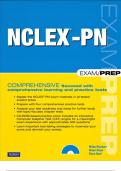
NCLEX-PN Exam Prep 2nd Edition - Exam Preperation

Rating
-
Sold
-
Pages
1200
Grade
A
Uploaded on
23-09-2023
Written in
2022/2023

NCLEX exam. The nurse preparing for the licensure exam should commit to memory the normal laboratory values, and be able to apply this knowledge to assist the client with meeting client needs. Exam Questions 1. The client is admitted complaining of nausea and vomiting for the past three days. The doctor has ordered D51/2NS with potassium added. Which action by the nurse is most appropriate? A. Obtain an IV controller B. Check the client’s vital signs hourly C. Check the sodium level D. Obtain an 18-gauge cathlon to begin the infusion 2. The client is admitted to the unit with third-degree burns to his chest and neck. The nurse should be vigilant to assess which of the following? A. Circulation B. Airway C. Urinary output D. Pain 3. The client with hypoparathyroidism has a lack of parathyroid hormone. This client will most likely have a serum calcium level of which of the following? A. 3.5 mg/dl B. 10.9 mg/dl C. 14.7 mg/dl D. 18.5 mg/dl 4. The client is admitted with a pH of 7.30, PaCO2 of 48mm Hg, and a HCO3 of 30. The nurse assesses these findings as which of the following? A. Metabolic acidosis B. Metabolic alkalosis C. Respiratory acidosis D. Respiratory alkalosis 5. The client is admitted following a motor vehicle accident. Extensive internal bleeding is suspected. The serum pH is 7.0, the PaCO2 is 32 mm/Hg, and the HCO3 is 20 mEq/dl. The nurse should assess the laboratory finding as which of the following? A. Metabolic acidosis B. Metabolic alkalosis C. Respiratory acidosis D. Respiratory alkalosis 6. Which of the following equipment should be obtained to safely administer magnesium sulfate? A. An internal fetal heart monitor B. An IV rate controller C. A blood administration set D. A wall suction device 7. Which medication can potentiate a fluid volume deficit? A. Insulin B. Inderal (propanolol) C. Lasix (furosemide) D. Valium (diazepam) 8. The client is admitted to the unit with anorexia nervosa. The nurse is aware that this client might show signs of which of the following? A. Metabolic alkalosis B. Metabolic acidosis C. Respiratory alkalosis D. Respiratory acidosim 9. The client is admitted with a blood glucose level of 545 mg/dl. Which action by the nurse indicates that the nurse is aware of the client’s needs? A. The nurse prepares an IV of D10W. B. The nurse prepares to administer insulin IV. C. The nurse obtains NPH insulin for administration. D. The nurse inserts a Foley catheter 10. The function of the lungs in acid-base balance is to perform which of the following? A. Control HCO3 levels B. Retain or blow off CO2 C. Regulate potassium levels D. Maintain sodium levels Answers to Exam Questions 1. Answer A is correct. If potassium is added to IV fluids, a controller is required because a too-rapid infusion of potassium can lead to cardiac arrhythmias. Answer B is incorrect only because there is no data to indicate that hourly vital signs should be obtained. Answer C is incorrect because the client has an order for D51/2NS, which is the same in saline as the client’s normal sodium level. Answer D is incorrect because an 18-gauge cathlon is not required. The nurse can use any size cathlon for this infusion. 2. Answer B is correct. Because the client has burns to the chest, it is likely that he has airway difficulty. The nurse should also assess the client for smoke inhalation. Answer A is incorrect because there is no data to indicate that circulation is the priority, although this is also important. Answer C is incorrect because there is no data to indicate an alteration in renal function. Answer D is incorrect because pain, although important, is not life- threatening. 3. Answer A is correct. The normal calcium level is 8.5–10.5 mg/dl. Answers B, C, and D are incorrect because all of these findings are elevated. 4. Answer C is correct. When assessing arterial blood gases, the nurse should look at the pH. In this case, the pH is low. After assessing the pH, the nurse should look at the PaCO2. In this case the PaCO2 is elevated. Finally, look at the HCO3. In this question, the HCO3 is elevated. Answers A, B, and D are incorrect findings because they are not consistent with the lab values given in the question. 5. Answer A is correct. The client with internal bleeding will most likely have metabolic acidosis. The laboratory findings reflect this suspicion. The pH is down, the PaCO2 is down, and the HCO3 is down. Answers B, C, and D are incorrect because they are not consistent with the lab values given in the question. 6. Answer B is correct. An IV rate controller must be obtained in order to safely administer magnesium sulfate. If magnesium sulfate is administered too quickly, toxicity can result, leading to respiratory arrest. Answer A is incorrect because there is no need to insert an internal fetal monitor. If magnesium sulfate is administered to the pregnant client, an external fetal monitor is sufficient. Answer C is incorrect because a standard IV administration set is used. Answer D is incorrect because there is no specific need for wall suction to be available with the administration of magnesium sulfate. 7. Answer C is correct. Lasix is a non–potassium-sparing diuretic. This drug can potentiate fluid volume deficit. Answer A is incorrect because insulin will force fluid back into the cell and will not increase fluid volume deficit. Answer B is incorrect because Inderal (propanolol) is a beta blocker used for the treatment of hypertension and cardiac disease. Inderal does not potentiate diuresis. Answer D is incorrect because Valium (diazepam) is a phenathiazine used as an anti-anxiety medication. This drug does not potentiate fluid volume deficit. 8. Answer B is correct. The client with anorexia nervosa is in a state of negative nitrogen balance. She is likely experiencing metabolic acidosis. Answer A is incorrect because metabolic alkalosis is reflected as an increase in HCO3. Clients with anorexia will show a deficit in HCO3. Answers C and D are incorrect because anorexia nervosa clients have a metabolic disorder, not a respiratory disorder. 9. Answer B is correct. The client with a blood glucose of 545 mg/dl is in metabolic acidosis. An IV with insulin will be ordered. Answer A is incorrect because D10W will increase the glucose level and potentiate the client’s condition. Answer C is incorrect because regular insulin will be ordered, not NPH, which is long-acting. Answer D is incorrect because although a Foley catheter might be ordered, it is not necessary for the improvement of the client’s condition. 10. Answer B is correct. The lungs assist in the control of acid-base balance by regulating the amount of CO2 that is retained or exhaled. The lungs are not in control of HCO3, potassium, or sodium; therefore, Answers A, C, and D are incorrect. Suggested Reading and Resources • Hogan, Mary Ann, and Daryle Wane. Fluid, Electrolytes, and Acid-Base Balance. Upper Saddle River, NJ: Pearson, 2003. • Paradiso, Catherine. Lippincott’s Review Series, Fluid and Electrolytes and Acid Base Balance. Philadelphia: Lippincott, Prentice Hall, 1988. • Rinehart, Sloan, Hurd, Exam Cram NCLEX-RN. Indianapolis: Que Publishing, 2005. Chapter 3. Care of the Client with Cardiovascular Disorders The cardiovascular system comprises the heart, the blood, and blood vessels and is responsible for the transport of oxygen and nutrients to the organ systems of the body. The heart is a cone-shaped organ made up of four chambers. The right atrium receives blood from the venous system by way of the superior and inferior vena cavae. Most of the venous blood flows through the tricuspid valve and into the right ventricle during the filling phase of cardiac contraction. The blood then moves to the lungs where carbon dioxide is released and oxygen is taken on. The left side of the heart then pumps the oxygenated blood to the body. During systole, the pressure exerted on the ventricle closes the mitral valve to prevent blood from flowing backward into the left atrium and opens the aortic valve to assist the ventricle to pump adequate oxygenated blood out of the heart into the aorta and to the body. Arteries and veins are types of blood vessels. Arteries transport oxygenated blood, and veins transport deoxygenated blood. Figure 3.1 provides an illustration of the anatomy of the heart for reference throughout the chapter. Figure 3.1. Anatomy of the human heart. In this chapter, you will discover diseases that affect the cardiovascular system, treatment of these diseases, and their effects on the client’s general health status. Hypertension Blood pressure is the force of blood exerted on the vessel walls. Systolic pressure is the pressure during the contraction phase of the heart and is the top number of a blood pressure reading. Diastolic pressure is the pressure during the relaxation phase or filling phase of the heart and is the bottom number of a blood pressure reading. Factors that alter peripheral resistance, heart rate, and stroke volume affect the blood pressure. Hypertension is defined as a systolic blood pressure greater than or equal to 140 over 90 mm Hg. If the client has diabetes or kidney disease, a systolic blood pressure greater than 130 mm Hg systolic and a diastolic blood pressure of 80 mm Hg or higher is considered hypertension and should be treated. The autonomic nervous system and circulating blood volume control blood pressure. Blood pressure also directly relates to circulating hormones such as antidiuretic hormones. Hypertension is classified as either primary or secondary. Primary or essential hypertension develops without apparent cause; secondary hypertension develops as the result of another illness or condition. Some examples of diseases that result in secondary hypertension are diabetes, peripheral vascular disease, renal disease, preeclampsia, coarctation of the aorta, adrenal tumors such as pheochromocytomas, brain tumors, encephalitis, and primary aldosteronism. This and other chapters of the book discuss these diseases. Obesity and smoking also affect blood pressure. Appropriate treatment of the contributing illness improves the symptoms associated with secondary hypertension. Malignant hypertension is an extremely elevated blood pressure that often results in a cerebral vascular accident or a myocardial infarction. Secondary hypertension occurs when another disease process causes the blood pressure to elevate above normal limits. Many medications can lead to secondary hypertension. Some examples of medications that can lead to hypertension are NSAIDs (nonstreroidal anti-inflammatory drugs), cocaine, amphetamines, bronchodilators, and estrogen preparations. The client might complain of a headache, blurred vision, and dyspnea. If renal function is impaired, the client will exhibit signs of uremia. A systolic blood pressure greater than 200 mm Hg and a diastolic blood pressure greater than 150 mm Hg is life-threatening. To prevent further deterioration of the client’s condition, medical personnel must implement prompt intervention. Diagnosing the Client with Hypertension The accuracy of a BP reading depends on the correct selection of cuff size. The bladder of the blood pressure cuff size should be sufficient to encircle the arm or thigh. According to the American Heart Association, the bladder width should be approximately 40% of the circumference or 20% wider than the diameter of the midpoint of the extremity. A too-small blood pressure cuff yields a false high reading, whereas a too-large blood pressure cuff yields a false low reading. For accuracy, the arm being used to check the blood pressure should be held at the level of the heart. The blood pressure should be taken on at least two occasions sitting, standing, and in a supine position. Diagnosis of hypertension involves conducting a comprehensive history of illness and stressors in the client’s life and medications taken by the client. Laboratory studies must be completed to determine any underlying illness that might be present. Some laboratory studies indicate the presence of protein in the urine. Others studies measure serum creatinine levels, blood urea nitrogen, serum corticoids, and 17-ketosteroids in the urine. The presence of serum corticoids and 17-ketosteroids in the urine is diagnostic of Cushing’s disease or increased function of the adrenal glands. A radiography study, such as an intravenous pyelography (IVP), can confirm renal disease. X-rays and computer tomography (CT) scans to determine the presence of tumors might also be ordered. An electrocardiogram (ECG) is valuable in determining the extent of cardiovascular involvement. Ultrasounds of the kidneys or the presence of adrenal tumors can also assist the physician with making a diagnosis of secondary hypertension. Managing the Client with Hypertension Management of hypertension includes a program of stress reduction, diet, smoking cessation, and exercise. A diet low in sodium is suggested. If the client’s cholesterol level is elevated, a low-fat, low-cholesterol diet is ordered The National Cholesterol Education Program recommends screening guidelines based on • Total serum cholesterol and high-density lipoprotein (HDL) levels in persons that do not show signs of cardiac or peripheral vascular disease • Total serum cholesterol and HDL levels in clients with risk factors for heart disease A desirable high-density lipoprotein level is above 40 mg/dL, and a desirable low-density lipoprotein (LDL) level is below 100 mg/dL. A triglyceride level of 150 mg/dl is considered normal. A triglyceride level of 200 mg/dL or higher indicates that the client is at risk for cardiovascular disease. Scientists recently found that homocysteine, a sulfur-containing amino acid derived from dietary protein, plays a part in the development of heart disease. A serum homocysteine level greater than 15 μmol/L is considered a risk factor. Current studies indicate that vitamin D might help to slow or prevent the development of coronary disease. Monounsaturated fats found in canola oil, olive oil, and nuts are high in polyunsaturated oils. These oils are recommended for individuals at risk for coronary disease. Eggs are saturated fats and should be limited by clients with risk for heart disease. The client is taught to avoid palm oil and coconut oil. If a change in diet does not lower the client’s cholesterol level, the doctor might prescribe hyperlipidemic medications such as simvastatin (Zocor), gemfibrozil (Lopid), or ezetimibe (Zetia). If diet, weight control, and exercise are unsuccessful in controlling the client’s hypertension, the healthcare provider might need to treat the client with a diuretic and/or an antihypertensive medication. There are three types of diuretics. Thiazide diuretics such as hydrochlorothiazide (HCTZ) and Furosemide (Lasix), a loop diuretic, do not spare potassium. The nurse should assess the client taking non–potassium-sparing diuretics for signs of hypokalemia. Potassium-sparing diuretics work by inhibiting the creation of antidiuretic hormone, thereby decreasing the amount of sodium ions. Diuretics are usually prescribed to be taken in the morning on a one-time-daily regime. Taking the diuretic in the morning allows the client to sleep comfortably during the night rather than experiencing nocturia (night-time voiding). If diuretics alone are unsuccessful in lowering the blood pressure, the physician might need to add an antihypertensive medication. Beta-adrenergic blocking agents lower blood pressure by blocking the beta receptors. Bradycardia (a heart rate of less than 60 beats per minute) and congestive heart failure are possible complications of this type of medication. The client should be taught to check his pulse rate daily and report bradycardia to the physician. Clients with a history of asthma taking beta-adrenergic agents should be watched for complications such as bronchospasms. Side effects include fatigue, weakness, sexual dysfunction, and depression. These drugs might be prescribed in combination with a diuretic. Calcium channel blockers such as verapamil hydrochloride (Calan) lower the blood pressure by interfering with calcium ions. This reduction in calcium ions results in vasodilation. Note Calcium channel blockers are more effective for the elderly and African- American clients because they provide a better controlled blood pressure without many of the side effects associated with other categories of drug. Angiotensin-converting enzyme (ACE) inhibitors are also used alone or in combination with a diuretic. ACE inhibitors work by inhibiting angiotensin I to angiotensin II, a very potent vasoconstrictor. An example of an ACE inhibitor is lisinopril (Zestril). When the client starts taking an ACE inhibitor, he should be taught to remain in bed for three to four hours because it can cause initial postural hypotension in some clients. One of the most common side effects of ACE inhibitors is a chronic cough. If the client experiences chronic coughing, he should report it to the healthcare provider. Angioedema, a condition marked by the development of edematous and itching areas of the skin or mucous membranes and visceral edema, are signs of a reaction to the medication. If the client experiences signs of angioedema, the healthcare provider should be notified immediately. Angiotensin II receptor antagonists block the binding of angiotensin II while allowing angiotensin-converting enzymes to function normally. This allows vasodilation to occur. An example of an angiotensin II receptor antagonist is losartan (Cozaar). They are an excellent choice for clients who experience a hacking cough when taking ACE inhibitors. Central alpha adrenergic receptor blockers act on the central nervous system and prevent reuptake of norepinephrine. This results in vasodilation. Two examples of central apha agonists are clonidine (Catapres) and methyldopa (Aldomet). Male clients sometimes experience impotence when taking methyldopa (Aldomet). Anemia and liver dysfunction are possible complications of this category of medication. Vasodilators such as Nitrobid and Nitropress relax and dilate smooth muscles, thereby causing a decrease in peripheral vascular resistance. Alpha-adrenergic receptor agonists dilate arterioles and veins, therefore lowering the blood pressure quickly. An example of this category of drugs is prazosin (Minipress). Most clients with essential hypertension require maintenance with medication and diet for the rest of their lives. Coronary Artery Disease Coronary artery disease (CAD) affects the arteries. When narrowing of the coronary arteries (the large arteries that supply the myocardium with blood) occurs, the result is ischemia. Narrowing of the coronary arteries is usually due to atherosclerosis. Atherosclerosis and Arteriosclerosis Though atherosclerosis and arteriosclerosis are related problems, they are not the same. Atherosclerosis is a type of arteriosclerosis involving cholesterol deposits and triglyceride deposits. Atherosclerosis is the overgrowth of smooth muscle cells. Narrowing of the blood vessels is the result of an overgrowth of intimal smooth muscle cells. This narrowing causes decreased blood flow to the heart and major organs. Arteriosclerosis is the thickening and hardening of the arterial walls. Symptoms of arteriosclerosis and atherosclerosis include intermittent claudication, decreased circulation to the extremities, changes in skin color and coolness of the extremities, headaches, dizziness, and loss of memory. Factors that contribute to arteriosclerosis and atherosclerosis are age, obesity, cigarette smoking, diabetes, and familial predisposition. Treatment of systemic signs of arteriosclerosis involves weight control with a diet low in fats and cholesterol. Stress reduction and smoking cessation also help to decrease the client’s risk factors. Conduction System of the Heart The normal conduction system of the heart is composed of the sinoatrial (SA) node located at the junction of the right atrium and the superior vena cava. The SA node is the main pacer of the heart rate. This area contains the pacing cells that initiate the contraction of the heart. The atrioventricular (AV) node is located in the interventricular septum. The AV node receives the impulse and transmits it to the bundle of His, which extends down through the ventricular septum and merges with the Purkinje fibers in the lower portion of the ventricles. Figure 3.2 shows an anatomical drawing of the conduction system of the human heart. Figure 3.2. Electrical system of the heart. Heart Block Heart block can occur as the result of structural changes in the conduction system (such as myocardial infarctions, coronary artery disease, tumors, and infections of the heart) or toxic effects of drugs (such as digitalis). First-degree AV block occurs when the SA node continues to function normally but transmission of the impulse is slowed. Because of the conduction dysfunction and ventricular depolarization, the heart beats regularly but the P-R interval is slowed. These clients are usually asymptomatic, and all impulses eventually reach the ventricles. Second-degree heart block is a block in which some impulses reach the ventricles but others do not. In third-degree heart block or complete heart block, none of the sinus impulses reach the ventricle. This results in erratic heart rates in which the sinus node and the atrioventricular nodes beat independently. The result of this type of heart block can be hypotension, seizures, cerebral ischemia, or cardiac arrest. A heart block is detected by assessing an electrocardiogram. Toxicity to Medications Toxicity to medications such calcium chanel blockers, betablockers, or digitalis can be associated with heart block. Clients taking betablockers or digoxin (Digitalis) should be taught to check their pulse rate and to return to their physician for regular evaluations of their digitalis levels. Judicious monitoring of the digoxin (Digitalis) blood levels is an important factor in the care of the client. The therapeutic level for digoxin (Digitalis) is 0.9–1.2 ng/mL. If the client’s blood level of digoxin (Digitalis) exceeds 2.0 ng/mL, the client is considered toxic. Clients with digoxin toxicity often complain of nausea, vomiting, and seeing halos around lights. A resting pulse rate of less than 60 bpm in an adult client, less than 80 bpm in a child, and less than 100 bpm in a neonatal client should alert the nurse to the possibility of toxicity. Treatment for digitalis toxicity includes checking the potassium level because hypokalemia can contribute to digitalis toxicity. The physician often will order potassium be given IV or orally and that the digitalis be held until serum levels return to normal. Another medication, such as Isuprel or atropine, is frequently ordered to increase the heart rate. A high-fiber diet will also be ordered because constipation contributes to digitalis toxicity. Malfunction of the Conduction System Because a malfunction of the conduction system of the heart is the most common cause of heart block, a pacing mechanism is frequently implanted to facilitate conduction. Pacemakers can be permanent or temporary and categorized as demand or set. A demand pacemaker initiates an impulse if the client’s heart rate falls below the prescribed beats per minute. A set pacemaker overrides the heart’s own conduction system and delivers an impulse at the rate set by the physician. Pacemakers can be combined with an internal defibrillation device. Figure 3.3 shows a graph that depicts a pacemaker spike with a normal ECG. Figure 3.3. Indicates the pacemaker spike with a normal ECG. Cardiac Monitoring An ECG provides a tracing of the heart’s electrical currents. Electrodes attach to the client’s chest with adhesive pads and then attach to cables (leads) connected to the electrocardiograph machine. Leads are made up of positive and negative electrodes. The relationship between the positive and negative electrodes is responsible for the deflections seen on the ECG machine. Figure 3.4 shows the correct placement of electrodes. Figure 3.4. Twelve-lead ECG electrode placement. The most commonly used ECG consists of 12 leads. Six leads are placed on the chest wall (V1–V6). These 6 leads provide a picture of the heart’s electrical activity from a variety of positions on the chest wall. The chest leads are placed on the horizontal axis of the chest. The limb leads are attached to the arms and legs. The client should be taught to remain as still as possible during ECG assessment and should be positioned in a semireclined position. For continuous ECG monitoring, the use of limb leads is not recommended because limb movement causes an inaccurate reading. Continuous ECG readings are most commonly done using the modified chest lead (MCL) system, which incorporates only three leads. If only three leads are used the white electrode is placed just below the mid-clavicle area on the client’s right side, the black lead is placed below the mid-clavicle area on the client’s left side and the positive (red) is placed at the mid-clavicular region on the client’s left side. If the six lead system is used the client is monitored using the V1 position located at the fourth intercostals position at the right sternal border. V2 is placed at the fourth intercostals space at the left sternal border. V3 is located midway between V2 and V4. V5 is located at the fifth intercostals space at the anterior axillary line. V6 is located at the fifth intercostals space at the midaxillary line. The ground electrode can be placed anywhere but is usually placed under the right clavicle. For accuracy of chest lead placement, the client’s chest hair should be clipped with scissors rather than shaved because shaving can abrade the skin. Reading an Electrocardiogram Figure 3.5 shows a normal ECG reading. The P wave represents atrial depolarization. P-R interval is the time required for the atria to depolarize and the impulse to travel through the conduction system to the Purkinje fibers. It is measured from the beginning of the P wave to the end of the P-R segment. The QRS complex represents the contraction phase of the heart and is measured from the beginning of the Q wave or R wave to the end of the S wave. The T wave represents repolarization of the heart. Figure 3.5. A normal ECG. After you look at the ECG reading for the presence of the P wave, QRS complex, and T wave, you will want to start your evaluation of the heart rate. Measure the rate by counting the number of P-P intervals or R-R intervals on a 6-second ECG strip. Timing should begin with the P wave or the QRS complex and end 30 large blocks later. The heart rate can be determined by looking at a 6- second strip, counting the cardiac cycles and the number of QRS complexes, and multiplying by 10. This method provides an accurate rate analysis of whether the rate is regular or irregular. A normal rhythm is one that originates in the SA node, is regular, has a rate of 60–100 beats per minute (bpm), has a P wave that is consistent, and is followed by a QRS complex. ECG tracing paper measures electrical impulses in duration of time. Each large block on the paper is 5 mm or 0.20 seconds and contains 25 small blocks. Each small block on the paper is 1 mm or 0.04 seconds. The normal ECG rhythm has a P-R interval of 0.12–0.20 seconds and has a QRS complex with a duration of 0.04–0.12 seconds. Cardiac Dysrhythmias Cardiac dysrhythmias occur when the heart loses its regular pacing capability. They are classified according to their origins. These abnormal rhythms can be lethal or of no danger to the client’s well-being. Tachydysrhythmias are characterized by a heart rate greater than 100 bpm. If the client has coronary artery disease, blood flow to the heart might be decreased. Bradydysrhythmias are characterized by a heart rate less than 60 beats per minute. Dizziness and syncopy are often the only symptoms the client notices. The client might tolerate this slow rate, or bradydysrhythmias might cause the blood pressure to be subnormal, leading to shock or ischemia. Another alteration in the normal beat the client might experience is bigeminy, a condition in which arrhythmias occur in pairs. The pairs can be junctional, atrial, or ventricular beats. A junctional beat is one originating at the AV and bundle of HIS. An atrial dysrhythmia originates in the atria of the heart, while a ventricular dysrhythmia originates in the ventricle of the heart. See Table 3.1 for characteristics and treatment of atrial dysrthymias. Table 3.1. Supraventricular Rhythm Characteristics Unlike tachydysrhythmias and bradydysrhythmias, which usually originate in the atria, ventricular dysrhythmias are life-threatening and their impulses originate in the ventricles. Ventricular Tachycardia Ventricular rhythms are those originating in the ventricle. These rhythms can result in decreased oxygen perfusion to the body and possible death. See Table 3.2 for the characteristics and treatment of ventricular rhythms. Table 3.2. Ventricular Rhythm Characteristics Because ventricular tachycardia is lethal, the item writers for NCLEX might ask the student to identify an ECG rhythm. It should be noted that ventricular tachycardia is a rapid irregular rhythm with the absence of a P wave. The rate can be 250 bpm, and the SA node continues to discharge independently of the ventricle. Ventricular tachycardia is often associated with valvular heart disease, heart failure, hypomagnesium, hypotension, and ventricular aneurysms. Figure 3.6 shows an ECG reading indicative of ventricular tachycardia. Figure 3.6. Evidence of ventricular tachycardia. Ventricular Fibrillation Ventricular fibrillation (V-fib) s the primary mechanism associated with sudden cardiac arrest. This disorganized chaotic rhythm results in a lack of pumping activity of the heart. Without effective pumping, no oxygen is sent to the brain and other vital organs. If this condition is not corrected quickly, the client’s heart stops beating and asystole is seen on the ECG. The client quickly becomes faint, loses consciousness, and becomes pulseless. Hypotension, or a lack of blood pressure, and abnormal heart sounds are present. Figure 3.7 shows a diagram of the chaotic rhythms typical with V-fib. Figure 3.7. Ventricular fibrillation diagram. Treatment of ventricular fibrillation is done with a defibrillator set at approximately 200 joules. Three quick, successive shocks are delivered, with the third at 360 joules. If a defibrillator is not readily available, a precordial thump can be delivered. If cardiac arrest occurs, the nurse should initiate cardiopulmonary resuscitation (CPR) and be ready to administer first-line drugs such as epinephrine or vasopressin (Pitressin). Internal Pacemaker/Internal Cardiac Defibrillators An internally implanted pacemaker and cardioverter/defibrillator are used to treat ventricular fibrillation, heart block, and other dysrhythmias. These devices are usually implanted on the client’s left side and are connected to the myocardium with electrical leads. If the client experiences fibrillation or ventricular tachycardia, the defibrillator delivers a shock to the heart and corrects the pattern. The internal defibrillator also records dysrhythmias the client has experienced so that the physician is aware of her condition. A client with an internal cardiac defibrillator or permanent pacemaker should be taught to • Avoid elevating her left arm above her head for approximately two weeks or until the doctor instructs otherwise. • Wear a medic alert stating that a pacemaker/internal defibrillator is implanted. Identification will alert the healthcare worker so that alterations in care can be made. • Take pulse for one full minute and report the rate to the physician. • Avoid applying pressure over the pacemaker. Pressure on the defibrillator or pacemaker can interfere with the electrical leads. • Inform her dentist of the presence of a pacemaker because electrical devices are often used in dentistry. • Avoid having a magnetic resonance imaging (MRI) test. Magnetic resonance interferes with the electrical impulse of the implant. • Avoid close contact with electrical appliances, electrical or gasoline engines, transmitter towers, antitheft devices, metal detectors, and welding equipment because they can interfere with conduction. • Be careful when using microwaves. Microwaves are generally safe for use, but the client should be taught to stand approximately five feet away from the device while cooking. • Report fever, redness, swelling, or soreness at the implantation site. • If beeping tones are heard coming from the internal defibrillator, the client should immediately move away from any electromagnetic source. She should stand clear from other people because shock can affect anyone touching the client during defibrillation. • Report dizziness, fainting, weakness, blackouts, or a rapid pulse rate. The client will most likely be told not to drive a car for approximately three months after the internal defibrillator is inserted to evaluate any dysrhythmias. • Report persistent hiccupping because this can indicate a misfiring of the pacemaker/internal defibrillator. Note Because a dye is used to identify the correct placement of the leads, the client should be questioned regarding allergies to shell fish or iodine and advised to force fluids after the procedure and report any difficulty voiding. (See the section “Cardiac Catheterization” for detailed instructions.) Cardiopulmonary Resuscitation The American Heart Association (AHA) releases new guidelines for professionals and the public periodically, so the graduate nurse should review the changes for updates. Note Refer to the AHA website ( Angina pectoris is defined as chest pain caused by disruption of the balance and demand for oxygen by the heart. This disruption results in a lack of oxygen to the myocardium. Several risk factors predispose the client to cardiac ischemia. These include • Hypertension • Hyperlipidemia • Smoking • Obesity • Familial history • Diabetes • Anemia • Stress The nurse caring for the client with angina pectoris assesses the type and location of chest pain. The pain is usually located in the substernal to retrosternal area and radiates down the left arm and to the jaw or shoulder. The onset is usually precipitated by a large meal, exertion, stress, anxiety, smoking, alcohol, or drugs, and it might occur immediately when the client awakens. The client’s skin is usually warm and dry, but it might be cool and clammy. He might complain of nausea and vomiting and gripping chest pain. Women, the elderly, and diabetics frequently do not complain of the typical chest pain associated with angina but might complain of fatigue and shortness of breath. An ECG often reveals S-T segment depressions and T wave inversion; there might be S-T depressions. If the client has Prinzmetal’s angina, there might be an elevation in the S-T segment. Treatment involves the application of oxygen and the administration of nitroglycerine sublingually, topically, or intravenously. The client should be taught to take one nitroglycerine tablet sublingually every five minutes, not to exceed three tablets. If the first tablet does not relieve the pain, a second can be taken. If the pain is still not relieved after taking three tablets, the client should go directly to the hospital or call an ambulance. The client should be taught to replenish his supply of nitroglycerine every six months and protect the pills from light by leaving them in the brown bottle. It is important for the client to understand that light decreases the effectiveness of nitroglycerine. Nitroglycerine patches and creams should be applied to dry skin. The site should be relatively free of hair. Most resources suggest that the hair should be clipped and not shaved because shaving might abrade the skin and cause irritation. Nurses should always wear gloves when applying nitroglycerine creams or patches to prevent application of the medication to themselves. Intravenous nitroglycerine must be administered with an infusion rate controller. Myocardial Infarction When there is a disruption in blood supply to the myocardium, the client is considered to have had a myocardial infarction (MI). Factors contributing to diminished blood flow to the heart include arteriosclerosis, emboli, thrombus, shock, and hemorrhage. If circulation is not quickly restored to the heart, the muscle becomes necrotic. Hypoxia from ischemia can lead to vasodilation. Acidosis associated with electrolyte imbalances often occurs, and the client can slip into cardiogenic shock. The most common site for an MI is the left ventricle. Only 10% of clients report the classic symptoms of a myocardial infarction. Women often fail to report chest pain and, if they do, they might tell the nurse that the pain is beneath the shoulder or in the back. Clients with diabetes have fewer pain receptors and might report little or no pain. The most commonly reported signs and symptoms associated with MI include • Substernal pain or pain over the precordium for a duration greater than 15 minutes • Pain that is described as heavy, vise-like, and radiating down the left arm • Pain that begins spontaneously and is not relieved by nitroglycerin or rest • Pain that radiates to the jaw and neck • Pain that is accompanied by shortness of breath, pallor, diaphoresis, dizziness, nausea, and vomiting • Increased heart rate, decreased blood pressure, increased temperature, and increased respiratory rate Diagnosis of Myocardial Infarction The diagnosis of a myocardial infarction is made by looking at both the ECG and the cardiac profile that consist of the cardiac enzymes. The following are the most commonly used diagnostic tools for determining the type and severity of MI: • Electrocardiogram • Serum enzymes and isoenzymes Other tests that are useful in providing a complete picture of the client’s condition are white blood cell count (WBC), sedimentations rate, and blood urea nitrogen (BUN). The best serum enzymes used to diagnose myocardial infarction are creatine kinase (CKMB), troponin T and 1, CRP, and LDH. The enzyme CKMB is released when there is damage to the myocardium and elevates quickly. The troponin T and 1 are specific to striated muscle and are often used to determine the severity of the attack. Troponin T and 1 can remain elevated for as long as two weeks following the MI. C-reactive protein (CRP) levels are used with the CKMB to determine whether the client has had an acute MI and the severity of the infarction. Lactic dehydrogenase (LDH) is a nonspecific enzyme that is elevated with any muscle trauma. Management of a Client with Myocardial Infarction Management of a client with myocardial infarction includes monitoring of blood pressure, oxygen levels, and pulmonary artery wedge pressures. Because the blood pressure can fall rapidly, medication such as dopamine is prescribed. Other medications are ordered to relieve pain and to vasodilate the coronary vessels— for example, morphine sulfate IV is ordered for pain. Thrombolytics, such as streptokinase, will most likely be ordered. Early diagnosis and treatment significantly improve the client’s prognosis. A client suffering an MI can present with dysrhythmias. Ventricular dysrhythmias, such as ventricular tachycardia or fibrillation, can lead to cardiac stand-still and death if not treated quickly. A client with an MI should be given small, frequent meals. The diet should be low in sodium, fat, and cholesterol. Adequate amounts of fluid and fiber are encouraged to prevent constipation. Stool softeners are often ordered to prevent straining during defecation. Post-MI teaching should stress the importance of a regular program of exercise, stress reduction, regular bowel elimination, and cessation of smoking. Because caffeine causes vasoconstriction, caffeine intake should be limited. The client can resume sexual activity in six weeks or when he is able to climb a flight of stairs without experiencing chest pain. Medications such as sildenafil (Viagra) can lead to uncontrolled hypotension if taken within 24 hours of taking a nitrite. For this reason, the client should be taught to consult the cardiologist if taking Viagra. Clients should be taught not to perform the Valsalva maneuver or bend at the waist to retrieve items from the floor. Placing items in top drawers helps to prevent increased intrathoracic pressure. The client will probably be discharged on an anticoagulant such as aspirin, clopidogrel (Plavix), enoxaparin (Lovenox), or sodium warfarin (Coumadin). Note Anticoagulants such as heparin are used to decrease the potential for clotting. The nurse should check the partial thromboplastin time (PTT). The normal control level in the most common laboratory ranges is approximately 30–60 seconds, however these values vary. Some text record levels are as low as 24 seconds. The graduate should refer to his or her laboratory. The therapeutic bleeding time should be from one and a half to two times the control. The medication should be injected in the abdomen 2′′ from the umbilicus using a tuberculin syringe. Do not aspirate or massage. The antidote for heparin derivatives is protamine sulfate. Anticoagulants should be stopped at least 24 hours prior to surgery and are usually restarted 12–24 hours following surgery. If Coumadin (sodium warfarin) is ordered, the nurse should check the prothrombin time (PT). The control level for a prothrombin time is 10–12 seconds. The therapeutic level for Coumadin should be from one and a half to two times the control. The antidote for Coumadin is vitamin K. The international normalizing ratio (INR) is usually done for oral anticoagulants. The therapeutic range is 2–3. If the level exceeds 7, watch for spontaneous bleeding. Exercise Electrocardiography An exercise electrocardiography test, also known as a stress test or an exercise tolerance test, helps to determine the function of the heart during exercise. The client is instructed to eat a light meal and refrain from smoking or consuming caffeine the morning of the test. Prior to the test, the cardiologist assesses the heart using an ECG tracing and blood pressure monitor. The client then walks on a treadmill or bicycles at a steadily progressing rate of speed of 1–10 miles per hour and can also be adjusted from flat to inclined. She is asked to report any shortness of breath or chest pain. Abnormalities can then be assessed. The client continues the test until • A rapid heart rate is reached and maintained. • Signs or symptoms of chest pain; fatigue; or extreme dyspnea, hypotension, or ventricular dyshythmias appear on the ECG. • S-T segment depressions are noted on the ECG. The client remains in the unit for approximately 2 hours after the test to ensure that there are no signs of hypotension or cardiac dyshythmias. Due to mobility problems, some clients are not able to walk on the treadmill or ride the bicycle. Cardiac stimulants are then used to induce stress. An example of medications used is dobutamine (Dobutrex). A Cardiolite scan is a scan that is done in conjunction with a treadmill test and ECG to evaluate the blood flow though the coronary arteries. Cardiolite is injected intravenously to stress the heart. Persantine, a vasodilator, is used for non-stress studies. Persantine is injected to increase blood flow to the coronary vessels while scans are done to determine blockages. Echocardiography Echocardiography is a noninvasive test used to determine the size of the ventricle, the functionality of the valves, and the size of the heart. There is no special preparation for the echocardiography, and this test takes only 30–60 minutes. A transesophageal echocardiography is a more invasive method of assessing the structures of the heart. A transducer is placed into the esophagus or stomach to examine the posterior cardiac structures. This test requires that the client be NPO after midnight the day of the procedure and the throat be anesthetized to prevent stimulation of the gag reflex. Following the procedure, the client is checked for return of the gag reflex prior to offering food. Note The gag reflex is stimulated by placing a tongue blade on the back of the throat. Absence of the gag reflex increases the chances of aspirating liquids. Cardiac Catheterization Cardiac catheterization is used to detect blockages associated with myocardial infarction and dysrhythmias. Cardiac catheterization, as with any other dye procedure, requires a signed consent. This procedure can also accompany percutaneous transluminal coronary angioplasty. Prior to and following this procedure, the nurse should • Assess for allergy to iodine or shellfish. • Maintain the client on bed rest for approximately 8 hours after the test with the leg straight. • Maintain pressure on the access site after the procedure for at least five minutes or until no signs of bleeding are noted. Many cardiologists use a device called an Angio-Seal to prevent bleeding at the insertion site. The device creates a mechanical seal, anchoring a collagen sponge to the site. The sponge absorbs in 60–90 days. • Use pressure dressing and/or ice packs to control bleeding after the test. • Check distal pulses after the procedure because diminished pulses can indicate a hematoma at the catheter insertion site and should be reported immediately. • Force fluids to clear dye from the body after the test. Percutaneous Transluminal Coronary Angioplasty and Stent Placement A percutaneous transluminal coronary angioplasty (PTCA) is a less invasive procedure than coronary artery bypass surgery. Many clients are relieved of chest pain following this procedure. Clients with noncalcified lesions, such as plaque, benefit most from a PTCA and recover relatively quickly. During the procedure, the physician inserts a catheter while visualizing the coronary vessels. A balloon is used to push plaque into the wall of the vessel. A stent might be placed in the artery following the balloon procedure. A stent is a mesh tube usually made of stainless steel. This tube is inserted following an angioplasty to prevent restenosis. When angiography indicates that the vessel is 50% or more open, the procedure is complete. An IV of heparin is administered in a continuous infusion. Nitroglycerin or sublingual nifedipine is often given to prevent spasms of the myocardium. Coronary Artery Bypass Graft When the client does not respond to medical management of a coronary artery occlusion and is experiencing chest pain, the physician might perform coronary artery bypass graft (CABG) surgery. The decision to perform a CABG is based on the results of the cardiac catheterization. If the client has the following symptoms, a CABG might be performed: • Angina with greater than 50% blockage of the left anterior descending artery • Unstable angina with two vessels severely blocked or three vessels moderately blocked • Ischemia of the myocardium • Has had an acute MI • Has ischemia following an angiography or PTCA During a coronary artery bypass, a sternal incision is performed and a donor vessel is removed. A common vessel used to bypass a blockage in the coronary arteries is the saphenous vein located in the back of the leg. Other vessels, such as the mammary artery and the radial artery, can also be used to bypass the

Show more Read less


Whoops! We can’t load your doc right now. Try again or contact support.

Document information

Uploaded on
September 23, 2023
Number of pages
1200
Written in
2022/2023
Type
Exam (elaborations)
Contains
Questions & answers

Subjects

Content preview

,
,NCLEX-PN Exam Prep, 2/e

Wilda Rinehart
Diann Sloan
Clara Hurd

, Copyright ® 2011 by Pearson Education, Inc.
All rights reserved. No part of this book shall be reproduced, stored in a retrieval
system, or transmitted by any means, electronic, mechanical, photocopying,
recording, or otherwise, without written permission from the publisher. No
patent liability is assumed with respect to the use of the information contained
herein. Although every precaution has been taken in the preparation of this book,
the publisher and author assume no responsibility for errors or omissions. Nor is
any liability assumed for damages resulting from the use of the information
contained herein.
ISBN-13: 978-0-7897-4795-2
ISBN-10: 0-7897-4795-2
Library of Congress Cataloging-in-Publication Data is on file.
Printed in the United States on America
First Printing: May 2011
PUBLISHER
Paul Boger

ASSOCIATE PUBLISHER
David Dusthimer

ACQUISITIONS EDITOR
Betsy Brown

SENIOR DEVELOPMENT EDITOR
Christopher Cleveland

MANAGING EDITOR
Sandra Schroeder

PROJECT EDITOR
Mandie Frank

INDEXER
Tim Wright

PROOFREADER

Get to know the seller

Seller avatar
Reputation scores are based on the amount of documents a seller has sold for a fee and the reviews they have received for those documents. There are three levels: Bronze, Silver and Gold. The better the reputation, the more your can rely on the quality of the sellers work.
ExamsExpert (self)
View profile
Follow You need to be logged in order to follow users or courses
Sold
613
Member since
2 year
Number of followers
313
Documents
2838
Last sold
2 days ago
ExamsExpert

We as a team provide best and Latest Test Banks that helps students to get A Grade we have vast range of test banks you can order us any test bank that you need

4.5

85 reviews

5
58
4
15
3
9
2
1
1
2

Recently viewed by you

Why students choose Stuvia

Created by fellow students, verified by reviews

Quality you can trust: written by students who passed their exams and reviewed by others who've used these revision notes.

Didn't get what you expected? Choose another document

No problem! You can straightaway pick a different document that better suits what you're after.

Pay as you like, start learning straight away

No subscription, no commitments. Pay the way you're used to via credit card and download your PDF document instantly.

Student with book image

“Bought, downloaded, and smashed it. It really can be that simple.”

Alisha Student

Frequently asked questions

