100% satisfaction guarantee Immediately available after payment Both online and in PDF No strings attached 4.6 TrustPilot
logo-home
Exam (elaborations)

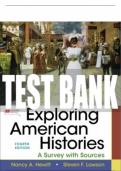
Test Bank for Employment Law for Business 7th Edition by Bennett Alexander

Rating
-
Sold
-
Pages
330
Grade
A
Uploaded on
20-09-2023
Written in
2022/2023

Chapter 02 The Employment Law Toolkit: Resources for Understanding the Law and Recurring Legal Concepts True / False Questions 1. (p. 43) The American legal system is based on stare decisis, a system of using legal precedent. TRUE Difficulty: 1 Easy 2. (p. 44) An appellee is the party who appealed the case to the court of appeals. FALSE Difficulty: 1 Easy 3. (p. 44, 46) If the plaintiff cannot establish a prima facie case in a Title VII lawsuit, the claim will be remanded to the EEOC. FALSE Difficulty: 1 Easy 4. (p. 60) Colton Manufacturing shuts down 3 manufacturing facilities without prior notice to its 3000 employees. Colton has graciously offered to provide outsourcing assistance to its displaced employees and informed them of their right to continue to receive health insurance coverage through COBRA for eighteen months. Colton has no further liability to its former employees. FALSE Difficulty: 3 Hard 5. (p. 57) Hannah Bing was hired by Friendly Catering Company. The employee handbook stated that employees would only be terminated for good cause. Hannah was fired and replaced by her supervisor's niece. Hannah cannot file a wrongful discharge lawsuit against Friendly Catering Company because she is an employee-at-will. FALSE Difficulty: 2 Medium 6. (p. 58) Promissory Estoppel is an exception to the employment-at-will doctrine if the employee can show that he/she relied on the employer's promise to his/her detriment. TRUE Difficulty: 1 Easy 7. (p. 60) Major Tire Company's plant in Charleston, South Carolina was destroyed when Hurricane Hazel hit the coast. The company officially closed the facility after reviewing the damage and terminated all 500 workers. The company did not give the employees 60 days' notice, and it is liable under the WARN Act. FALSE Difficulty: 3 Hard 8. (p. 64) An employer can successfully defend a charge of disparate treatment discrimination under Title VII of the Civil Rights Act by offering a legitimate, nondiscriminatory reason for the action taken regarding the charging party. TRUE Difficulty: 2 Medium 9. (p. 74) Punitive damages are permitted in Title VII cases, but not in disparate impact cases or against government employers. TRUE Difficulty: 2 Medium 10. (p. 62) If Sally's employer subjects her to more severe discipline for an act of misconduct than a similarly situated fellow employee not in her protected group for the same act of misconduct, Sally is being subjected to disparate treatment discrimination. TRUE Difficulty: 2 Medium 11. (p. 70) Questions asked during idle conversational chat during preemployment interviews or included on job applications may unwittingly be the basis for Title VII claims of disparate impact. TRUE Difficulty: 1 Easy Multiple Choice Questions 12. (p. 45, 46) When a party wins a Motion for Summary Judgment A. the case is remanded to the lower court B. there are triable issues of fact C. there are no triable issues of fact D. Both A and B. Difficulty: 2 Medium 13. (p. 57) Davis Hosiery Mills has each new employee sign a form acknowledging receipt of the company's handbook. The handbook states that employees will be terminated for good cause only. It also contains a disclaimer, in small print, which informs the employee that the employment relationship is "at will." An employee of Davis Hosiery sues for wrongful termination. A. The employee cannot sue because termination for good cause is not generally recognized as a limitation to employment-at-will, even when placed in an employee handbook. B. Davis Hosiery will win the case because the employee signed a form acknowledging that the employment relationship at Davis Hosiery is "at will." C. Depending on the statutes or court decisions in the state where Davis Hosiery is located, the employee can proceed with the lawsuit because the disclaimer was neither prominent nor conspicuous. D. The employee cannot sue if she lost her copy of the handbook. Difficulty: 2 Medium 14. (p. 54-55) Mr. Johnson, a white male, testified for the plaintiffs in a racial discrimination lawsuit brought by a black female employee against his employer, Security Bank. He had been advised by his manager not to get involved. Shortly thereafter, Mr. Johnson was fired. A. Mr. Johnson has no case for retaliatory discharge because he is not a member of the protected class. B. Mr. Johnson has no case for retaliatory discharge because merely testifying on behalf of someone else is insufficient involvement in a discrimination lawsuit to get protection against retaliatory discharge under Title VII of the Civil Rights Act. C. Mr. Johnson has no case for retaliatory discharge because he is an employment-at-will employee. D. Mr. Johnson may have a case because Title VII of the Civil Rights Act protects an employee who participates in any manner in an investigation, proceeding or hearing on a colleague's complaint of discrimination. Difficulty: 3 Hard 15. (p. 47) The employment-at-will doctrine means that A. An actor must agree to follow the instructions by the play's director in order to be cast in a play by William Shakespeare. B. Highly paid skilled workers in the building trades can pass their jobs on to a relative when they die. C. An employer can terminate an employee for any reason as long as the reason is not a violation of public policy or against the law. D. Government employees lose their constitutional rights when on the job. Difficulty: 1 Easy 16. (p. 51) Ms. Lee was employed as a secretary at Burton Trucking. She was fired from her job when she refused to perjure herself at a trial where her employer was the defendant. She filed a wrongful discharge lawsuit against her former employer. Ms. Lee will A. prevail if the state where the lawsuit was filed recognizes a public policy exception to the employment-at-will doctrine. B. prevail only if she proves she was telling the truth. C. will lose because the employment-at-will doctrine completely insulates the employer from liability. D. will lose because her testimony provided the basis for a defamation lawsuit by her former employer. Difficulty: 2 Medium 17. (p. 52) Octavia is an employee of DFC, Inc., a defense contractor. She discloses to the Department of Justice information relating to fraud in carrying out a defense contract on which she is working. DFC subsequently fires her. Octavia then files a lawsuit against DFC for violating the Federal Whistleblower Statute. A. Octavia's case will be dismissed. B. Octavia can win compensatory damages only. C. Octavia can win compensatory and punitive damages. D. Octavia can win reinstatement only. Difficulty: 3 Hard 18. (p. 60) Mr. Jones was employed by Barker Sock Company as a sewing machine repairman in Plant #5. He, along with the other 700 employees, was informed that the plant had been permanently closed by a written notice on the door when he arrived at work. A. Mr. Jones' only recourse is to file for unemployment benefits. B. Mr. Jones has no recourse because he was an employee-at-will. C. Mr. Jones may be eligible to receive his salary and benefits for the next 60 days. D. None of the choices are correct. Difficulty: 3 Hard 19. (p. 52) Cortney was employed at Brunson County Elementary School as a cook. Her supervisor routinely took extra food and other supplies home. Cortney was fired after she reported the theft to the police and local newspaper. A. Cortney does not have a cause of action for wrongful discharge. B. Cortney may have a cause of action pursuant to the "whistle-blowers" exception to the employment-at-will doctrine. C. Cortney is an employee-at-will and can be terminated at any time for any reason. D. None of the choices are correct. Difficulty: 2 Medium 20. (p. 52) Mathias is an employee for Burton Commercial Realty. He receives a modest salary, however, his salary is supplemented by substantial commissions. He has been working on a commercial real estate deal for 5 months, two weeks before the deal closes, he is fired and Burton does not pay him his commission: A. Mathias has a cause of action for breach of implied covenant of good faith. B. Mathias has a cause of action for retaliatory discharge. C. Mathias has a claim under the Civil Service Reform Act. D. None of the above. Difficulty: 2 Medium 21. (p. 54) A retaliatory discharge claim under Title VII requires A. that the employee has either participated in the statutory complaint process or opposed some form of discrimination. B. an adverse action taken with regard to the employee's employment status. C. a causal connection between the adverse employment action and the employee's participation in the statutory process. D. All of the choices are correct. Difficulty: 2 Medium 22. (p. 61) Natalie resigned from her position as floor supervisor at Martin's Department Store. The store manager told the other employees that she had been fired for coming to work drunk. He also communicated that information to someone calling to verify Ms. Weston's previous employment with Martin's Department Store. A. Ms. Weston has no recourse against her former employer because the store manager is a known liar. B. Ms. Weston is an at-will employee and therefore has no cause of action against Martin's Department Store. C. Ms. Weston may have a cause of action against Martin's Department Store for defamation. D. None of the choices are correct. Difficulty: 3 Hard 23. (p. 57) Harrison was hired by SportsTV to broadcast the local high school sports games. During the interview, Harrison was told that the company had plans to expand its coverage of team sports to college and professional sports. He was told that he would be getting in on the ground floor and would have an opportunity to move up with the company as it grew. Harrison was given a timeline for expansion that covered the next ten years. Armed with this knowledge, Harrison accepted the job and moved to Greensboro, North Carolina from Atlanta, Georgia. After 18 months, the management at SportsTV fired Harrison and replaced him with a local athlete with more name recognition. A. Harrison has cause of action for breach of contract. B. Harrison has a cause of action for breach of implied contract. C. Harrison has no recourse because he is an employee-at-will. D. Harrison has no recourse because he did not have a written contract. Difficulty: 3 Hard 24. (p. 59) Sarah was employed at Carlson Printing Company as the Sales Manager. After a year on the job, Paul became her new supervisor. Paul was constantly yelling at Sarah and telling her she was stupid. Sarah was so nervous when Paul was around that she started to stutter. After working with Paul for 6 months, Sarah sought treatment from a psychiatrist for depression. Shortly thereafter, Sarah quit her job and filed a wrongful discharge lawsuit against Carlson Printing Company. A. Sarah is an employee-at-will and has no right to her job. B. Sarah has valid claim for constructive discharge. C. Carlson Printing Company is not liable for wrongful discharge because Sarah quit her job, she was not fired. D. Carlson Printing Company is not liable for wrongful discharge because Paul was not acting within the scope of his authority. Difficulty: 2 Medium 25. (p. 54) Harrison works in a cubicle at a window next to Karen Ravenwood's cubicle at Tabernacle Insurers. One day, Harrison overhears Karen's supervisor make a comment that she'd be more successful if she spent as much time on shaping her list of prospective customers as she does on shaping her body. Karen files a complaint of sex/gender discrimination with the EEOC and Harrison is called to testify during the investigation. The EEOC decides not to pursue the matter. A month and a half after the investigation is closed, Tabernacle management moves Harrison from his cubicle to a cubicle on a vacant floor. All other aspects of his job remain the same. Harrison files a complaint of retaliation. A. Harrison cannot pursue a case of retaliation because the relocation of his work area between cubicles did not materially affect the terms, conditions, or privileges of his employment at Tabernacle. B. Harrison cannot prove a case of retaliation because the investigation uncovered no wrongdoing. C. Harrison cannot prove a case of retaliation because he is not in the same protected group as Karen. D. Harrison can prove a case of retaliation. Difficulty: 2 Medium 26. (p. 61) Cara works in the packaging and shipping department of the John Quincy Adams Mint & Collectibles Company. For the past few weeks, some special commemorative coin sets have been disappearing. The company used metal detectors and searched employee lockers and belongings in the plant but no contraband was found. Now, in an effort to catch the wrong-doers, the company stops the car of each packing and shipping department employee, including Cara as they leave the plant parking lot. The search of Cara's car did not turn up any coins but she was terminated because the search revealed that her car's glove compartment contained some sex toys that she had put in a John Quincy Adams Mint & Collectibles Company gift box. A. Cara has no recourse because she should have been more careful about storing her personal belongings in her car. B. Cara should be reinstated to her job because she was not terminated for a just cause. C. Cara may have an action against the Mint for wrongful invasion of privacy. D. Cara may have a cause of action against the Mint for violating her constitutional right against an unwarranted search and seizure. Difficulty: 2 Medium 27. (p. 55-56) Alana Brown was employed by the Quality Protection Security Company as a security officer at a local military base. While off duty, she participated in a rally protesting U.S. participation in the Iraq war. Chief of Security Felix Bratfurter saw Officer Brown on the evening television news. The next day, Chief Bratfurter fired Officer Brown. A. Officer Brown has no recourse because the protections of employee constitutional rights only apply when the employer is a government agency and she was employed by a private company. B. Officer Brown has a cause of action for wrongful discharge because she cannot be fired for exercising her constitutional right to free speech. C. Officer Brown has a cause of action for breach of contract. D. None of the choices are correct. Difficulty: 1 Easy 28. (p. 59) Carla Thomas, a nonsmoker, often encouraged her co-workers to quit smoking. Her new manager, Paul, a smoker, was annoyed by what he considered her constant nagging. He moved her desk from a separate room with a window to a cubicle surrounded by smokers, who smoked all day. Paul refused Carla's request to create a no smoking area in the office and he refused her request to be moved back to the separate room. After 4 weeks of breathing second hand smoke, Carla quit. A. Carla has no recourse against her employer because she is an employee-at-will. B. Carla can file a lawsuit based on discrimination because non-smokers are a protected class. C. Carla may have a cause of action for constructive discharge. D. None of the choices are correct. Difficulty: 2 Medium 29. (p. 63) In a prima facie case of disparate impact discrimination, the claimant must establish that the claimant is a member of a protected class protected under Title VII and that: I. the claimant applied for and was qualified for a job for which the employer was seeking applicants. II. the claimant was rejected and, after the rejection, the position remained open. III. the employer continued to seek applicants with the rejected applicant's qualifications. A. I and II. B. II and III. C. I, II, and III. D. None of the above. Difficulty: 1 Easy 30. (p. 65) The bona fide occupational qualification defense (BFOQ) can be used by the employer to defend Title VII discrimination claims when the basis is A. Sex/gender, religion, national origin, race or color B. Sex/gender, national origin, race or color C. Religion, national origin, race or color D. Sex/gender, religion, national origin Difficulty: 1 Easy 31. (p. 74) Every successful claimant in a Title VII case is eligible to receive A. back pay, front pay, and liquidated damages. B. back pay, front pay, attorney fees, and punitive damages. C. back pay, front pay, attorney fees, punitive damages, and compensatory damages. D. back pay, front pay, and compensatory damages. Difficulty: 3 Hard 32. (p. 67, 71) Major Industries has a published workplace policy that reads: "Promotions to the level of supervisor and higher are limited to individuals with at least a bachelor's degree from an accredited college or university." A. Although this is a facially neutral policy, it could be found to be discriminatory if it can be shown by statistics that it has a disparate impact on a protected group, unless Major Industries can prove a business necessity for the policy. B. There is nothing facially neutral about this policy because there are lots of people who are in supervisory or higher positions who never earned a degree from a college or university. C. Although this is a facially neutral policy, it could be found to be discriminatory if it can be shown by statistics that it has a disparate impact on a protected group, unless Major Industries can prove a bottom line defense. D. Although this is a facially neutral policy, it could be found to be discriminatory if it can be shown by statistics that it has a disparate impact on a protected group, unless Major Industries can prove a subjective qualifications defense. Difficulty: 2 Medium 33. (p. 74) Karen Rogers was employed at the Pentagon as manager of the Purchasing Department. Prior to the arrival of her new supervisor in June of 2004, she received the highest employee rating on her yearly evaluation. Her new supervisor, John Lincoln, had been overheard saying that he did not believe that women were smart enough to manage a department. Six months later, Karen was fired for poor work performance. If she wins her claim for gender discrimination, Karen may be entitled to I back pay II reinstatement to her former position III punitive damages A. I only B. I and II only C. I, II, and III D. All of the choices are correct. Difficulty: 3 Hard 34. (p. 65) Dean Capers, an African American, was employed as a bus driver with Mountain City Transportation Department. The city council voted to reduce the number of bus routes, and Dean's job was eliminated. Dean filed a claim with EEOC alleging racial discrimination because he was the only African American bus driver and he had more seniority than 4 of the drivers retained. Mountain City successfully responded A. by showing that Dean was selected for lay off because he had a bad attitude and there had been several complaints filed against him. B. by using the bona fide occupational qualification defense. C. by using the business necessity defense. D. none of the choices are correct. Difficulty: 3 Hard 35. (p. 63) Marc Brown is a chemical engineer with a graduate degree from MIT. Mr. Brown is African American. He applied for a chemical engineering position with Kincaid Paper Company. Although he was qualified for the job, he was not offered the position. Mr. Brown happened to see the job advertised in the newspaper 2 weeks after he had been rejected. A. Mr. Brown does not have a cause of action for discrimination. B. Mr. Brown can offer evidence to satisfy the elements of a prima facie case. C. Mr. Brown cannot offer evidence to satisfy the elements of a prima facie case. D. Mr. Brown is not eligible to file a claim under Title VII. Difficulty: 3 Hard 36. (p. 67-68) BJI Enterprises requires all employees to pass a standardized test before being considered for promotions. Marisa Chavez, a Hispanic female, was employed in the Maintenance department as a housekeeper. She wanted to be considered for a supervisory position in that department. However, she could not make a passing score on the test. There were no minority supervisors in the Maintenance Department. The Civil Rights Act requires A. BJI to show that the test is related to the job. B. Ms. Chavez to show that the test is not related to the job. C. Ms. Chavez to prove that she is qualified for the job. D. None of the choices are correct. Difficulty: 3 Hard 37. (p. 69) The four-fifths rule states that A. only 20% of the employees affected by the screening device can be minorities or there is a presumption of disparate impact discrimination. B. minorities must do at least 80% as well as the majority on the screening device or there is a presumption of disparate impact discrimination. C. after the claim has been filed, the employer must offer evidence to prove that four-fifths of all employees are successful when the screening device is used. D. None of the choices are correct. Difficulty: 3 Hard 38. (p. 71) The Business Necessity Defense requires the employer to show A. that the challenged policy is job related and is a legitimate requirement for the job. B. that there is a legitimate, nondiscriminatory reason for the alleged discriminatory conduct. C. that the information provided by the employee is false. D. None of the choices are correct. Difficulty: 2 Medium 39. (p. 70-71) James Helton, an African-American, was hired as a dock worker with Coastal Distributing Company. As a full time employee, he was eligible for health insurance benefits if he met certain criteria. His pre-employment physical indicated that he suffered from hypertension or high blood pressure. The company's health insurance plan excluded employees that had that condition. Hypertension is a condition that is common among African-Americans and affects that race at a much higher percentage than any other race. A. Coastal Distributing Company's policy is not discriminatory because it applies to all employees, regardless of race. B. Coastal Distributing Company's policy is discriminatory because more African-Americans will be denied health insurance than employees who are not African-American. C. Coastal Distributing Company's policy is not subject to Title VII because it involves employee benefits, not hiring, promotion or termination. D. Coastal Distributing Company's policy is discriminatory because it treats some employees differently (African Americans) than other similarly situated employees. Difficulty: 3 Hard 40. (p. 64, 65, 71) The following defenses are available to employers in discrimination claims: A. bona fide occupational qualification (BFOQ) defense B. legitimate, nondiscriminatory reason defense C. business necessity defense D. All of the choices are correct. Difficulty: 2 Medium 41. (p. 71, 92) Which of the following is not a business necessity providing a defense to a disparate impact claim? A. Hiring only cashiers that are bondable. B. Hiring only brunettes to work as servers in a restaurant because they are preferred by customers and bring larger profits for the company. C. Hiring only pizza deliverers who possess driver's licenses. D. Hiring only English speaking workers to be telephone operators. Difficulty: 2 Medium 42. (p. 71) Emmanuel and Petersen is an extremely busy law firm specializing in litigation. In order to keep up with their workload, they refuse to hire anyone as a secretary who is unable to type at least 65 words per minute. If a group of male applicants challenges this policy as being discriminatory against generally slower typing males, the company could defend the typing-speed requirement as a: A. bottom line defense. B. disparate treatment defense. C. business necessity. D. bona fide disparate impact defense. Difficulty: 3 Hard 43. (p. 73) McFerrin was refused employment by Billiot, Inc., because he failed to achieve a high enough score on a valid, reliable skills test. Believing that he has been the victim of national origin discrimination, since no one of Scottish descent has ever achieved a satisfactory score, McFerrin sues under Title VII after exhausting his administrative remedies. He asks the court to require Billiot to adjust the scores of all Scottish-descent test-takers, upward, by ten points. Assuming McFerrin proves national origin discrimination, can the court grant the relief he seeks? A. No, because the Civil Rights Act of 1964 makes it an unfair employment practice for an employer to adjust the scores of an employment-related test on the basis of a protected trait. B. Yes, because the Civil Rights Act of 1964 requires an employer to adjust the scores of an employment-related test on the basis of a protected trait, if the effect of the test is to exclude certain groups from a certain minimum level of employment. C. No, because the Civil Rights Act of 1991 makes it an unfair employment practice for an employer to adjust the scores of an employment-related test on the basis of a protected trait. D. Yes, because the Civil Rights Act of 1991 requires an employer to adjust the scores of an employment-related test on the basis of a protected trait, if the effect of the test is to exclude certain groups from a certain minimum level of employment. Difficulty: 3 Hard 44. (p. 71) NorthernSky Airlines is a regional carrier that flies a variety of aircraft with maximum interior cabin heights ranging from 6'2¼" to 5'9." NorthernSky advertisements for flight attendants state that an applicant "must be between 5'0" and 5'8" without shoes due to the internal size of our aircraft." James, a 6' 0" man complains that the height restrictions have a disparate impact on men. The airline defends the case by asserting that height is a business necessity for the job. A. James will prevail on his complaint because he can fit inside some of the aircrafts. B. NorthernSky will prevail because it can demonstrate that the flexibility to schedule flight attendants on all its aircraft is a reasonable necessity for normal operation. C. James will prevail on his complaint because height restrictions have nothing to do with the primary responsibility of a flight attendant, which is the safety of the passengers. D. NorthernSky will prevail because it can demonstrate that a shorter flight attendant is innately better suited to perform the "non-mechanical" functions of the job, such as soothing nervous customers. Difficulty: 2 Medium 45. (p. 70-71) The Bright Creek Luggage Company has hired you as a consultant to improve the company's hiring processes so it will be less vulnerable to claims of discrimination when hiring. You should make the following recommendations. A. Bright Creek should scrutinize prepared interview questions and employment applications to determine whether there is a disparate impact in the way that information is elicited. B. Bright Creek should require all outside recruiters and employment agencies to certify that they are familiar with the requirements of anti-discrimination laws. C. Bright Creek should provide training on basic legal concepts for equal employment opportunity to all interviewers and persons who make hiring decisions. D. All of the answers are correct. Difficulty: 1 Easy Essay Questions 46. (p. 51) Explain the public policy exception to the doctrine of employment at-will, including stating what the ex-employee must demonstrate to prevail and give at least three examples of the public policy exception that have been recognized by some of the states. The public policy exception protects an employee who has engaged in conduct that society wants to encourage. The ex-employee must show that the employer's actions were motivated by bad faith, malice, or retaliation. A violation of public policy can occur when the employee is terminated for an act such as refusing to violate a criminal statute on behalf of the employer or at the employer's request, exercising a statutory right (e.g., voting), fulfilling a statutory duty (e.g., serving on a jury) or disclosing violations of statutes by an employer (e.g., violation of laws and regulations designed to protect public safety). Difficulty: 2 Medium 47. (p. 60) What are the requirements imposed on employers by the Worker Adjustment and Retraining Notification (WARN) Act? List and discuss the exceptions to this Act. The WARN Act requires employers to give its employees 60 days advance notice of a plant closing or mass layoff. Notice is required if the plant closing will result in loss of employment for 50 or more workers in a 30-day period. Notice is required if the mass layoff at one facility during a 30-day period results in loss of employment for 500 or more workers or 50-499 workers if that number represents at least 1/3 of the total active workforce. An employer's failure to comply with the WARN Act gives the affected employees the right to recover pay and benefits for the time notice was not given, up to the statutory 60-day maximum. The WARN Act also provides for exceptions to the 60-day notice requirement. First, the "faltering company" exception allows an employer to forego notification of an imminent plant closing or mass layoff if the employer is actively seeking capital and has a good faith belief that notification to the employees would prevent the employer from receiving the necessary capital. Secondly, the Act provides an exception to the notice requirement when the plant closing or mass layoff is due to a sudden, unexpected business circumstance that was not foreseeable and out of the employer's control. The final exception is for situations resulting from natural disasters. Difficulty: 1 Easy 48. (p. 62, 65) Linda was employed with Southern Telephone Company as a telephone operator for ten (10) years. Bored with this job, she applied for an open position as a telephone repairman which paid $10.00 per hour more than she was currently earning. This position required the employee to be able to climb to the top of a telephone pole wearing a tool belt weighing approximately 15 to 20 lbs to make repairs. Southern Telephone Company refused to admit Linda into the training program for the position claiming that she was incapable of performing the duties of the position because she was female. Discuss this scenario from both Linda's and Southern Telephone Company's point of view, including the basis for the relevant claims and defenses. Linda can file a claim with EEOC alleging disparate treatment discrimination in violation of Title VII of the Civil Rights Act of 1964. Specifically, Linda would allege that she was denied training for the new position because she was female, thus, she was treated differently because of her gender in violation of Title VII. Southern Telephone Company can use the Bona Fide Occupational Qualification Defense to defend against Linda's disparate treatment claim of discrimination. The BFOQ defense allows an employer to engage in discriminatory practices if it can be shown that the discrimination is necessary to the employer's business. In this instance, the company can argue that it excludes women from training for the position as telephone repairman because women would be unable to climb the telephone pole carrying the weight of the tool belt. Furthermore, the employer should argue that while there may occasionally be a woman that would be able to perform the duties of the job, it would be impracticable to allow women to enter the training program, only to later be excluded due to the inability to climb the pole wearing the tool belt. Difficulty: 3 Hard 49. (p. 62, 67) Describe the two theoretical bases for lawsuits alleging discrimination under Title VII of the Civil Rights Act of 1964. Disparate Treatment discrimination requires that the plaintiff/employee allege that he/she was treated differently than other similarly situated employees based on the plaintiff/employee's race, color, gender, national origin or religion. This is intentional discrimination, but the plaintiff/employee does not have to prove that the employer said that one of the prohibited factors was the reason for the discriminatory conduct. It is enough for the plaintiff/employee to produce evidence that shows that discrimination as the only plausible explanation for what happened. Disparate Impact discrimination occurs when an employer uses some type of screening device or has an employment policy that is neutral on its face, but the device or policy can be shown, by the use of statistics, to impact a protected group negatively. If such a policy impacts protected groups more harshly than majority groups, illegal discrimination may be found if the employer cannot show that the requirement is a legitimate business necessity. Difficulty: 2 Medium 50. (p. 65, 71) Distinguish the business necessity defense from the bona fide occupational qualification defense, including describing each defense and stating when each can be used. A bona fide occupational qualification (BFOQ) is some skill or trait that is legitimately required in order for an individual to adequately and properly perform a particular job. An employer may defend against a claim of disparate treatment discrimination brought by an individual not possessing the trait or skill by asserting that the trait or skill is a BFOQ. The BFOQ can be used in cases involving allegations based on gender, religion or national origin but not for race or color. The business necessity defense is available only in cases of unintentional or disparate impact discrimination. It requires the employer to demonstrate that the performance of a particular job by the use of particular methods or skills is reasonably necessary to the essence of the employer's business. Difficulty: 2 Medium 51. (p. 91) Describe the basic legal theory that is used to determine whether the plaintiff or the defendant will prevail in a lawsuit in which it is alleged that the defendant has committed illegal, disparate treatment employment discrimination, in violation of Title VII of the Civil Rights Act of 1964, as amended, when there is no direct evidence of discrimination. According to the pattern set forth in McDonnell Douglas v. Green, the plaintiff must prove all elements of the prima facie case of discrimination alleged in the complaint. The burden then shifts to the defendant to articulate some legitimate nondiscriminatory reason to explain the alleged discriminatory act. If the defendant articulates such a reason, the plaintiff must then prove that this nondiscriminatory reason is simply a pretext for another, illegally discriminatory explanation of the defendant's alleged discriminatory act. If the plaintiff can successfully show this, the plaintiff will prevail. Difficulty: 2 Medium Chapter 04 Legal Construction of the Employment Environment True / False Questions 1. (p. 130) The Fair Credit Reporting Act requires that employers obtain written authorization from applicants before obtaining their credit reports. TRUE Difficulty: 2 Medium 2. (p. 146) Employers should not ask about gender on an application unless the information is necessary for a bona fide occupational qualification. TRUE Difficulty: 1 Easy 3. (p. 159) Federal law requires that employers document the reasons for failing to hire a specific applicant. FALSE Difficulty: 1 Easy 4. (p. 164) Content validation is based on a careful job analysis that identifies important tasks behaviors, and knowledge that the job requires. TRUE Difficulty: 1 Easy 5. (p. 169) The Drug-Free Workplace Act of 1988 authorized drug testing of federal and state employees and private sector employers who have 25 or more employees. FALSE Difficulty: 2 Medium 6. (p. 180) An employer can be subjected to liability for defamation for including false and defamatory statements in an employee's performance appraisal if that information is communicated to a third party and it harms the employee's reputation. TRUE Difficulty: 2 Medium 7. (p. 181) An employer can be liable for negligent performance evaluation if he/she fails to use reasonable care in conducting a performance evaluation. TRUE Difficulty: 2 Medium 8. (p. 163) Title VII exempts professionally developed employment eligibility tests from claims of disparate impact discrimination as long as the test is not designed to discriminate against a member of a protected class. TRUE Difficulty: 2 Medium 9. (p. 139) The Americans with Disabilities Act requires employers to engage in affirmative action in order to accommodate the needs of qualified, disabled employees. FALSE Difficulty: 2 Medium 10. (p. 175) To date, no state has enacted a law prohibiting genetic testing in the workplace. FALSE Difficulty: 1 Easy Multiple Choice Questions 11. (p. 138) If an employer relies only on ________ to meet its hiring needs, it may be subject to a claim of disparate impact discrimination. A. word-of-mouth recruiting. B. venue recruiting. C. walk-in applications. D. all of the above. Difficulty: 1 Easy 12. (p. 140) Prita has worked for Milton Publishing, a large publishing company for 15 years as a staff editor. She is contacted by Sonnet Publishing, a small publishing company. Sonnet would like Prita to interview for a job opening. During the interview, the CEO of Sonnet offers Prita the Chief Editor position at $200,000 more per year than her current salary. This is a significant promotion for Prita, so she accepts the new job. After three months on the job, the CEO announces that the company will be closing. Prita learns that the CEO knew when he offered her the job that the company would be going out of business, but the company only needed her to complete projects Sonnet was contractually obligated to complete before closing its doors. Prita has A. no cause of action because the CEO did not lie to her. B. a cause of action for negligent hiring. C. a cause of action for fraud. D. a cause of action for defamation. Difficulty: 2 Medium 13. (p. 145) Glowing Hair Products, Inc. interviewed Andaleeb Fayad for the position of Marketing Manager. During the interview, the vice president for marketing asked Ms. Fayad about the origin of her first name, if she was married and if she planned to have children. A. These questions are prohibited by federal law because they concern national origin or ethnicity, marital status and sex/gender. B. These questions are not prohibited by federal law but they could be used as evidence of discrimination because they are not job related. C. These questions are not prohibited by federal law but there is no risk of liability if all applicants are asked the same questions. D. None of the choices are correct. Difficulty: 2 Medium 14. (p. 145) Woodberry Furniture Industries was accepting applications for employment. The application included a question asking whether the applicant had ever filed a workers compensation claim and a question asking if the applicant had a disability. A. Questions on the application about prior workers compensation claims are allowable. B. Questions on the application about physical disabilities are allowable. C. Applicants cannot be asked about prior workers compensation claims or physical disabilities on the application. D. Employers can ask any question deemed necessary to gather all the relevant information on a written application. Difficulty: 1 Easy 15. (p. 148) Bob's Painting Service hired 3 temporary workers through Deb's Temps. Bob didn't ask if back ground checks had been done on the employees. Deb did not check the criminal records for the workers hired by Bob. One of the workers, Joe Herrington, had been convicted of rape and had just recently been released from prison. While working for Bob, Joe attacked and raped the owner of the home that was being painted. The owner sued Bob. A. Bob is not liable because Joe was a temporary worker hired though Deb's Temps. B. Bob may be liable because he did not make sure that adequate back ground checks had been done for the workers he hired. C. Bob is not liable because Joe was not acting within the course and scope of his employment. D. None of the choices are correct. Difficulty: 3 Hard 16. (p. 155) Marilyn was employed at the Quick Stop. She was fired for allegedly stealing from the cash draw. Marilyn denied taking the money. She applied for another position at the local Food Mart. When asked why she left her last job, she explained that her manager fired her for stealing; however, she continued to deny stealing the money. Marilyn did not get the job at the Quick Mart. She contacted a lawyer to discuss her options. A. Marilyn does not have a cause of action against Quick Stop for defamation because her reputation has not been harmed. B. Marilyn does not have a cause of action against Quick Stop for defamation because she told the manager at Food Mart about the allegations. C. Marilyn has a cause of action for defamation against Quick Stop because she was forced to repeat the defamatory remarks to her prospective new employer. D. Marilyn has a cause of action for defamation because the manager at Quick Stop would have provided the information if he had been asked for a reference. Difficulty: 2 Medium 17. (p. 163) Margo, an African American female, applied for a job as a drug and alcohol counselor with Roderick County. She was told she had to pass an exam to be considered for the position. The exam tested math and reading proficiency. Margo did not pass the exam and was not hired, despite having worked for 10 years as a drug and alcohol counselor in another county. African American applicants passed the exam at a significantly lower rate than White and Asian applicants. Margo has a claim for A. disparate treatment discrimination because the County administered an eligibility test that was not job-related. B. disparate treatment discrimination because the County administered an ineligibility test that was not job-related. C. disparate impact discrimination because the County administered an eligibility test that was not job-related. D. disparate impact discrimination because the County administered an ineligibility test that was not job-related. Difficulty: 3 Hard 18. (p. 166) Reducing workplace injury, deterring poor performance, and reducing employers' legal and financial liability are reasons employers use A. ineligibility testing B. eligibility testing C. nepotism D. word-of-mouth recruiting Difficulty: 2 Medium 19. (p. 176) A workplace substance abuse program should incorporate: A. a written abuse policy that has been drafted after input from employees. B. an employee education and awareness program. C. a supervisory training program. D. all of the above. Difficulty: 1 Easy 20. (p. 176) Regarding ineligibility testing, an employer may establish A. mandatory testing, probable cause testing, and random testing. B. mandatory testing and probable cause testing. C. mandatory testing only. D. probable cause testing only. Difficulty: 2 Medium 21. (p. 176) Steve Murphy is the Human Resources Manager at Duncan's Tires. He has heard a rumor that Arthur Bailey has HIV-AIDS. Arthur is employed as a mechanic and his job duties include putting on new tires and changing the oil in a routine car service. Steve called Arthur into his office and informed him that he would have to take an HIV test. Arthur told Steve there was no need for the test, that he was HIV positive. Steve told Arthur that he hated to do it, but he was going to have to terminate his employment, effective immediately. A. Arthur is an employee-at-will and has no cause of action for wrongful discharge. B. Arthur's termination is justified because he did not inform Steve that he was HIV positive. C. Arthur's termination is a violation of the Americans with Disabilities Act because his HIV status did not affect his performance on the job. D. Arthur's termination is not a violation of the Americans with Disabilities Act because he did not inform his employer as required by the Act. Difficulty: 3 Hard 22. (p. 148) To avoid liability for negligent hiring, an employer must A. conduct a reasonable background check that would disclose information sufficient to determine whether the applicant is fit for the job. B. check the applicant's references. C. verify the information provided by the applicant on the application. D. All of the choices are correct. Difficulty: 1 Easy 23. (p. 155) When an employer is asked for a reference for a former employee, the employer A. has a duty to respond B. has no duty to respond, but if he/she responds, the reference must be truthful and honest C. can only respond if the former employee has signed a waiver authorizing release of confidential information D. should carefully develop a response that will not subject the employer to liability for defamation, even if that means leaving out relevant information about the former employee Difficulty: 2 Medium 24. (p. 163) Title VII does not prohibit the use of an employment eligibility test that results in a disparate impact on a protected group, provided that A. the employer can show that the test was professionally developed. B. the employer can show that the test was not designed, intended, or used to discriminate on the basis of membership in a protected class. C. the employer can show that the test scores can be used to determine appropriate and meaningful inferences about probable job-related behavior. D. All of the answers are correct. Difficulty: 2 Medium 25. (p. 166) Grand Lake Bridge Builders is hiring Material Handling Laborers. The job requires the ability to lift or move objects weighing 100 pounds. Shannon Marshall, who is 5'9'' tall and looks to weigh about 135 pounds applies for the job. Grand Lakes wants to ensure that she is physically capable of doing the job. A. Grand Lake can require Shannon to take a preemployment physical examination before wasting time and money on the rest of the application process, such as an interview, drug test, and background check. B. If Grand Lake makes a conditional job offer to Shannon, it can require her to take a physical examination before wasting time and money on the rest of the application process, such as the drug test and background check. C. Grand Lake cannot require Shannon to take a preemployment physical examination as a condition of employment, but can require a physical examination after a job offer has been made, provided that all of the non-medical aspects of the application process are completed before the physical examination. D. Grand Lake can avoid this problem by keeping a set of 100 pound weights in the office and requiring all applicants to lift them at the time of the interview. Difficulty: 2 Medium 26. (p. 169) Tyler was employed at the local grocery store, Food World. The store manager, Jeff Searcy, discovered that there were several cartons of cigarettes missing. He had reason to believe that Tyler took the cigarettes. Jeff asked Tyler to take a polygraph test and Tyler refused, claiming that he did not steal the cigarettes. Tyler also reminded Jeff that he did not have a key to the case where the cigarettes were kept. Jeff fired Tyler because he refused to take the polygraph test. A. Tyler has a cause of action against Food World for wrongful discharge because his refusal to take the polygraph test cannot be the basis for termination of his employment without more evidence, and he did not have access to the cigarettes. B. Tyler does not have a cause of action against Food World because refusal to take the polygraph test is grounds for dismissal. C. Tyler does not have a cause of action against Food World because he is an employee-at-will and can be fired for no reason. D. None of the choices are correct. Difficulty: 3 Hard 27. (p. 141) A Five Star restaurant called "The Eating Room" put the following advertisement in the local newspaper: "Waiters needed. Experience required. Must look good in tuxedo." Ella Hardy applied for the job and was rejected even though she had experience working in a Five Star restaurant and she thought she would look good in a tuxedo. A. This advertisement violates no federal or state laws on recruitment and Ella has no basis for a cause of action against the restaurant. B. Ella can file a claim with EEOC because the ad contains language indicating a preference based on sex. C. Ella cannot file a claim because she was not told she was rejected because she was female. D. None of the choices are correct. Difficulty: 2 Medium 28. (p. 169) The Federal Employee Polygraph Protection Act of 1988 A. permits employers to ask applicants about polygraph tests given by prior employers. B. includes an exemption which allows employers to test current employees if necessary to investigate a workplace theft or incident. C. provides that employers cannot discharge an employee based on the polygraph test unless the test has been administered twice. D. None of the choices are correct. Difficulty: 2 Medium 29. (p. 169) The Drug-Free Workplace Act of 1988 A. authorized the drug testing of federal employees under certain circumstances B. authorized the drug testing of private employees C. prohibited preemployment screening of job applicants D. All of the choices are correct. Difficulty: 3 Hard 30. (p. 148) Weber has been arrested four times for, and convicted twice of fraud. He is hired as a teller by Port Alice State Bank. He consistently underpays customers making large withdrawals, and keeps the unpaid funds for himself. When a customer attempts later to recover her unpaid funds from Weber, she discovers that Weber has disappeared. Port Alice State Bank will A. not incur liability since it is not liable for the crimes of its employees. B. not incur liability since it will be unable to recover from the now absent Weber. C. be liable to the customer only if it can be shown that the bank had knowledge of Weber's past. D. be liable to the customer, because it has negligently hired a thief. Difficulty: 3 Hard 31. (p. 153) An effective method to minimize the possibility that a prior employer of a prospective employee will refuse to provide a reference on the grounds that a reference can give rise to defamation liability is A. to require all prospective employees to sign a document releasing former employers from liability for providing references, and providing a copy of the release to prior employers from whom references are sought. B. conduct reference checks secretly. C. have the references checked by an unrelated third party. D. check only references that are adequately insured against defamation. Difficulty: 2 Medium 32. (p. 148) In order to avoid liability for the negligent hiring of a dangerous individual, the law imposes a duty on an employer to: A. take all the steps expected of a reasonable person in similar circumstances. B. take all steps necessary to exhaust all sources of information about a prospective employee. C. exhaust all sources of information about a prospective employee. D. require all prospective employees to certify that they have never been convicted of a crime. Difficulty: 2 Medium 33. (p. 139) In the absence of a BFOQ, the Age Discrimination in Employment Act of 1967 prohibits discrimination against an individual ________ years of age or older. A. 35 B. 40 C. 50 D. 65 Difficulty: 1 Easy 34. (p. 139) The Immigration Reform and Control Act of 1986: A. affords legal and illegal aliens protection under the Civil Rights Act of 1964. B. requires that employers of legal and illegal aliens submit copies of applications, green cards, and visas to the EEOC on a yearly basis. C. sets acceptable percentage limits regarding the ratio of aliens to natural born citizens permissible in the overall employee population. D. permits discrimination by providing that employers of four or more determine the eligibility of each individual they intend to hire. Difficulty: 1 Easy 35. (p. 174) The purpose of the Drug-Free Workplace Act of 1998 was to A. educate small business concerns about the advantages of a drug-free workplace B. provide financial incentives and technical assistance to help small businesses create a drug-free workplace C. assist working parents in keeping their children drug free D. All of the choices are correct. Difficulty: 1 Easy 36. (p. 178) Jung is an Asian male. After working for his employer as a project manager for one year, he received his first performance appraisal. In the appraisal his supervisor stated, "Compared with the other project managers, Jung falls below expectations in the performance of his job duties. He has missed 4 out of 6 deadlines on assigned projects in the past year without justification. Jung needs to improve his time management." If the performance appraisal is truthful, it subjects the employer to A. a claim of defamation B. a claim of disparate impact discrimination C. a claim of disparate treatment discrimination D. no liability because it is truthful and not based on protected characteristics Difficulty: 2 Medium 37. (p. 178) Roxanne is a white female with a hearing impairment. She has worked as a social worker for her employer for 3 years. In her recent performance appraisal, her supervisor stated, "Despite her impairment, her clients seem to understand her quite well." That statement subjects the employer to A. a claim of disparate impact discrimination in violation of ADA B. a claim of disparate treatment discrimination in violation of ADA C. a claim of disparate treatment and disparate impact discrimination in violation of ADA D. no liability because it is truthful and not based on protected characteristics Difficulty: 3 Hard 38. (p. 179) Calvert city's police officers must successfully pass a test to be promoted. The test was job related and professionally developed and validated. This year, the city discovered that African American officers taking the test scored significantly lower than white officers. Therefore, the city did not use the test scores for promotions. The city's decision A. caused disparate treatment discrimination against the white officers. B. caused disparate impact discrimination against the white officers. C. caused both disparate treatment and disparate impact discrimination against the white officers. D. caused no discrimination against the white officers. Difficulty: 3 Hard 39. (p. 182) Employer disciplinary systems A. must allow the employee the opportunity to be reinstated after termination. B. do not subject employers to liability unless the system contains provisions for progressive discipline. C. must be administered in an objective and nondiscriminatory manner. D. All of the choices are correct. Difficulty: 2 Medium 40. (p. 138) Title VII of the Civil Rights Act of 1964 A. does not regulate the recruitment process if the employer uses an employment agency. B. requires employers to write recruitment announcements that will encourage a diverse group of individuals to apply for employment. C. allows employers to restrict advertising to the Internet instead of newspapers in order to prevent discrimination. D. None of the choices are correct. Difficulty: 3 Hard 41. (p. 140) Employers can be found liable for common law fraud if A. the employer intentionally or recklessly misrepresents a significant fact about the job that the applicant relies on to make the decision to accept the job. B. the employer allows an applicant to believe something about the job that the employer knows is false. C. the employer hides certain information about the job from the applicant. D. All of the choices are correct. Difficulty: 2 Medium 42. (p. 164) Criterion Related Validation is A. based on data relating to job performance which is gathered from a simulated exercise or other on-the-job measures of performance. B. based on a representative sample of job-related tasks, behaviors, and knowledge. C. based on measuring psychological characteristics which are job-related behavior. D. All of the choices are correct. Difficulty: 2 Medium 43. (p. 182) An employer has a policy in which it tries to correct an employee's negative behavior or misconduct on the job by a series of increasingly severe penalties following each offense before terminating the employee. The policy is called A. Due process B. Progressive discipline C. Good cause D. Alternative discipline Difficulty: 1 Easy 44. (p. 191) In EEOC v. Consolidated Service System, the defendant was a janitorial firm owned by a Korean immigrant and staffed mostly with Korean immigrants. The court disagreed with the EEOC and found that the defendant's use of word-of-mouth recruiting did not cause A. disparate impact discrimination B. disparate treatment discrimination C. A or B D. None of the above. Difficulty: 3 Hard 45. (p. 194) In National Treasury Employees Union v. Von Raab, the Supreme Court determined that the U.S. Customs Service's use of a drug-screening program A. did not violate their employees' Fourteenth Amendment rights. B. violated their employees' Fourteenth Amendment rights. C. did not violate their employees' Fourth Amendment rights. D. violated their employees' Fourth Amendment rights. Difficulty: 3 Hard Essay Questions 46. (p. 142) What is word-of-mouth recruiting and how can it result in discriminatory hiring practices? Word-of-mouth recruiting occurs when an employer's referrals for job openings come from current employees. As a general rule, people will refer individuals that they know as friends or relatives. Thus, the individuals referred will mirror the current workforce creating a homogeneous work environment. The danger in recruiting by word-of-mouth is that the employer may intentionally or inadvertently discriminate against members of a protected class in violation of Title VII. Specifically, word-of-mouth recruiting can result in both disparate treatment and disparate impact discrimination. Difficulty: 1 Easy 47. (p. 148) Sandley Vacuum Sales hires Rhonda Piper and Martina Stuart to be door-to-door salespersons. Ms. Piper has a record of committing physical violence against people who displease her, including four convictions for assault. Ms. Stuart has lead a sensible and very gentle life and is known for her hospitality and homemaking skills by her friends and family. On Ms. Piper's first day of employment with Sandley, she beats up three women who decline to purchase her wares after she has spent over an hour with each giving a demonstration of the vacuums. Three days later, Ms. Stuart becomes frustrated and beats up three other prospective customers who criticize Sandley's products while she is giving a demonstration of their wares. All six victims sue Sandley. Do any of the victims have a reasonable chance of prevailing? The three women beaten up by Piper probably have a viable cause of action for negligent hiring. Negligent hiring occurs when an employer fails to conduct a thorough background check on the employee and that employee later causes harm that could have been prevented if the employer had made a diligent search of the employee's background to ensure that the employee does not pose an unreasonable risk of harm to others. When the employer fails to conduct a thorough background check and the employee subsequently injures a co-worker or another third party, the employer will be held liable for negligent hiring. The employer is judged by "what he knew or should have known" when determining whether liability will be imposed for employee misconduct. Therefore, if a reasonable employer in similar circumstances would have and could have discovered Piper's violent background, then Sandley will be liable to the plaintiffs for negligently hiring a person whom they should have known was likely to commit violence in the course and scope of work. Conversely, the three victims of Stuart probably cannot establish negligent hiring by Sandley because a background check would not have revealed that she posed a risk to potential customers. Furthermore, given Ms. Stuart's reputation, it was not reasonably foreseeable that she would resort to violence. Difficulty: 2 Medium 48. (p. 155) Tom Payton was employed by Carver Industries, Inc. as a Marketing Manager. He was fired for sexually harassing 3 female administrative assistants. Specifically, Tom cornered the women in the supply room on 3 separate occasions and touched them inappropriately. The last incident that resulted in his termination occurred after he asked Paula Lee to work overtime and called her into the supply room to assist him in finding paper clips. When she entered the room, Tom grabbed her and attempted to fondle her. Ms. Lee pushed Tom away and called a security officer who escorted her out of the building. Ms. Lee reported the incident the following day to the Vice-President of Human Resources. Later that day, the other women came forward and reported the previous incidents. Dave Smith, Tom's immediate supervisor, was contacted by Marketing Miracles, Inc. for a reference for Tom. Dave gave Tom a glowing reference and did not mention the reason for Tom's termination. Tom was hired and 6 months later, sexually assaulted Ann Kelly, a female employee of Marketing Miracles, in the supply room after he requested that she work overtime. Is Carver Industries liable for the harm to Ann Kelly? Carver Industries is liable for "negligent references." Under this theory, liability is imposed when the employer fails to provide a reference that is truthful and honest. Employers are not required to provide references, however, if they do provide a reference, they have a duty to respond in a way that will prevent foreseeable harm. In this scenario, Tom has exhibited behavior that makes it reasonably foreseeable that he may engage in similar behavior at his next job. Once Dave decided to respond to Marketing Miracles request for a reference, he was obligated to do so truthfully. His failure will subject his employer to liability for the harm to Ann Kelly. Difficulty: 2 Medium 49. (p. 162) What is eligibility testing and how is it restricted by Title VII? Eligibility testing are those tests administered by employers to determine whether a prospective employee has the ability and the qualifications to perform the job. Eligibility tests include eye exams, physical stamina tests, aptitude or achievement tests or personality testing. The danger in utilizing eligibility tests is that the testing will result in disparate impact discrimination. Where this type of discrimination occurs, the employer can continue to use the test if it can be shown that the requirement is job related and consistent with business necessity. Title VII specifically exempts professionally developed employment tests from disparate impact discrimination as long as the test is not designed, intended or used to discriminate on the basis of membership in a protected class. A professionally developed employment test means one that has been validated in accordance with strict standards. Difficulty: 2 Medium 50. (p. 180) Discuss the potential liability for defamation that can result from the use of performance appraisals. Employers can be held liable for defamation if the employer makes a false statement during the course of performance appraisal and the evaluation is given to a third party, such as a future employer. Additionally, employers can be liable for defamation if the performance appraisal evaluates the employer based on the wrong criteria. An appraisal can also be false if the evaluation does not include the information that would explain or justify a poor appraisal. An employer can also incur liability for defamation if a performance appraisal is changed to justify a subsequent firing or demotion of an employee. Difficulty: 2 Medium employment law - test banks, employme

Show more Read less


Whoops! We can’t load your doc right now. Try again or contact support.

Document information

Uploaded on
September 20, 2023
Number of pages
330
Written in
2022/2023
Type
Exam (elaborations)
Contains
Questions & answers

Subjects

Content preview

, CHAPTER 01
The Regulation of Employment


True / False Questions


1. (p. 7) Regulations governing the employer-employee relationship are based on agency law
and failure of an employee/agent to act according to the employer's instructions could result in
liability for the employer.
TRUE


Difficulty: 1 Easy


2. (p. 8) Misclassification of employees as independent contractors can result in liability under
the Fair Labor Standards Act of 1938.
TRUE


Difficulty: 1 Easy


3. (p. 7) If an agent acts without authority of the principal, the principal is not liable for any
resulting loss to a third party.
FALSE


Difficulty: 1 Easy


4. (p. 7) There is one commonly accepted definition of "employee" used by courts.
FALSE


Difficulty: 1 Easy

,5. (p. 9) An employer is vicariously liable for the actions of an employee causing harm to a
third party outside the course of employment.
FALSE

Difficulty: 2 Medium


6. (p. 16) Under the economic realities test, courts consider whether the worker is economically
dependent on a particular enterprise or works for himself or herself.
TRUE


Difficulty: 1 Easy


7. (p. 16) A signed agreement between a company and a worker that specifically states that no
employee-employer relationship exists will be controlling in the event of a legal dispute over
whether the worker is covered by the National Labor Relations Act.
FALSE


Difficulty: 1 Easy


8. (p. 8) Marco provides accounting services to the Consolidated Bank as an independent
contractor. Marco must pay his own Social Security (FICA), FICA excise, and federal
unemployment compensation (FUTA), taxes. However, Consolidated is responsible for
federal and state income tax withholdings.
FALSE


Difficulty: 1 Easy


9. (p. 11) Willful violations of FLSA subject an employer to criminal liability.
TRUE


Difficulty: 1 Easy

, 10. (p. 8, 13) If an employer does not make any withholding from a worker's pay for taxes, then
the IRS deems the worker to be an independent contractor.
FALSE

Difficulty: 2 Medium


11. (p. 20) The Wonder City Restaurant uses a staffing firm to obtain temporary workers. After
the staffing firm sent over a temporary hostess, Wonder asked the firm to replace her with
someone of another race. If the hostess who was replaced proceeds with a Title VII claim,
Wonder cannot be liable because the temporary hostess was never its employee.
FALSE


Difficulty: 1 Easy


12. (p. 28) Non-compete agreements are governed by federal law.
FALSE


Difficulty: 2 Medium


13. (p. 26) The Civil Rights Act of 1866 applies to employers with 15 or more employees.
FALSE


Difficulty: 2 Medium


14. (p. 27) The Rehabilitation Act applies to federal contractors with contracts with the federal
government in excess of $10,000 annually.
TRUE


Difficulty: 2 Medium

Get to know the seller

Seller avatar
Reputation scores are based on the amount of documents a seller has sold for a fee and the reviews they have received for those documents. There are three levels: Bronze, Silver and Gold. The better the reputation, the more your can rely on the quality of the sellers work.
ExamsExpert (self)
View profile
Follow You need to be logged in order to follow users or courses
Sold
628
Member since
2 year
Number of followers
313
Documents
2838
Last sold
6 days ago
ExamsExpert

We as a team provide best and Latest Test Banks that helps students to get A Grade we have vast range of test banks you can order us any test bank that you need

4.5

87 reviews

5
60
4
15
3
9
2
1
1
2

Recently viewed by you

Why students choose Stuvia

Created by fellow students, verified by reviews

Quality you can trust: written by students who passed their exams and reviewed by others who've used these revision notes.

Didn't get what you expected? Choose another document

No problem! You can straightaway pick a different document that better suits what you're after.

Pay as you like, start learning straight away

No subscription, no commitments. Pay the way you're used to via credit card and download your PDF document instantly.

Student with book image

“Bought, downloaded, and smashed it. It really can be that simple.”

Alisha Student

Frequently asked questions