Lecture 11- parliamentary supremacy, the European Union and Brexit
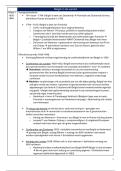
The EU did not create the European convention on human rights and fundamental rights.
At the end of WW2 European leaders had two major concerns-
1. Coming to terms with the atrocities of the holocaust
2. Rebuilding economies shattered by war.
A group of European leaders formed the council of Europe- an idea suggested by the UK prime
minister Winston Churchill
- In 1950 the council of Europe ratified the treaty named the European convention on human
rights and fundamental freedoms and established the European court of human rights to
enforce the treaty.
Meanwhile in Rome in 1957
- Six European governments ( Belgium, The Netherlands, Italy, France, West Germany and
Luxembourg) formed the European economic community by signing the treaty of Rome, to
foster economic cooperation and boost their trading power.
What is a treaty?
- A legally binding agreement between states.
- The power to negotiate and sign a treaty is a prerogative power.
- But any treaty must be laid before parliament and cannot be ratified if it is not approved.
(constitutional reform and governance act 2010)
What is the legal status of a treaty?
- It is a binding agreement and like any contract, may contain penalties for breach.
- In UK law it is very important to remember that a treaty agreement binds the executive
branch of the state but it is not part of domestic law.
- In other words, if the UK government breaches an international treaty, then one of the other
governments who are party to the agreement can seek a remedy, but a UK citizen could not
try to enforce the agreement in the UK court.
- There is a PRESUMPTION by judges interpreting Acts of Parliament that Parliament intends
to respect treaty agreements, but if the clear language of an Act contradicts it then they will
apply the Act.
A treaty can become part of UK law if parliament acts to incorporate it.
- EUROPEAN COMMUNITIES ACT 1972 – this incorporated the agreements made with other
nations (eventually becoming the EU) into domestic law.
- S2(1) All such rights, powers, liabilities, obligations and restrictions from time to time
created or arising by or under the Treaties, and all such remedies and procedures from time
to time provided for by or under the Treaties, as in accordance with the Treaties are without
further enactment to be given legal effect or used in the United Kingdom shall be
recognised and available in law, and be enforced, allowed and followed accordingly.
What did s2 of the European communities act 1972 really do?
The EU did not create the European convention on human rights and fundamental rights.
At the end of WW2 European leaders had two major concerns-
1. Coming to terms with the atrocities of the holocaust
2. Rebuilding economies shattered by war.
A group of European leaders formed the council of Europe- an idea suggested by the UK prime
minister Winston Churchill
- In 1950 the council of Europe ratified the treaty named the European convention on human
rights and fundamental freedoms and established the European court of human rights to
enforce the treaty.
Meanwhile in Rome in 1957
- Six European governments ( Belgium, The Netherlands, Italy, France, West Germany and
Luxembourg) formed the European economic community by signing the treaty of Rome, to
foster economic cooperation and boost their trading power.
What is a treaty?
- A legally binding agreement between states.
- The power to negotiate and sign a treaty is a prerogative power.
- But any treaty must be laid before parliament and cannot be ratified if it is not approved.
(constitutional reform and governance act 2010)
What is the legal status of a treaty?
- It is a binding agreement and like any contract, may contain penalties for breach.
- In UK law it is very important to remember that a treaty agreement binds the executive
branch of the state but it is not part of domestic law.
- In other words, if the UK government breaches an international treaty, then one of the other
governments who are party to the agreement can seek a remedy, but a UK citizen could not
try to enforce the agreement in the UK court.
- There is a PRESUMPTION by judges interpreting Acts of Parliament that Parliament intends
to respect treaty agreements, but if the clear language of an Act contradicts it then they will
apply the Act.
A treaty can become part of UK law if parliament acts to incorporate it.
- EUROPEAN COMMUNITIES ACT 1972 – this incorporated the agreements made with other
nations (eventually becoming the EU) into domestic law.
- S2(1) All such rights, powers, liabilities, obligations and restrictions from time to time
created or arising by or under the Treaties, and all such remedies and procedures from time
to time provided for by or under the Treaties, as in accordance with the Treaties are without
further enactment to be given legal effect or used in the United Kingdom shall be
recognised and available in law, and be enforced, allowed and followed accordingly.
What did s2 of the European communities act 1972 really do?