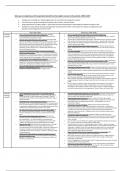
Was war or diplomacy of the greatest benefit to the English crown in the period 1399-1509?
• Foreign war something of a ‘double-edged sword’ (H. Carrel) for late medieval monarchs
• One hand seen as king’s sovereign duty protect realm outside + internal threats
• Kings expected act as military leaders + prove skills as warrior/commander as demanded by medieval concepts of war
• Foreign war costly; defeats seriously damage king’s status (Commons often used requests for taxation as opportunity raise
grievance concerning government of realm)
War (1399-1509) Diplomacy (1399-1509)
Greatest • Henry V most successful monarch terms foreign war: massively • Henry IV survived threats to regime due to use international diplomacy:
benefit increased popularity with nobles who benefitted substantially from ➢ Marriage 1402 daughter Blanche to Ludwig (son of) Count Palatine of Rhine + successful
victories (land Normandy/titles provided) alliance with Brittany (strengthened hand vs French)
• Treaty of Troyes 1420 made Henry V heir to throne: apex of Hundred ➢ Informal alliance 1402/1403 with King Portugal + King Castille; Henry IV invited to member
Years War for England + culmination important military victories such as Order of Garter (continental mark status/military prowess + important diplomatic tool)
Agincourt 1415 + Rouen 1919; Henry V secured his reputation as the ➢ 1406 marriage other daughter Philippa to King Norway/Sweden/Denmark + supported
quintessential ‘good king.’ Emphasised how the benefits of war at large relations with Hanseatic League
determined by the capability of the King to rule effectively (vs • Henry V utilised diplomacy before invasion France 1415: conciliatory attitude towards
ineptitude); Treaty of Troyes seen as a ‘political high-watermark’ (by Welsh, rehabilitated Percy family to protect Scottish border; Jan 1414 10 year truce with
many contemporary historians Brittany
• Success in war resulted in parliament more generous to grants for • The Treaty of Picquigny: Edward IV’s planned invasion France 1468 to promote real +
taxation to increase revenue: ‘briefest + least controversial parliament personal glory/political security didn’t go ahead; 1474: secured alliance with Burgundy vs
of the century’ (T. Frulovisi) under Henry V + contributed to parliament’s France + granted special tax 1/10th all income by parliament Nov 1472 (13k archers for
satisfaction reduced threat French invasion on practical level + reduced campaign): King Louis XI France effectively ‘bought-off’ invasion (7 year truce England +
French naval rads South Coast (damages >£12k to areas such as Kent) France, Marriage Dauphin Charles to Edward’s eldest daughter, Elizabeth + £15k upfront
• Increased finances due to pillaging/fiscal endeavours: events such as payment with £10k pa ‘pension’
besieging Rouen July to Jan 1919 created recognition of Henry V as their • Henry VII + foreign diplomacy rally support before Battle of Bosworth 1485: relationships
‘feudal lord’ + fined Rouen £50k (placed the city under fiscal strain at Duke Brittany allowing supporters join; French gov provided Henry money + ships/supplies
expense of increasing financial stability of English crown) launch invasion; Wales provided 2k-4k troops as area rely considerable support + Scots
• Henry V focused developing new administrations in conquered provided similar no. troops
territories + substantial grants of land: aimed to increase control over • Trade Alliance ‘Magnus Intercursus’ 1496: Margaret of Burgundy significant role assist those
swathes French land and advance power of English crown causing difficulties Henry VII such as Francis Lovell; trade agreement obliged Margaret bring
political manoeuvring end + evidence foreign trade diplomacy ensuring domestic political
stability
• The Spanish Marriage 1499: late 15th century, Spain ruled by King Ferdinand II of Aragon +
wife + 2nd cousin, Queen Isabella I of Castille; referred jointly ‘Catholic monarchs’: title
granted by Pope Alexander VI 1494 recognition defence Catholic faith
➢ Their 5 children made politically significant foreign marriages as part diplomatic endeavours;
youngest daughter, Katherine of Aragon married to Henry VII’s eldest son, Prince Arthur
(1499)
➢ Henry VII keen form alliance: security Tudor dynasty uncertain (Henry’s claim tenuous:
usurpation Battle of Bosworth 1485); marriage eldest son + Spanish princess highly
advantageous, gaining Tudors prospect military support abroad + strengthening family’s
royal status immeasurably (no. trade agreements: Treaty of Medina del Campo 1489)
Not the • Henry V bequeathed to his son (Henry VI) ‘a poisoned chalice’ (H. • Diplomatic exchanges failed under Henry IV 10th Nov 1399: left English little after planned
greatest Carrel): overshadowed reign Henry VI + need for continuing requests invasion of Scotland (15k soldiers); failed acquire peaceful relationship with Robert III +
taxation to further war effort made regime vulnerable to criticism; factor causing Scrope’s Rebellion of May 1405
benefit exacerbated by the military situation rapidly diminishing after siege of • Anglo-Burgundian alliance ends1435: Henry V’s death 1432 serious blow English
Orleans late 1420s unity/strength (alliance successful vs Armangnacs 1420s); Congress of Arras 1435 critical
• Considerable strain crown finances due to invasion: growing lack of blow English hopes consolidating dual-monarchy + ‘forcing English into a war of
enthusiasm for war + many disillusioned by reduction in living standards retrenchment’ (Royle)
due to increased taxation for military endeavours; C.T. Allamand argues • Consequences of Treaty of Picquigny: Edward IV/army heavily criticised due to
‘contemporaries regarded Troyes as an unworkable agreement for much dishonourable settlement + anger taxes/benevolences not returned + contributed to
of 1420s due to increased financial burdens on the crown’ subsequent reputation avaricious monarch; Edward IV raised money through ‘benevolences’
• War with France placed economic strain on areas within England: for + sexual favours with wives wealthy London merchants (indicative noted lustfulness
e.g., Gascony’s wine exports disrupted + fell >50%; damaged English appearing crossed class barriers + willingness utilise charm manipulate subjects pursue
interests in Bristol due to the economic hub of Bristol Port situated objectives diplomacy)
there • Consequences Spanish Marriage 1499: planned marriage never took place owing
• War became long-standing problem for Henry VI: contemporary disagreements 1490’s surrounding pretender throne, Perkin Warbeck’s rebellion (Warbeck
historians such as A.J. Pollard regard Henry VI ‘as more of a vacuum gained international support for cause, particularly areas hostile England (Scot, Ireland,
then a personality’ + his uniform weakness exacerbated other France, Austria))
mechanics of government such as managing finance (crown in debt ➢ Henry VII shaken, accused Ferdinand + Isabella supporting Warbeck (quickly acted reassure
>£360k) + the nobility (the Crown owed the Duke of York >£36k) him + proxy marriage occurred Arthur/Katherine May 1499)
• Treaty of Tours 1444: although attempted negotiate peace + marriage ➢ Incident Katherine + Arthur’s 1st meeting suggest tensions English + Spanish entourages
1445 Henry VI + Margaret of Anjou; problematicality the Treaty regarding sexual etiquette, perceptions female modesty + consummation marriage; Spanish
surrendered Maine to France (hard fought + kept secret) created outcry ambassador to England, Doctor de Puebla argued marriage shouldn’t be consummated;
in England + helped to promote factionalism within English courts + deliberate ploy by Spanish keep marriage unconsummated long as possible; reflected
considerable hostility to Henry VI/Anjou + favourites: Somerset, Suffolk Spain’s continuing unease about Tudor regime
+ Edmund Beaufort • Spanish Marriage 1499 protracted arrangement, politically + economically: highly
• Defeats of early 1450s regarded as a disaster for England + personal problematic when cut short due to Arthur’s untimely death
catastrophe for King Henry VI: one of many grievances causing Cade’s ➢ Both Catholic monarchs + Henry VII keen ensure alliance continued + suggest Katherine
Rebellion of 1450 due to large swathes of the population disillusioned marry Arthur’s younger brother, Henry (Church didn’t allow marriage: needed papal
with Henry VI’s governance dispensation: arrived 1504)
➢ Henry VII highlighted fact Ferdinand hadn’t paid 2nd instalment Katherine’s dowry + financial
wrangling between both countries bitter
• Death Henry VII April 1509 changed situation: his son, new King Henry VIII took different
direction foreign policy (alliance with Spain as anti-French): 11th June 1509, Katherine
Aragon married Henry VIII + became Queen of England
, How accurate is it to say that retaining decreased in importance in the years 1399-1509?
• Control of land crucial to political power late Middle Ages + necessary understand feudal system + how some contemporaries
argue the use of retaining was disintegrating
Retaining decreased in importance 1399-1509 Retaining increased/constant in importance 1399-1509
• 14th/15th centuries, feudal system gradually disintegrating: • Feudal relationships still had obligations on both sides: Lord
changed described by historians such as C. Plummer + K.B. expected provide vassals not only with use fief but
McFarlane as ‘bastard feudalism’ (traditional feudal protection from attacks by interlopes + certain legal
relationship hereditary with families of vassals having long- protection if vassal in trouble with law + emphasis ‘good
term commitment to their Lord) lordship’
• Traditional feudalism problematic as estates divided • Vassals still required take oaths of fealty: required for ex
through inheritance + marriage: not always enough come to Lord’s aid if called upon (vassal Lord’s retainer) +
property/land provide vassals + no control over type of attending the lord’s local court (act as adviser)
vassal (due to feudal holdings descending through family • Lord still gave each retainer a livery designed to advertise
line) their loyalties to a Lord + easier to stop paying a
• System vassalage shifted from land as core system to where disobedient retainer under ‘bastard feudalism’: incentivised
annual cash payments made in return for military/non- more Lords take on more vassals + more control over who
military services: focus instead on personal relationships + to bind themselves to
protected by indentures of mutual dependence + loyalty for • Traditional view retaining upmost importance during W of
lifetime of parties concerned only R’s: fluid system social relationships key factor casing civil
• Less demand for retinues towards the close of the period: unrest as reflected more widespread destabilisation of
foreign policy/diplomacy centred around resolving society; loyalty of large retinues to individual noblemen
disagreements instead of conquest factor making ‘over-mighty subject’ (in effect used as
• Contemporary criticism towards the end of the period that private armies)
Lords failed to control these retinues + became more • Retinue needed if lords were to provide necessary no.
erratic: extended retinues unduly with groups of men armed men for king’s war: important factor later medieval
paying fees/given livery despite little connection to lord period with Hundred’s Year War in France (at height
(last group referred to as ‘liverymen’ in primary sources + Agincourt 1415 + early 1420s); proved necessary for
viewed with suspicion/complaints causing disturbances to defence of Scottish border throughout 1399-1509
the peace)
• Contemporaries regarded it essential great nobles had large
• Parliament legislated + passed 3 Acts late 1390s which
followings: magnate for, expected have large no. servants
reflects contemporary concern regarding growing instability
who resided in household, as well as a retinue of men
Richard II + potential lawlessness within realm: built upon
by Retinue legislation 1468 (Edward IV), outlawing practice bound to him via indentures
retaining except for legal advisers, domestic servants, • Considerable debate among historians about the extent
estate officials + those in ‘lawful service’ this shift towards cash relationships responsible for
• Consistent awareness of monarchs to balance the power of breakdown law/order late medieval period: contemporaries
retaining + limit size retinues: monarch needed to maintain concerned regarding development private retinues +
sufficient popularity among nobles vs asserting authority suggests importance didn’t decrease due to importance of
ensure not challenged or create disorder in kingdom retaining during W of R’s
• Henry VII’s retaining legislation 1504: passed a statute that • 1468 legislation ‘lawful service’ proved a major loophole:
lords had to receive written permission in form of a license the practice of maintenance among the great lords
from king to retain men + provide list of retainers for continued unabated; king’s criticised the lawlessness of
approval; those who disobeyed fined heavily
some retinues but remained aware in reality they were
essential for medieval political + military system function
(basis of national armies in 1475 + 1492)
• The liverymen of nobles who were loyal to the King proved
highly beneficial to a monarch throughout the period:
Henry VII discovered during Lambert Simnel’s rebellion
1487 that retaining essential for expression political power
• Loyal associates of Henry VII such as Sir Thomas Lovell still
developed extensive affinities in the early 1500s
• Foreign war something of a ‘double-edged sword’ (H. Carrel) for late medieval monarchs
• One hand seen as king’s sovereign duty protect realm outside + internal threats
• Kings expected act as military leaders + prove skills as warrior/commander as demanded by medieval concepts of war
• Foreign war costly; defeats seriously damage king’s status (Commons often used requests for taxation as opportunity raise
grievance concerning government of realm)
War (1399-1509) Diplomacy (1399-1509)
Greatest • Henry V most successful monarch terms foreign war: massively • Henry IV survived threats to regime due to use international diplomacy:
benefit increased popularity with nobles who benefitted substantially from ➢ Marriage 1402 daughter Blanche to Ludwig (son of) Count Palatine of Rhine + successful
victories (land Normandy/titles provided) alliance with Brittany (strengthened hand vs French)
• Treaty of Troyes 1420 made Henry V heir to throne: apex of Hundred ➢ Informal alliance 1402/1403 with King Portugal + King Castille; Henry IV invited to member
Years War for England + culmination important military victories such as Order of Garter (continental mark status/military prowess + important diplomatic tool)
Agincourt 1415 + Rouen 1919; Henry V secured his reputation as the ➢ 1406 marriage other daughter Philippa to King Norway/Sweden/Denmark + supported
quintessential ‘good king.’ Emphasised how the benefits of war at large relations with Hanseatic League
determined by the capability of the King to rule effectively (vs • Henry V utilised diplomacy before invasion France 1415: conciliatory attitude towards
ineptitude); Treaty of Troyes seen as a ‘political high-watermark’ (by Welsh, rehabilitated Percy family to protect Scottish border; Jan 1414 10 year truce with
many contemporary historians Brittany
• Success in war resulted in parliament more generous to grants for • The Treaty of Picquigny: Edward IV’s planned invasion France 1468 to promote real +
taxation to increase revenue: ‘briefest + least controversial parliament personal glory/political security didn’t go ahead; 1474: secured alliance with Burgundy vs
of the century’ (T. Frulovisi) under Henry V + contributed to parliament’s France + granted special tax 1/10th all income by parliament Nov 1472 (13k archers for
satisfaction reduced threat French invasion on practical level + reduced campaign): King Louis XI France effectively ‘bought-off’ invasion (7 year truce England +
French naval rads South Coast (damages >£12k to areas such as Kent) France, Marriage Dauphin Charles to Edward’s eldest daughter, Elizabeth + £15k upfront
• Increased finances due to pillaging/fiscal endeavours: events such as payment with £10k pa ‘pension’
besieging Rouen July to Jan 1919 created recognition of Henry V as their • Henry VII + foreign diplomacy rally support before Battle of Bosworth 1485: relationships
‘feudal lord’ + fined Rouen £50k (placed the city under fiscal strain at Duke Brittany allowing supporters join; French gov provided Henry money + ships/supplies
expense of increasing financial stability of English crown) launch invasion; Wales provided 2k-4k troops as area rely considerable support + Scots
• Henry V focused developing new administrations in conquered provided similar no. troops
territories + substantial grants of land: aimed to increase control over • Trade Alliance ‘Magnus Intercursus’ 1496: Margaret of Burgundy significant role assist those
swathes French land and advance power of English crown causing difficulties Henry VII such as Francis Lovell; trade agreement obliged Margaret bring
political manoeuvring end + evidence foreign trade diplomacy ensuring domestic political
stability
• The Spanish Marriage 1499: late 15th century, Spain ruled by King Ferdinand II of Aragon +
wife + 2nd cousin, Queen Isabella I of Castille; referred jointly ‘Catholic monarchs’: title
granted by Pope Alexander VI 1494 recognition defence Catholic faith
➢ Their 5 children made politically significant foreign marriages as part diplomatic endeavours;
youngest daughter, Katherine of Aragon married to Henry VII’s eldest son, Prince Arthur
(1499)
➢ Henry VII keen form alliance: security Tudor dynasty uncertain (Henry’s claim tenuous:
usurpation Battle of Bosworth 1485); marriage eldest son + Spanish princess highly
advantageous, gaining Tudors prospect military support abroad + strengthening family’s
royal status immeasurably (no. trade agreements: Treaty of Medina del Campo 1489)
Not the • Henry V bequeathed to his son (Henry VI) ‘a poisoned chalice’ (H. • Diplomatic exchanges failed under Henry IV 10th Nov 1399: left English little after planned
greatest Carrel): overshadowed reign Henry VI + need for continuing requests invasion of Scotland (15k soldiers); failed acquire peaceful relationship with Robert III +
taxation to further war effort made regime vulnerable to criticism; factor causing Scrope’s Rebellion of May 1405
benefit exacerbated by the military situation rapidly diminishing after siege of • Anglo-Burgundian alliance ends1435: Henry V’s death 1432 serious blow English
Orleans late 1420s unity/strength (alliance successful vs Armangnacs 1420s); Congress of Arras 1435 critical
• Considerable strain crown finances due to invasion: growing lack of blow English hopes consolidating dual-monarchy + ‘forcing English into a war of
enthusiasm for war + many disillusioned by reduction in living standards retrenchment’ (Royle)
due to increased taxation for military endeavours; C.T. Allamand argues • Consequences of Treaty of Picquigny: Edward IV/army heavily criticised due to
‘contemporaries regarded Troyes as an unworkable agreement for much dishonourable settlement + anger taxes/benevolences not returned + contributed to
of 1420s due to increased financial burdens on the crown’ subsequent reputation avaricious monarch; Edward IV raised money through ‘benevolences’
• War with France placed economic strain on areas within England: for + sexual favours with wives wealthy London merchants (indicative noted lustfulness
e.g., Gascony’s wine exports disrupted + fell >50%; damaged English appearing crossed class barriers + willingness utilise charm manipulate subjects pursue
interests in Bristol due to the economic hub of Bristol Port situated objectives diplomacy)
there • Consequences Spanish Marriage 1499: planned marriage never took place owing
• War became long-standing problem for Henry VI: contemporary disagreements 1490’s surrounding pretender throne, Perkin Warbeck’s rebellion (Warbeck
historians such as A.J. Pollard regard Henry VI ‘as more of a vacuum gained international support for cause, particularly areas hostile England (Scot, Ireland,
then a personality’ + his uniform weakness exacerbated other France, Austria))
mechanics of government such as managing finance (crown in debt ➢ Henry VII shaken, accused Ferdinand + Isabella supporting Warbeck (quickly acted reassure
>£360k) + the nobility (the Crown owed the Duke of York >£36k) him + proxy marriage occurred Arthur/Katherine May 1499)
• Treaty of Tours 1444: although attempted negotiate peace + marriage ➢ Incident Katherine + Arthur’s 1st meeting suggest tensions English + Spanish entourages
1445 Henry VI + Margaret of Anjou; problematicality the Treaty regarding sexual etiquette, perceptions female modesty + consummation marriage; Spanish
surrendered Maine to France (hard fought + kept secret) created outcry ambassador to England, Doctor de Puebla argued marriage shouldn’t be consummated;
in England + helped to promote factionalism within English courts + deliberate ploy by Spanish keep marriage unconsummated long as possible; reflected
considerable hostility to Henry VI/Anjou + favourites: Somerset, Suffolk Spain’s continuing unease about Tudor regime
+ Edmund Beaufort • Spanish Marriage 1499 protracted arrangement, politically + economically: highly
• Defeats of early 1450s regarded as a disaster for England + personal problematic when cut short due to Arthur’s untimely death
catastrophe for King Henry VI: one of many grievances causing Cade’s ➢ Both Catholic monarchs + Henry VII keen ensure alliance continued + suggest Katherine
Rebellion of 1450 due to large swathes of the population disillusioned marry Arthur’s younger brother, Henry (Church didn’t allow marriage: needed papal
with Henry VI’s governance dispensation: arrived 1504)
➢ Henry VII highlighted fact Ferdinand hadn’t paid 2nd instalment Katherine’s dowry + financial
wrangling between both countries bitter
• Death Henry VII April 1509 changed situation: his son, new King Henry VIII took different
direction foreign policy (alliance with Spain as anti-French): 11th June 1509, Katherine
Aragon married Henry VIII + became Queen of England
, How accurate is it to say that retaining decreased in importance in the years 1399-1509?
• Control of land crucial to political power late Middle Ages + necessary understand feudal system + how some contemporaries
argue the use of retaining was disintegrating
Retaining decreased in importance 1399-1509 Retaining increased/constant in importance 1399-1509
• 14th/15th centuries, feudal system gradually disintegrating: • Feudal relationships still had obligations on both sides: Lord
changed described by historians such as C. Plummer + K.B. expected provide vassals not only with use fief but
McFarlane as ‘bastard feudalism’ (traditional feudal protection from attacks by interlopes + certain legal
relationship hereditary with families of vassals having long- protection if vassal in trouble with law + emphasis ‘good
term commitment to their Lord) lordship’
• Traditional feudalism problematic as estates divided • Vassals still required take oaths of fealty: required for ex
through inheritance + marriage: not always enough come to Lord’s aid if called upon (vassal Lord’s retainer) +
property/land provide vassals + no control over type of attending the lord’s local court (act as adviser)
vassal (due to feudal holdings descending through family • Lord still gave each retainer a livery designed to advertise
line) their loyalties to a Lord + easier to stop paying a
• System vassalage shifted from land as core system to where disobedient retainer under ‘bastard feudalism’: incentivised
annual cash payments made in return for military/non- more Lords take on more vassals + more control over who
military services: focus instead on personal relationships + to bind themselves to
protected by indentures of mutual dependence + loyalty for • Traditional view retaining upmost importance during W of
lifetime of parties concerned only R’s: fluid system social relationships key factor casing civil
• Less demand for retinues towards the close of the period: unrest as reflected more widespread destabilisation of
foreign policy/diplomacy centred around resolving society; loyalty of large retinues to individual noblemen
disagreements instead of conquest factor making ‘over-mighty subject’ (in effect used as
• Contemporary criticism towards the end of the period that private armies)
Lords failed to control these retinues + became more • Retinue needed if lords were to provide necessary no.
erratic: extended retinues unduly with groups of men armed men for king’s war: important factor later medieval
paying fees/given livery despite little connection to lord period with Hundred’s Year War in France (at height
(last group referred to as ‘liverymen’ in primary sources + Agincourt 1415 + early 1420s); proved necessary for
viewed with suspicion/complaints causing disturbances to defence of Scottish border throughout 1399-1509
the peace)
• Contemporaries regarded it essential great nobles had large
• Parliament legislated + passed 3 Acts late 1390s which
followings: magnate for, expected have large no. servants
reflects contemporary concern regarding growing instability
who resided in household, as well as a retinue of men
Richard II + potential lawlessness within realm: built upon
by Retinue legislation 1468 (Edward IV), outlawing practice bound to him via indentures
retaining except for legal advisers, domestic servants, • Considerable debate among historians about the extent
estate officials + those in ‘lawful service’ this shift towards cash relationships responsible for
• Consistent awareness of monarchs to balance the power of breakdown law/order late medieval period: contemporaries
retaining + limit size retinues: monarch needed to maintain concerned regarding development private retinues +
sufficient popularity among nobles vs asserting authority suggests importance didn’t decrease due to importance of
ensure not challenged or create disorder in kingdom retaining during W of R’s
• Henry VII’s retaining legislation 1504: passed a statute that • 1468 legislation ‘lawful service’ proved a major loophole:
lords had to receive written permission in form of a license the practice of maintenance among the great lords
from king to retain men + provide list of retainers for continued unabated; king’s criticised the lawlessness of
approval; those who disobeyed fined heavily
some retinues but remained aware in reality they were
essential for medieval political + military system function
(basis of national armies in 1475 + 1492)
• The liverymen of nobles who were loyal to the King proved
highly beneficial to a monarch throughout the period:
Henry VII discovered during Lambert Simnel’s rebellion
1487 that retaining essential for expression political power
• Loyal associates of Henry VII such as Sir Thomas Lovell still
developed extensive affinities in the early 1500s