How does Steinbeck present Racism in the Novel?
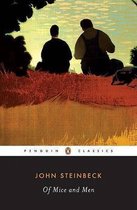
The novella Of Mice and Men was published in 1937, a time of extreme racism and
discrimination. Racism occurred on a large scale worldwide and in this particular instance,
America. People of colour were labelled by derogatory terms and those around them had no
respect for people of colour. Throughout the novel, Racism is showed mainly towards
Crooks, the only black man who appears on the ranch. The essay will further expand on the
issue of Racism and how he dealt with it from those who worked alongside him.
The character of Crooks as a whole is used to highlight the issue of racism and Steinbeck
uses the people he works with as a source. Racism was almost a normalized practice and
wasn’t considered shameful or disrespectful in any way. Those who were black were
considered to be inferior in comparison to those who were white. One instance which
stands out is when Candy says’ to George: ‘Sure ya see the stable bucks’ a n*****’. Two
words in this quotation are worth mentioning. The first being the use of n*****. This term
was used freely and regularly towards blacks and Crooks in particular was almost only
referred to as this when spoken of or to. Now the position of a stable buck was to tend to
the horses. This position was mainly given to black individuals in order so show that they
could not be successful and had no chance of having any important role on the ranch. It
could also be said that due to his differing skin colour he was sent to stay with the horses
rather than the other workers and he is dehumanised due to his race. Here racism is
presented by the use of a derogatory term and the fact that there was a specific position on
the ranch dedicated to black people out of spite only highlights the surface of the issue. The
context of the quote was referring to the fact that the boss loses his temper and the fact
that the stable buck is black only fuels it. Here it seems that Candy is justifying that the only
reason he is spoken to rudely is due to his skin colour. This again shows the dire situation of
racism in the 1930s.
The sentence is then ended with ‘he’s a nice fella too’. This demonstrates how everyone had
adjusted to using racial slurs in their sentences. He is only recognized by his skin colour and
his job within the book. The reader is then left with the impression that he isn’t important or
cared for.
Another aspect of Racism is by Crooks himself. He is so isolated and unfairly treated that he
then says: ‘this is just a n***** talking, a busted-back n*****, so it doesn’t mean nothing
see?’. This shows how Crooks views himself and how he recognizes how the other men on
the ranch see him. He also mentions his ‘busted-back’ which in itself is a disability. As well as
being black and discriminated, he isn’t much use on the ranch and isn’t respected. We can
notice that he feels rejected and cast aside and he understand that it is due to his skin
colour but there is nothing he can do to help it. Steinbeck repeatedly uses these derogatory
terms not to be racist but to raise awareness and to try and stop what he felt was an
injustice. Many of Steinbeck’s novels revolve around social issues which shows he was a
man ahead of his time and that he did not agree with how things were done. He wanted a
change and this book was a way for him to get justice.
The novella Of Mice and Men was published in 1937, a time of extreme racism and
discrimination. Racism occurred on a large scale worldwide and in this particular instance,
America. People of colour were labelled by derogatory terms and those around them had no
respect for people of colour. Throughout the novel, Racism is showed mainly towards
Crooks, the only black man who appears on the ranch. The essay will further expand on the
issue of Racism and how he dealt with it from those who worked alongside him.
The character of Crooks as a whole is used to highlight the issue of racism and Steinbeck
uses the people he works with as a source. Racism was almost a normalized practice and
wasn’t considered shameful or disrespectful in any way. Those who were black were
considered to be inferior in comparison to those who were white. One instance which
stands out is when Candy says’ to George: ‘Sure ya see the stable bucks’ a n*****’. Two
words in this quotation are worth mentioning. The first being the use of n*****. This term
was used freely and regularly towards blacks and Crooks in particular was almost only
referred to as this when spoken of or to. Now the position of a stable buck was to tend to
the horses. This position was mainly given to black individuals in order so show that they
could not be successful and had no chance of having any important role on the ranch. It
could also be said that due to his differing skin colour he was sent to stay with the horses
rather than the other workers and he is dehumanised due to his race. Here racism is
presented by the use of a derogatory term and the fact that there was a specific position on
the ranch dedicated to black people out of spite only highlights the surface of the issue. The
context of the quote was referring to the fact that the boss loses his temper and the fact
that the stable buck is black only fuels it. Here it seems that Candy is justifying that the only
reason he is spoken to rudely is due to his skin colour. This again shows the dire situation of
racism in the 1930s.
The sentence is then ended with ‘he’s a nice fella too’. This demonstrates how everyone had
adjusted to using racial slurs in their sentences. He is only recognized by his skin colour and
his job within the book. The reader is then left with the impression that he isn’t important or
cared for.
Another aspect of Racism is by Crooks himself. He is so isolated and unfairly treated that he
then says: ‘this is just a n***** talking, a busted-back n*****, so it doesn’t mean nothing
see?’. This shows how Crooks views himself and how he recognizes how the other men on
the ranch see him. He also mentions his ‘busted-back’ which in itself is a disability. As well as
being black and discriminated, he isn’t much use on the ranch and isn’t respected. We can
notice that he feels rejected and cast aside and he understand that it is due to his skin
colour but there is nothing he can do to help it. Steinbeck repeatedly uses these derogatory
terms not to be racist but to raise awareness and to try and stop what he felt was an
injustice. Many of Steinbeck’s novels revolve around social issues which shows he was a
man ahead of his time and that he did not agree with how things were done. He wanted a
change and this book was a way for him to get justice.