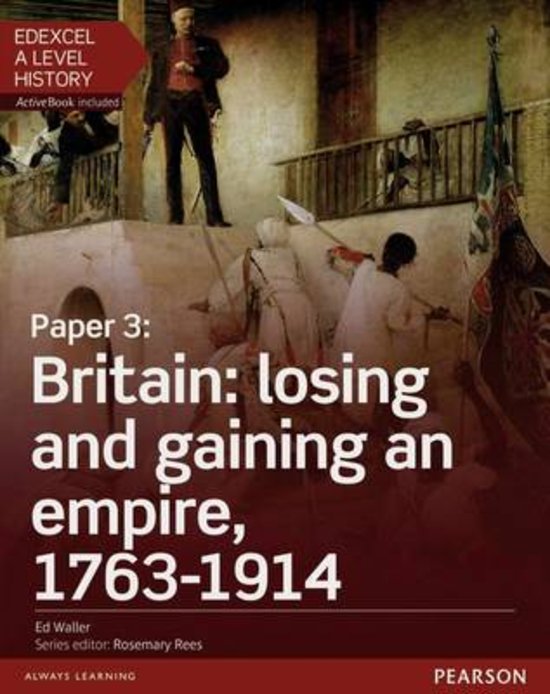
Edexcel A-level History - Paper 3, option 35.1
Britain: losing and gaining an empire, 1763-1914
The changing nature and extent of trade 2
The changing nature of the Royal Navy 9
The loss of the American colonies, 1770-83 16
The birth of British Australia, 1788-1829 23
Learning from past mistakes: Canada and the Durham Report, 31
1837-40
Nearly losing an empire: the British in India, 1829-58 40
The Nile Valley, 1882-98 47
1
, 3.1 - The changing nature and extent of trade
How important was government policy in shaping changes to patterns of
trade in the years 1763-1914?
Background
• Britain emerged victorious from the Seven Years War in 1763 but with masses of
government debt - 157% of GDP.
• This was replicated during the American War of Independence and the Napoleonic
Wars. Debt rose to 260% of GDP in 1821.
• Government policy was:
o mercantilist: the value of exports was kept higher than the value of imports in
order to keep a positive balance of trade (trade was seen as finite) to acquire
assets with which to invest in further economic growth
o protectionist: taxes were imposed on imports in order to protect domestic
producers from being undercut by imports.
• Over time, free trade was adopted instead. Britain used diplomacy or coercion to make
other countries abolish import duties too as this favoured cheap, industrially-produced
British goods.
• Other European powers began to seek increased geopolitical influence. Colonies were
no longer seen as vital for trade but as a symbol of imperial status.
The abolition of the slave trade, 1807
Challenges to abolitionists
• British involvement in the slave trade had been going on since the 16th century.
• The transatlantic slave trade meant trading British goods like textiles for slaves in West
Africa before carrying those slaves to the Americas and bringing slave-produced raw
materials back to Britain.
• Britain dominated the transatlantic slave trade (the ‘triangular trade’) from the mid-18th
century.
• The slave trade was a profitable investment for British financiers.
• British ports (used by slave carriers) like Bristol and Liverpool boomed.
• The government used the revenues from taxing the imports from the Americas brought
by slave ships to fund the Royal Navy and fight European wars.
• The slave trade provided a large pool of skilled sailors for use during wars.
• Powerful vested interests in Britain supported the slave trade, including dozens of MPs
who had interests in slave plantations.
The abolition of the slave trade
• The Quakers were the first abolitionist movement in Britain. They first petitioned
parliament in 1783.
• They joined forces with other abolitionists in 1787 and William Wilberforce led a
campaign inside parliament for abolition from 1789.
2
, • The abolitionists led the first grassroots campaign for abolition, exposing the horrors of
slavery to the public through pamphlets, posters and meetings.
• The timing could not have been worse as France went into revolution in 1789 and
became a republic in 1792. This led to conflict with Britain.
• France emancipated the slaves of plantation owners who were loyal to the monarch.
Britain supported the loyalists, hoping to take the island. Emancipation was therefore a
pro-French position. Parliament voted against abolition consistently.
• British hopes of taking Saint-Domingue had faded by 1802 and Napoleon, the French
Emperor, restored slavery to reinstate revenues from it. Emancipation was therefore an
anti-French position, making it much more attractive.
• A bill abolishing the slave trade passed the Commons in 1804 but not the Lords.
• The Foreign Slave Trade bill did pass in 1806, banning British citizens (not just British-
flagged ships) from trading slaves with enemies (i.e. France).
• At the 1806 general election, more abolitionist MPs were elected and opposition
crumbled. The Slave Trade Act passed in 1808, ending Britain’s role in the slave trade.
• The 1806 act only banned the slave trade – not the practice of slavery itself which was
not banned in British colonies until 1834 when the government compensated slave
owners £20 million for the loss of their ‘property’.
Reasons for abolition
• Humanitarianism and anti-French sentiment were not the only reasons for abolition.
• The slave trade had been declining in importance anyway and the slavery lobby was
weakening by the early 19th century.
• British slave traders had been hurt by losses in the slave trade to foreign traders due to
Britain’s many wars and by disease on slave ships and slave revolts making the trade a
less financially sound investment.
The adoption of free trade, 1842-1846
Free trade economics
• Mercantilism had dominated economic thinking from the 16th century to the 18th
century. The aim was not to accumulate vast wealth but to use profits to invest.
• Leading economic thinkers had begun to question mercantilism.
• Adam Smith published The Wealth of Nations in 1776. He argued that removing barriers
to trade would increase overall wealth since both parties benefited from trade, not just
one.
Adopting free trade
• Smith’s book was influential and popular but for the time being British policy remained
mercantilist.
• Parliament was dominated by wealthy landowners who had an interest in keeping
incomes from their estates high.
• English landowners kept tariffs on Irish-produced agricultural goods to keep food prices
in England high to maximise profits.
• Despite the tariffs, Ireland continued to grow since its agricultural goods were
competitive. Dublin was the second most prosperous city in the British Empire.
3
Britain: losing and gaining an empire, 1763-1914
The changing nature and extent of trade 2
The changing nature of the Royal Navy 9
The loss of the American colonies, 1770-83 16
The birth of British Australia, 1788-1829 23
Learning from past mistakes: Canada and the Durham Report, 31
1837-40
Nearly losing an empire: the British in India, 1829-58 40
The Nile Valley, 1882-98 47
1
, 3.1 - The changing nature and extent of trade
How important was government policy in shaping changes to patterns of
trade in the years 1763-1914?
Background
• Britain emerged victorious from the Seven Years War in 1763 but with masses of
government debt - 157% of GDP.
• This was replicated during the American War of Independence and the Napoleonic
Wars. Debt rose to 260% of GDP in 1821.
• Government policy was:
o mercantilist: the value of exports was kept higher than the value of imports in
order to keep a positive balance of trade (trade was seen as finite) to acquire
assets with which to invest in further economic growth
o protectionist: taxes were imposed on imports in order to protect domestic
producers from being undercut by imports.
• Over time, free trade was adopted instead. Britain used diplomacy or coercion to make
other countries abolish import duties too as this favoured cheap, industrially-produced
British goods.
• Other European powers began to seek increased geopolitical influence. Colonies were
no longer seen as vital for trade but as a symbol of imperial status.
The abolition of the slave trade, 1807
Challenges to abolitionists
• British involvement in the slave trade had been going on since the 16th century.
• The transatlantic slave trade meant trading British goods like textiles for slaves in West
Africa before carrying those slaves to the Americas and bringing slave-produced raw
materials back to Britain.
• Britain dominated the transatlantic slave trade (the ‘triangular trade’) from the mid-18th
century.
• The slave trade was a profitable investment for British financiers.
• British ports (used by slave carriers) like Bristol and Liverpool boomed.
• The government used the revenues from taxing the imports from the Americas brought
by slave ships to fund the Royal Navy and fight European wars.
• The slave trade provided a large pool of skilled sailors for use during wars.
• Powerful vested interests in Britain supported the slave trade, including dozens of MPs
who had interests in slave plantations.
The abolition of the slave trade
• The Quakers were the first abolitionist movement in Britain. They first petitioned
parliament in 1783.
• They joined forces with other abolitionists in 1787 and William Wilberforce led a
campaign inside parliament for abolition from 1789.
2
, • The abolitionists led the first grassroots campaign for abolition, exposing the horrors of
slavery to the public through pamphlets, posters and meetings.
• The timing could not have been worse as France went into revolution in 1789 and
became a republic in 1792. This led to conflict with Britain.
• France emancipated the slaves of plantation owners who were loyal to the monarch.
Britain supported the loyalists, hoping to take the island. Emancipation was therefore a
pro-French position. Parliament voted against abolition consistently.
• British hopes of taking Saint-Domingue had faded by 1802 and Napoleon, the French
Emperor, restored slavery to reinstate revenues from it. Emancipation was therefore an
anti-French position, making it much more attractive.
• A bill abolishing the slave trade passed the Commons in 1804 but not the Lords.
• The Foreign Slave Trade bill did pass in 1806, banning British citizens (not just British-
flagged ships) from trading slaves with enemies (i.e. France).
• At the 1806 general election, more abolitionist MPs were elected and opposition
crumbled. The Slave Trade Act passed in 1808, ending Britain’s role in the slave trade.
• The 1806 act only banned the slave trade – not the practice of slavery itself which was
not banned in British colonies until 1834 when the government compensated slave
owners £20 million for the loss of their ‘property’.
Reasons for abolition
• Humanitarianism and anti-French sentiment were not the only reasons for abolition.
• The slave trade had been declining in importance anyway and the slavery lobby was
weakening by the early 19th century.
• British slave traders had been hurt by losses in the slave trade to foreign traders due to
Britain’s many wars and by disease on slave ships and slave revolts making the trade a
less financially sound investment.
The adoption of free trade, 1842-1846
Free trade economics
• Mercantilism had dominated economic thinking from the 16th century to the 18th
century. The aim was not to accumulate vast wealth but to use profits to invest.
• Leading economic thinkers had begun to question mercantilism.
• Adam Smith published The Wealth of Nations in 1776. He argued that removing barriers
to trade would increase overall wealth since both parties benefited from trade, not just
one.
Adopting free trade
• Smith’s book was influential and popular but for the time being British policy remained
mercantilist.
• Parliament was dominated by wealthy landowners who had an interest in keeping
incomes from their estates high.
• English landowners kept tariffs on Irish-produced agricultural goods to keep food prices
in England high to maximise profits.
• Despite the tariffs, Ireland continued to grow since its agricultural goods were
competitive. Dublin was the second most prosperous city in the British Empire.
3