Evaluate the claim that Natural Moral Law provides a justified foundation for moral rules
This essay will evaluate the claim that Natural Moral Law provides a justified foundation for
moral rules by examining key theorists and criticisms.
Natural Moral Law is a normative ethical theory meaning it deals with how we work out what
we should do, contrasting meta-ethics and applied ethics. It is a posteriori as it is derived
from experience, not from reason as with a priori. It is also absolutist, meaning there are
certain moral rules that are always right or wrong, and does not depend on situations like
relativistic theories. Furthermore, Natural Moral Law is deontological as it focuses on the
actual action and not the consequences, contrasting consequentialist theories. It is also
religious, not secular, as it is based on the claim that God designed humans with a particular
purpose and function.
Aristotle, an Ancient Greek philosopher, proposed his normative ethical theory of Virtue
Ethics which claimed that we can work out our functions by observing our nature, and that if
we follow our function, we would act morally. Aquinas was inspired by Aristotle's Virtue
Ethics and agreed that we all have a function. However, Aquinas stated that we were all
designed by God. Natural Moral Law is seen as the combination of Virtue Ethics and
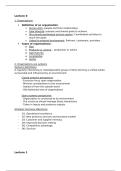
Christianity. In Aquinas' seminal work 'Summa Theologica', he proposed four kinds of laws:
eternal law, which explains the will of God and His plan for us, this is revealed in divine law,
including holy books and religious teachings, which we know to be true through natural law,
explaining what we observe our function to be, and we use this to construct human law,
which helps to govern society.
Aquinas believed we could establish the most fundamental moral rules by observing our
nature. Through a posteriori reasoning we know that humans are designed to fulfil certain
functions, which explain our primary precepts. These primary precepts include to live, to
reproduce, to learn, to worship God and to order society, which Aquinas believed were the
basis of morality and were unchanging. Moreover, Aquinas argues all other moral rules can
be derived from our primary precepts, which he called secondary precepts. For example,
from the primary precept of 'to live', we can derive secondary precepts such as 'do not
murder' or 'do not commit suicide', which can explain how Natural Moral Law provides a
justified foundation for moral rules.
One strength of Natural Moral Law is through its absolutist nature. This is because the
ethical theory can provide unchanging moral rules that can be applied to any situation,
hence easy to follow. However, even if it is easy to follow, the ethical theory is questioned as
Aquinas himself failed to follow the theory. One of the primary precepts is to reproduce,
however Aquinas was a Christian friar, meaning he never married, hence never had
children, failing to fulfil the primary precept he himself explains. However, this criticism is a
non-sequitur statement as it suffers from the Tu Quoque fallacy. This is a logical fallacy
where the person’s hypocrisy is used to show the argument they are proposing is false. The
rightness or wrongness of an action does not depend on the presenter’s actions; the primary
precept of reproduction can still be valid, regardless of whether Aquinas has followed it or
not. Therefore, since this criticism is a non-sequitur, it cannot undermine Natural Moral Law,
making it still possible to be a justified foundation for providing moral rules.
Another strength of Natural Moral Law is that it uses a posteriori reasoning meaning it is
based on experience, hence the ethical theory’s concepts, such as the primary precepts, can
be verified. However, it is through the a posteriori nature of this ethical theory that it suffers
from the is/ought problem. Hume explains that we cannot move from an is to an ought. In
other words, we cannot move from a description to a prescription. Natural Moral Law uses a
posteriori reasoning to observe our nature (primary precepts) to explain what we ought to do,
This essay will evaluate the claim that Natural Moral Law provides a justified foundation for
moral rules by examining key theorists and criticisms.
Natural Moral Law is a normative ethical theory meaning it deals with how we work out what
we should do, contrasting meta-ethics and applied ethics. It is a posteriori as it is derived
from experience, not from reason as with a priori. It is also absolutist, meaning there are
certain moral rules that are always right or wrong, and does not depend on situations like
relativistic theories. Furthermore, Natural Moral Law is deontological as it focuses on the
actual action and not the consequences, contrasting consequentialist theories. It is also
religious, not secular, as it is based on the claim that God designed humans with a particular
purpose and function.
Aristotle, an Ancient Greek philosopher, proposed his normative ethical theory of Virtue
Ethics which claimed that we can work out our functions by observing our nature, and that if
we follow our function, we would act morally. Aquinas was inspired by Aristotle's Virtue
Ethics and agreed that we all have a function. However, Aquinas stated that we were all
designed by God. Natural Moral Law is seen as the combination of Virtue Ethics and
Christianity. In Aquinas' seminal work 'Summa Theologica', he proposed four kinds of laws:
eternal law, which explains the will of God and His plan for us, this is revealed in divine law,
including holy books and religious teachings, which we know to be true through natural law,
explaining what we observe our function to be, and we use this to construct human law,
which helps to govern society.
Aquinas believed we could establish the most fundamental moral rules by observing our
nature. Through a posteriori reasoning we know that humans are designed to fulfil certain
functions, which explain our primary precepts. These primary precepts include to live, to
reproduce, to learn, to worship God and to order society, which Aquinas believed were the
basis of morality and were unchanging. Moreover, Aquinas argues all other moral rules can
be derived from our primary precepts, which he called secondary precepts. For example,
from the primary precept of 'to live', we can derive secondary precepts such as 'do not
murder' or 'do not commit suicide', which can explain how Natural Moral Law provides a
justified foundation for moral rules.
One strength of Natural Moral Law is through its absolutist nature. This is because the
ethical theory can provide unchanging moral rules that can be applied to any situation,
hence easy to follow. However, even if it is easy to follow, the ethical theory is questioned as
Aquinas himself failed to follow the theory. One of the primary precepts is to reproduce,
however Aquinas was a Christian friar, meaning he never married, hence never had
children, failing to fulfil the primary precept he himself explains. However, this criticism is a
non-sequitur statement as it suffers from the Tu Quoque fallacy. This is a logical fallacy
where the person’s hypocrisy is used to show the argument they are proposing is false. The
rightness or wrongness of an action does not depend on the presenter’s actions; the primary
precept of reproduction can still be valid, regardless of whether Aquinas has followed it or
not. Therefore, since this criticism is a non-sequitur, it cannot undermine Natural Moral Law,
making it still possible to be a justified foundation for providing moral rules.
Another strength of Natural Moral Law is that it uses a posteriori reasoning meaning it is
based on experience, hence the ethical theory’s concepts, such as the primary precepts, can
be verified. However, it is through the a posteriori nature of this ethical theory that it suffers
from the is/ought problem. Hume explains that we cannot move from an is to an ought. In
other words, we cannot move from a description to a prescription. Natural Moral Law uses a
posteriori reasoning to observe our nature (primary precepts) to explain what we ought to do,