Lecture 1 – criminal responsibility and the legal system
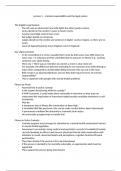
The English Legal System:
- The UK uses an adversarial (one side fights the other) justice system
- Juries decide on the verdict in cases in lower courts;
- County court/High court/Crown court
- But judges decide on sentences
- Judges decide on the verdict and sentence in higher courts (2 types), so there are no
Juries.
- Court of Appeal/Supreme Court (highest court in England)
Key Legal Concepts:
- To be committed of a crime, (usually) there must be both actus reus AND mens rea
- Actus reus = A voluntary act/Not committed due to pressure or illness/ E.g., running
someone over while driving
- Mens rea = There was an intention to commit a crime in clear mind set
- For example, the difference between intending to run someone over while driving to
injury them compared to accidentally hitting someone who ran out in the road
- Both result in an injured pedestrian, but are they both equal in terms of criminal
responsibility?
- This is important with people with mental health problems
Fitness to Plead:
- Assessed first in police custody.
- Is the suspect functioning whilst in custody?
- If MHP is present, it could make them vulnerable in interview so they may not
understand the implication of interviews/might provide unreliable testimony or self-
incriminate.
- May be:
- A temporary lack of fitness like intoxication or been high
- A treatable MHP like psychosis, this can be under control before been interviewed
- A permanent condition like dementia or traumatic brain injury
- No universally accepted way to handle this!
Fitness in Police Custody:
- Custody sergeant must arrange for attention by a mental health professional trained
in mental health legislation
- Assessment can include: Using medical and psychiatric records (if available)/Custody
records/Speaking to officers and forensic physician/Mental state examination with
attention to mood, abnormal beliefs and perceptions, cognitive function/Physical
examination.
- They then decide if the person is fit to be interviewed
- If the person is decided to be mentally vulnerable, an appropriate adult must be
appointed
- They support the person being interviewed
The English Legal System:
- The UK uses an adversarial (one side fights the other) justice system
- Juries decide on the verdict in cases in lower courts;
- County court/High court/Crown court
- But judges decide on sentences
- Judges decide on the verdict and sentence in higher courts (2 types), so there are no
Juries.
- Court of Appeal/Supreme Court (highest court in England)
Key Legal Concepts:
- To be committed of a crime, (usually) there must be both actus reus AND mens rea
- Actus reus = A voluntary act/Not committed due to pressure or illness/ E.g., running
someone over while driving
- Mens rea = There was an intention to commit a crime in clear mind set
- For example, the difference between intending to run someone over while driving to
injury them compared to accidentally hitting someone who ran out in the road
- Both result in an injured pedestrian, but are they both equal in terms of criminal
responsibility?
- This is important with people with mental health problems
Fitness to Plead:
- Assessed first in police custody.
- Is the suspect functioning whilst in custody?
- If MHP is present, it could make them vulnerable in interview so they may not
understand the implication of interviews/might provide unreliable testimony or self-
incriminate.
- May be:
- A temporary lack of fitness like intoxication or been high
- A treatable MHP like psychosis, this can be under control before been interviewed
- A permanent condition like dementia or traumatic brain injury
- No universally accepted way to handle this!
Fitness in Police Custody:
- Custody sergeant must arrange for attention by a mental health professional trained
in mental health legislation
- Assessment can include: Using medical and psychiatric records (if available)/Custody
records/Speaking to officers and forensic physician/Mental state examination with
attention to mood, abnormal beliefs and perceptions, cognitive function/Physical
examination.
- They then decide if the person is fit to be interviewed
- If the person is decided to be mentally vulnerable, an appropriate adult must be
appointed
- They support the person being interviewed