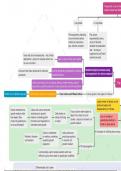
The growth curve of mic
closed culture has distin
1. Lag phase 2. Log phase Go and eat my
stinky shit i wa
Microorganisms adjusting Pop. grows moneys and a
to environment before exponentially (every pls go shove u
starting to reproduce - round of division
curves up ur a
pop. remains constant doubles the population
size - as long as
organism has sufficient
Grow well at low temperatures - not climate
nutrient amount)
dependent + grown on materials which are Easy to grow as they grow rapidly
no use to humans
Are purer than those produced in chemical Can be genetically engineered to produce Biotechnological processes using
processes desired products microorganisms for various reasons
Used in processes such as brewing, baking, cheese making, yoghurt The u
production, penicillin production, insulin production and bioremediation
MIXED mix of different species PURE initially contains 1 miroorganism Pure culture and Mixed culture Can be grown in two types of culture
Large number of plants can be
produced easily and
Shoots transferred to Callus cells can be removed independently of climate
Tissue culture when explant is
growth medium after and placed on growth Cells divide via
taken from shoot tip to be Lack of variation (
few weeks (then medium containing plant mitosis (forming
cloned - placed on nutrient rich genetically identical) +
moved to greenhouse- hormones and regulators to a callus)
growth medium harder to grow plants
to be acclimatised) stimulate shoot growth
Callus is transferred Callus produced Examples of artificial plant cloning
Plantlet is formed + to medium containing producing explants
acclimatised essential growth in nutrient rich
regulators growth medium
Micropropagation
Commercially used to produce plants which are
difficult to grow from seed (or genetically modified)
Differentiated cell is taken
closed culture has distin
1. Lag phase 2. Log phase Go and eat my
stinky shit i wa
Microorganisms adjusting Pop. grows moneys and a
to environment before exponentially (every pls go shove u
starting to reproduce - round of division
curves up ur a
pop. remains constant doubles the population
size - as long as
organism has sufficient
Grow well at low temperatures - not climate
nutrient amount)
dependent + grown on materials which are Easy to grow as they grow rapidly
no use to humans
Are purer than those produced in chemical Can be genetically engineered to produce Biotechnological processes using
processes desired products microorganisms for various reasons
Used in processes such as brewing, baking, cheese making, yoghurt The u
production, penicillin production, insulin production and bioremediation
MIXED mix of different species PURE initially contains 1 miroorganism Pure culture and Mixed culture Can be grown in two types of culture
Large number of plants can be
produced easily and
Shoots transferred to Callus cells can be removed independently of climate
Tissue culture when explant is
growth medium after and placed on growth Cells divide via
taken from shoot tip to be Lack of variation (
few weeks (then medium containing plant mitosis (forming
cloned - placed on nutrient rich genetically identical) +
moved to greenhouse- hormones and regulators to a callus)
growth medium harder to grow plants
to be acclimatised) stimulate shoot growth
Callus is transferred Callus produced Examples of artificial plant cloning
Plantlet is formed + to medium containing producing explants
acclimatised essential growth in nutrient rich
regulators growth medium
Micropropagation
Commercially used to produce plants which are
difficult to grow from seed (or genetically modified)
Differentiated cell is taken