
Courtney Lowes
The trial balance
What are the reasons for a business to produce a trail balance?
A business would produce a trial balance so they could check the accuracy of the book
keeping in the business. After all of the businesses balances have been taken from their
accounts then the debit admissions will equal and total the credit entries. They also create a
trial balance as it helps to prepare them for their final accounting. This could include a
balance sheet, income statement or cash flow statement.
What do the companies use it for?
The report is primarily used to ensure that the total of all debits equals the total of all
credits, meaning there would be no unbalanced journal entries in the accounting system so
the business can produce accurate financial statements.
How is it constructed?
Accounting records would be constructed every 6 months or at the end of the business year.
This forms the basis of the profit and loss account as well as the balance sheet. They would
have to ensure that the trial balance balances up first before they can try to construct other
accounts.
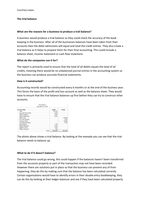
The photo above shows a trial balance. By looking at the example you can see that the trial
balance needs to balance up.
What to do if it doesn’t balance?
The trial balance could go wrong, this could happen if the balances haven’t been transferred
from the accounts properly or part of the transaction may not have been recorded.
However there are solutions put in place so that the business can prevent any of from
happening, they do this by making sure that the balance has been calculated correctly.
Certain organisations would have to identify errors in their double entry bookkeeping, they
can do this by looking at their ledger balances and see if they have been calculated properly.
The trial balance
What are the reasons for a business to produce a trail balance?
A business would produce a trial balance so they could check the accuracy of the book
keeping in the business. After all of the businesses balances have been taken from their
accounts then the debit admissions will equal and total the credit entries. They also create a
trial balance as it helps to prepare them for their final accounting. This could include a
balance sheet, income statement or cash flow statement.
What do the companies use it for?
The report is primarily used to ensure that the total of all debits equals the total of all
credits, meaning there would be no unbalanced journal entries in the accounting system so
the business can produce accurate financial statements.
How is it constructed?
Accounting records would be constructed every 6 months or at the end of the business year.
This forms the basis of the profit and loss account as well as the balance sheet. They would
have to ensure that the trial balance balances up first before they can try to construct other
accounts.
The photo above shows a trial balance. By looking at the example you can see that the trial
balance needs to balance up.
What to do if it doesn’t balance?
The trial balance could go wrong, this could happen if the balances haven’t been transferred
from the accounts properly or part of the transaction may not have been recorded.
However there are solutions put in place so that the business can prevent any of from
happening, they do this by making sure that the balance has been calculated correctly.
Certain organisations would have to identify errors in their double entry bookkeeping, they
can do this by looking at their ledger balances and see if they have been calculated properly.


