Causes of the 1905 Revolu2on (including social and economic condi2ons and the significance
of the Russo-Japanese War)
Analyse the causes and consequences of the 1905 revolu7on in Russia.
Assess the impact of the Russo-Japanese War on the reign of Nicholas II up to 1914.
Consequences of the 1905 Revolu2on (including Stolypin and the Dumas)
To what extent were Stolypin’s poli7cal and economic policies successful in the years 1906-
1911?
November 2018: Discuss the causes and consequences of the 1905 Revolu2on in Russia.
The ques7on requires that candidates offer a considered and balanced review of the causes and
consequences of the 1905 Revolu7on. For causes, candidates may focus on a range of long-
term causes, such as liberal frustra2on with autocra2c rule. This led to the growth of
revolu7onary par7es, or economic problems. Other long-term issues included the poor working
condi2ons in many parts of Russia and the land hunger that prevented landless peasants from
improving their situa7on. Other candidates may emphasize short-term and immediate causes,
for example Russia’s defeat in the Russo–Japanese War and Bloody Sunday both of which
highlighted government incompetence. When discussing consequences, candidates may again
differen2ate between short- and long-term effects. In the short-term, there was some
apparent reform (the October Manifesto and the establishment of the State Duma). When
considering the long-term, candidates may argue that Russia began the process of reform
under Stolypin because of the 1905 Revolu2on or that the 1905 Revolu2on highlighted the
weakness of the monarchy and that it was a dress rehearsal for 1917.
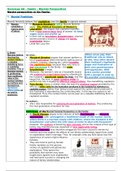
A good way to think about the causes is the long term factors, the immediate and the trigger
Long-term discontent
Catalyst
Spark
, C: INCREASED • Sergei WiRe
INDUSTRIALISATION • Appointed Minister of Finance in 1893
• Ini7ated a program of rapid industrialisa7on known as the Great Spurt – brought in lots of
foreign investment
• In 1891 construc7on of Trans-Siberian Railway began, designed to connect the isolated
regions of central and eastern Russia with the emerging industrial centres in the west – not
completed un7l 1916
• WiRe’s reforms
-Relied on foreign investments
-Developed heavy industry but made liRle for Russian consumers
-Failed to improve the livelihoods of workers and peasants
-Led to high interest rates, rising prices and increased taxes on goods
• Due to famine crisis and poverty, many peasants flocked to Russia’s industrial centres in
search of work
• Industrial labour force tripled 1860-1905, living and working condi7ons were terrible,
increasing social tensions
• Number of industrial strikes suppressed by military force increased from 19 in 1893 to 522 in
1902
C: SOCIAL & • Last decade of 19th century Russia was experiencing rapid social and economic change
ECONOMIC • Living condi7ons and pay are poor - ci7es aren’t built for all people to come to - discontent
FACTORS (long term building, was dealt with through repression
discontent) • Grievances for long working hours, poor living condi7ons and low pay
• Peasant discontent arising from burden of redemp7on payments
• Middle class discontentment from exclusion from share in government, feeling of ill will
against an incompetent government
• Na7onali7es’ resentment of imposi7on of Russian language, culture and religion and lack of
regard for their demands of self-rule
• Impact of regime’s repressive policies
-Repressive measures along could not combat the appeal of socialism and the spread of
revolu7onary ideas
• Workers were given trade unions and educa7onal and self-help organisa7ons supervised and
funded by the police
-HOWEVER - Iskra - ‘it was more terrible to us that is police brutality’
-Back handed way of crushing them
-Revolu7onary groups annoyed by these trade unions
-In 1903 police union strike escalated into General Strike, Zubatov dismissed
-Historians’ views mixed on significance
-Read - ‘wherever they were set up, Zubatov unions became a cover for radicals and blew
up in the face of their sponsors’
-Scheidermann - only coherent labour policy coming from government
of the Russo-Japanese War)
Analyse the causes and consequences of the 1905 revolu7on in Russia.
Assess the impact of the Russo-Japanese War on the reign of Nicholas II up to 1914.
Consequences of the 1905 Revolu2on (including Stolypin and the Dumas)
To what extent were Stolypin’s poli7cal and economic policies successful in the years 1906-
1911?
November 2018: Discuss the causes and consequences of the 1905 Revolu2on in Russia.
The ques7on requires that candidates offer a considered and balanced review of the causes and
consequences of the 1905 Revolu7on. For causes, candidates may focus on a range of long-
term causes, such as liberal frustra2on with autocra2c rule. This led to the growth of
revolu7onary par7es, or economic problems. Other long-term issues included the poor working
condi2ons in many parts of Russia and the land hunger that prevented landless peasants from
improving their situa7on. Other candidates may emphasize short-term and immediate causes,
for example Russia’s defeat in the Russo–Japanese War and Bloody Sunday both of which
highlighted government incompetence. When discussing consequences, candidates may again
differen2ate between short- and long-term effects. In the short-term, there was some
apparent reform (the October Manifesto and the establishment of the State Duma). When
considering the long-term, candidates may argue that Russia began the process of reform
under Stolypin because of the 1905 Revolu2on or that the 1905 Revolu2on highlighted the
weakness of the monarchy and that it was a dress rehearsal for 1917.
A good way to think about the causes is the long term factors, the immediate and the trigger
Long-term discontent
Catalyst
Spark
, C: INCREASED • Sergei WiRe
INDUSTRIALISATION • Appointed Minister of Finance in 1893
• Ini7ated a program of rapid industrialisa7on known as the Great Spurt – brought in lots of
foreign investment
• In 1891 construc7on of Trans-Siberian Railway began, designed to connect the isolated
regions of central and eastern Russia with the emerging industrial centres in the west – not
completed un7l 1916
• WiRe’s reforms
-Relied on foreign investments
-Developed heavy industry but made liRle for Russian consumers
-Failed to improve the livelihoods of workers and peasants
-Led to high interest rates, rising prices and increased taxes on goods
• Due to famine crisis and poverty, many peasants flocked to Russia’s industrial centres in
search of work
• Industrial labour force tripled 1860-1905, living and working condi7ons were terrible,
increasing social tensions
• Number of industrial strikes suppressed by military force increased from 19 in 1893 to 522 in
1902
C: SOCIAL & • Last decade of 19th century Russia was experiencing rapid social and economic change
ECONOMIC • Living condi7ons and pay are poor - ci7es aren’t built for all people to come to - discontent
FACTORS (long term building, was dealt with through repression
discontent) • Grievances for long working hours, poor living condi7ons and low pay
• Peasant discontent arising from burden of redemp7on payments
• Middle class discontentment from exclusion from share in government, feeling of ill will
against an incompetent government
• Na7onali7es’ resentment of imposi7on of Russian language, culture and religion and lack of
regard for their demands of self-rule
• Impact of regime’s repressive policies
-Repressive measures along could not combat the appeal of socialism and the spread of
revolu7onary ideas
• Workers were given trade unions and educa7onal and self-help organisa7ons supervised and
funded by the police
-HOWEVER - Iskra - ‘it was more terrible to us that is police brutality’
-Back handed way of crushing them
-Revolu7onary groups annoyed by these trade unions
-In 1903 police union strike escalated into General Strike, Zubatov dismissed
-Historians’ views mixed on significance
-Read - ‘wherever they were set up, Zubatov unions became a cover for radicals and blew
up in the face of their sponsors’
-Scheidermann - only coherent labour policy coming from government