1.What are the three certainties? Why do you need to satisfy the certainty requirements before a
valid trust is created?
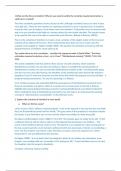
The three certainties questions involve clauses in wills ,although certainties issues can arise in inter
vivos gifts also. There are two reasons for requiring certainty in a trust: A practical one. It would be
wrong for the court to impose a trust where none was intended. Trusteeship can be an onerous task
and so no one should be held liable as a trustee unless this was clearly intended. The second reason
is the need for the court to be able to control the trust (Monice v Bishop of Durham (1805)).
There is the certainty of intention to create a trust, certainty of the subject matter of the trust and
certainty of the objects of the trust. These requirements have been set out in many cases.For
example Lord Langdale in Knight v Knight (1840). The question of certainties is bound up with the
fundamental one of whether a trust exists at all.
Tip: maybe there are four certainties – consider the argument made in David Wilde,‘ The three
certainties required to declare a trust - or is it four? “Distributional certainty”’(2020) 79 CLJ 349-
3592.
This article establishes that they believe there may be a fourth certainty, which would be
distributional certainty. He uses the case of Boyce v Boyce to establish the demonstration of
distributional certainty. He says we need the distributional certainty as the “overall property going
into the trust was clear (the houses); the identities of the beneficiaries were known (the testator's
daughters X and Y); what was uncertain was the shares into which the property was to be divided – a
property-related uncertainty.” He says his reasoning is as follows:
First, it helps to expose the potentially differing consequences of distributional uncertainty from
those of uncertainty of property, which it is usually seen as merely part of. Second, it helps to
highlight that special judicial techniques exist for resolving distributional uncertainty.Footnote14
Third, isolating the idea of distributional uncertainty may also help us to understand the puzzling
concept of “administrative unworkability” in discretionary trusts.
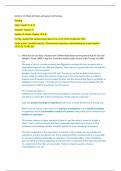
2. Explore the certainty of intention in more detail.
a. What are the key cases?
Lamb v Eames (1871)- Widow received property “to be at her disposal in any way that she may think
best, for the benefit of herself and her family.” She gave some of that property to recipients outside
her family. It was held there was no trust and the widow was entitled to make those gifts.
Re Adams and Kensington Vestry (1884) 27 Ch D 394. The testator gave his estate to his wife “in full
confidence that she will do what is right as to the disposal thereof between my children…” The
words in full confidence did not create a trust. This decision is an example of a clear turning point in
the law as previously the courts had been willing to hold more expressions of desire as constituting a
trust. The first modern case where a clear intention to create a trust was required was “lamb v
Eames(1871)” and was followed by this decision.
Re Digges (1888)- “it is my desire that (my daughter) allows to my relative and companion, anne
Gregory, now residing with me, an annuity of £25 during her life.” It was held there was no trus and
the daughter took the property absolutely.
Comiskey v Bowring- Hanbury (1905).
valid trust is created?
The three certainties questions involve clauses in wills ,although certainties issues can arise in inter
vivos gifts also. There are two reasons for requiring certainty in a trust: A practical one. It would be
wrong for the court to impose a trust where none was intended. Trusteeship can be an onerous task
and so no one should be held liable as a trustee unless this was clearly intended. The second reason
is the need for the court to be able to control the trust (Monice v Bishop of Durham (1805)).
There is the certainty of intention to create a trust, certainty of the subject matter of the trust and
certainty of the objects of the trust. These requirements have been set out in many cases.For
example Lord Langdale in Knight v Knight (1840). The question of certainties is bound up with the
fundamental one of whether a trust exists at all.
Tip: maybe there are four certainties – consider the argument made in David Wilde,‘ The three
certainties required to declare a trust - or is it four? “Distributional certainty”’(2020) 79 CLJ 349-
3592.
This article establishes that they believe there may be a fourth certainty, which would be
distributional certainty. He uses the case of Boyce v Boyce to establish the demonstration of
distributional certainty. He says we need the distributional certainty as the “overall property going
into the trust was clear (the houses); the identities of the beneficiaries were known (the testator's
daughters X and Y); what was uncertain was the shares into which the property was to be divided – a
property-related uncertainty.” He says his reasoning is as follows:
First, it helps to expose the potentially differing consequences of distributional uncertainty from
those of uncertainty of property, which it is usually seen as merely part of. Second, it helps to
highlight that special judicial techniques exist for resolving distributional uncertainty.Footnote14
Third, isolating the idea of distributional uncertainty may also help us to understand the puzzling
concept of “administrative unworkability” in discretionary trusts.
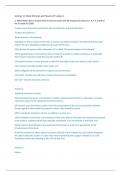
2. Explore the certainty of intention in more detail.
a. What are the key cases?
Lamb v Eames (1871)- Widow received property “to be at her disposal in any way that she may think
best, for the benefit of herself and her family.” She gave some of that property to recipients outside
her family. It was held there was no trust and the widow was entitled to make those gifts.
Re Adams and Kensington Vestry (1884) 27 Ch D 394. The testator gave his estate to his wife “in full
confidence that she will do what is right as to the disposal thereof between my children…” The
words in full confidence did not create a trust. This decision is an example of a clear turning point in
the law as previously the courts had been willing to hold more expressions of desire as constituting a
trust. The first modern case where a clear intention to create a trust was required was “lamb v
Eames(1871)” and was followed by this decision.
Re Digges (1888)- “it is my desire that (my daughter) allows to my relative and companion, anne
Gregory, now residing with me, an annuity of £25 during her life.” It was held there was no trus and
the daughter took the property absolutely.
Comiskey v Bowring- Hanbury (1905).