Chapter 04 Huether & McCance Understanding Pathophysiology, 6th Edition
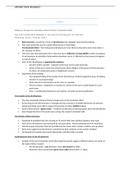
Chapter 04: Altered Cellular and Tissue Biology Huether & McCance: Understanding Pathophysiology, 6th Edition MULTIPLE CHOICE 1. A report comes back indicating that muscular atrophy has occurred. A nurse recalls that muscular atrophy involves a decrease in muscle cell: a. number. b. size. c. vacuoles. d. lipofuscin. REF: p. 74 2. During childhood, the thymus decreases in size, and this is referred to as what type of atrophy? a. Physiologic b. Pathologic c. Disuse d. Neurogenic REF: p. 74 3. When planning care for a cardiac patient, the nurse knows that in response to an increased workload, cardiac myocardial cells will experience hypertrophy which is an: a. increase in size. b. decrease in length. c. increase in excitability. d. decrease in number. REF: p. 75 4. A 55-year-old male with a 30-year history of smoking is examined for respiratory disturbance. Examination of his airway (bronchial) reveals that stratified squamous epithelial cells have replaced the normal columnar ciliated cells. This type of cellular adaptation is called: a. anaplasia. b. hyperplasia. c. metaplasia. d. dysplasia. REF: p. 77 5. When planning care for the pregnant patient, the nurse will recall that the mammary glands enlarge as a consequence of: a. compensatory hyperplasia. b. hormonal hyperplasia. c. hormonal anaplasia. d. compensatory anaplasia. REF: p. 76 6. A 24-year-old female presents with excessive menstrual bleeding. The physician identified endometrial changes that are due to hormonal imbalances. These cellular changes would be referred to as: a. dysplasia. b. pathologic dysplasia. c. hyperplasia. d. pathologic hyperplasia. REF: pp. 76-77 7. A 55-year-old male is diagnosed with hepatocellular cancer secondary to hepatitis C. If the cancerous region of the liver is removed, the remaining cells would undergo: a. pathologic hyperplasia. b. pathologic metaplasia. c. compensatory hyperplasia. d. compensatory aplasia. REF: p. 76 8. A 40-year-old female’s Pap smear indicates abnormal changes in the shape and organization of cervical cells. Which term would be used to identify this type of change? a. Metaplasia b. Atrophy c. Hypertrophy d. Dysplasia REF: p. 77 9. A 75-year-old male presents with chest pain on exertion. The chest pain is most likely due to hypoxic injury secondary to: a. malnutrition. b. free radicals. c. ischemia. d. chemical toxicity. REF: pp. 78-79 10. A patient has a heart attack that leads to progressive cell injury that causes cell death with severe cell swelling and breakdown of organelles. What term would the nurse use to define this process? a. Adaptation b. Calcification c. Apoptosis d. Necrosis REF: p. 78, Table 4-1 11. Sodium and water accumulation in an injured cell are a direct result of: a. decreased ATP production. b. karyorrhexis. c. ribosome detachment. d. dehydration. REF: p. 80 12. The early dilation (swelling) of the cell’s endoplasmic reticulum results in: a. increased aerobic metabolism. b. failure of DNA. c. reduced protein synthesis. d. increased Na+-K+ pump function. .................................................continued............................................
Written for
- Institution
- 123 University
- Module
- NURS 8022 (NURS8022)
Document information
- Uploaded on
- August 5, 2023
- Number of pages
- 12
- Written in
- 2023/2024
- Type
- Exam (elaborations)
- Contains
- Questions & answers
Subjects
-
huether amp mccance understanding pathophysiology
-
6
-
altered cellular and tissue biology