UNIT_3_STUDY_GUIDE complete
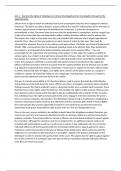
UNIT 3 STUDY GUIDE Lecture 8: Due before class on 8th MOTIVATION - Motivation – A process that guides behavior toward a goal, and dissipates once the goal is reached - Motivation and emotion give impetus to behavior - Motivation Maintains , or internal equilibrium. E.g. temperature nutrient content, etc. - - individuals are motivated to maintain a certain set point to maintain equilibrium. - Clark Hull felt that an internal state called drive motivates organisms to seek or avoid important things - When the important stimulus is obtained individuals experience . - Other psychologists feel external incentives can pull organism toward performing a behavior - rewards – rewards that are inherent in activity, e.g. pride in a job well done, fun of a sport. - rewards – rewards that are external to a task, e.g. money, praise. - Extrinsic rewards can sometimes undermine intrinsic rewards - In a study, children that already enjoyed playing with parkers played with them less if they were told they would get a certificate HUNGER - How much and when do we choose to eat? - Internal cues – feelings of hunger, stomach grumbling or contracting, low blood glucose o Stomach contractions alone don’t lead to hunger…individuals who have had their stomach removed ! - External Cues – Time of day, social cues, sight and smell of food. - hypothalamus – the gas pedal. If it is electrically stimulated, rats will overeat and become grossly overweight. If it is destroyed, rats eat and drink very little. - hypothalamus – the brake pedal. If it is electrically stimulated, eating and drinking are suppressed. If it is destroyed, rats overeat. - - simple sugar that enters the blood during digestion. - We tend to feel hungry when we have low blood glucose (not the whole story…) - - hormone secreted by pancreas that assists with transfer of glucose from the blood into cells. - People with diabetes either don’t produce enough insulin, or their cells are immune to it. - Despite high blood sugar, diabetics still report feeling hungry - Hunger might result from how available glucose is to cells, rather than simply how much is in the blood. Amount of insulin in the blood after a meal for a diabetic and non-diabetic. Fill in the graph - - a hormone secreted from well- nourished fat cells that increases metabolism and decreases eating. - Mice with a genetic mutation that prevents fat cells from secreting leptin have low metabolisms, overeat, become obese, and tend to develop diabetes. - If given leptin injections, their weight returns to normal. - Ghrelin – a hormone released by the gastrointestinal system when the stomach is empty - Ghrelin increases when fasting, decreases after a meal - In a study with humans, an injection of ghrelin and elicited vivid images of preferred foods (Schmid et al. 2005) - Ghrelin administered to laboratory animals causes them to eat more than usual and gain weight ..............................................continued.............................................
Written for
- Institution
- 123 University
- Module
- Psychology 1010
Document information
- Uploaded on
- August 5, 2023
- Number of pages
- 36
- Written in
- 2023/2024
- Type
- OTHER
- Person
- Unknown
Subjects
-
unit3studyguide complete 2023 2024
-
ghrelin administered to laboratory animals causes